Why the Rose Bowl Was Not Selected for Major FIFA World Cup 2026 Matches
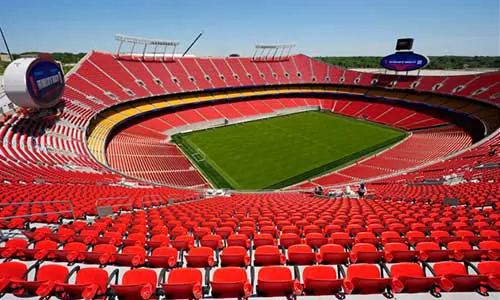
As excitement builds for the highly anticipated FIFA World Cup 2026, soccer enthusiasts around the globe are looking forward to witnessing history in the making. The tournament, co-hosted by the United States, Mexico, and Canada, promises to be the largest and most diverse iteration in the history of international soccer. However, as the list of host venues was finalized, one glaring omission sparked intense discussion among sports historians and local fans: the legendary Rose Bowl in Pasadena, California. Despite its status as one of the most famous sports arenas in the world, the Rose Bowl will not host any matches for the FIFA World Cup 2026.
This decision marks a significant shift in how mega-sporting events are organized and hosted in the modern era. In this article, we will delve deep into the structural, financial, and logistical reasons behind this surprising exclusion, comparing it with the selected alternative, SoFi Stadium.
Table of Contents
- The Glorious History of the Rose Bowl and the FIFA World Cup 2026
- Why SoFi Stadium Was Chosen Over the Rose Bowl for the FIFA World Cup 2026
- 1. Technical Infrastructure and Modern Amenities for FIFA World Cup 2026
- 2. Commercial Opportunities and VIP Hospitality in the FIFA World Cup 2026
- 3. Public Transit, Parking, and Accessibility Challenges in the FIFA World Cup 2026
- The Financial Reality of FIFA Host Stadium Agreements
- Rose Bowl vs. SoFi Stadium: A Comparative Analysis
- The Evolution of FIFA’s Stadium Standard Requirements
- Conclusion: The Sunset on a Historic Venue
- Frequently Asked Questions (FAQ)
The Glorious History of the Rose Bowl and the FIFA World Cup 2026
To fully understand the weight of this decision, one must first look at the rich history of the Rose Bowl. Located in Pasadena, California, the historic stadium has served as the backdrop for some of the most iconic moments in international sports. Built in 1922, it is a National Historic Landmark that has stood the test of time, hosting five Super Bowls, Olympic soccer matches, and the annual collegiate Rose Bowl Game.
Most notably, the Rose Bowl was the crowning jewel of the 1994 tournament. It hosted the historic men’s final between Brazil and Italy, which culminated in a dramatic penalty shootout. Five years later, it welcomed the world again for the 1999 FIFA Women’s World Cup Final, where the United States defeated China in front of a record-breaking crowd. To many soccer purists, the venue is considered the spiritual home of soccer in the United States, as documented on the Official Rose Bowl Stadium Website.
Therefore, when planning began for the FIFA World Cup 2026, many assumed the Rose Bowl would naturally return as a primary venue. It seemed like the perfect opportunity to bridge the gap between soccer’s past and its future in North American sports culture. To learn more about other selected venues, check out our guide on USA World Cup Host Stadiums.
However, the modern demands of global sports governing bodies have evolved far beyond historical sentiment. While nostalgia remains a powerful draw, structural limitations and commercial expectations have ultimately redirected the path of the tournament. The physical realities of a century-old stadium have made it increasingly difficult to compete with state-of-the-art facilities.
Why SoFi Stadium Was Chosen Over the Rose Bowl for the FIFA World Cup 2026
In June 2022, FIFA officially announced the 16 host cities for the upcoming tournament. Instead of selecting the historic Pasadena venue, Los Angeles was represented by SoFi Stadium, located in Inglewood. SoFi Stadium is a marvel of modern architecture and engineering, developed at a cost of approximately $5 billion by Los Angeles Rams owner Stan Kroenke.
The decision to select SoFi Stadium over the Rose Bowl for the FIFA World Cup 2026 highlights a clear preference for cutting-edge technology and high-end fan experiences over historical prestige. For a deeper look into this modern masterpiece, read our Ultimate Guide to SoFi Stadium. To understand why the older venue was ultimately bypassed, we must analyze several critical factors, ranging from structural infrastructure to commercial hospitality.
1. Technical Infrastructure and Modern Amenities for FIFA World Cup 2026
Modern international sports events require highly sophisticated technology to support global broadcasts, media operations, and real-time communications. The Rose Bowl, despite various renovations over the decades, is fundamentally a century-old stadium. Its concrete structure lacks the pre-installed high-tech infrastructure necessary to support the immense broadcasting demands of the FIFA World Cup 2026.
For instance, modern media centers require massive fiber-optic arrays, extensive high-speed internet cabling, and spacious press boxes with dedicated power grids. The Rose Bowl’s press box facilities, while functional for college football games, are inadequate for the thousands of international journalists who will descend upon Southern California.
In contrast, SoFi Stadium was built with future-proof technology from its inception. It features the “Infinity Screen,” a massive, double-sided 4K HDR video board that wraps around the center of the playing area, providing an unparalleled viewing experience. In addition, the stadium possesses robust, integrated 5G wireless networks and state-of-the-art LED lighting systems.
Furthermore, SoFi Stadium’s translucent ETFE roof protects spectators from the hot summer sun while still allowing natural light to illuminate the pitch. The Rose Bowl, on the other hand, is completely open-air. During hot summer months, the lack of shade poses serious comfort and safety concerns for both players and spectators, a risk that tournament organizers were hesitant to accept.
2. Commercial Opportunities and VIP Hospitality in the FIFA World Cup 2026
Another decisive factor in the venue selection process was the potential for generating revenue through premium seating and corporate hospitality. The commercial model of modern professional sports relies heavily on VIP luxury suites, club lounges, and exclusive amenities to generate profit during major tournaments.
The Rose Bowl features a continuous, single-deck bowl design, which is classic and aesthetically pleasing but extremely limited in terms of modern luxury suites. While the Terry Donahue Pavilion, completed in 2013, added some luxury suites, the overall capacity for corporate hospitality remains low. For a tournament of this scale, maximizing hospitality revenue is a top priority for organizers.
Conversely, SoFi Stadium was engineered to be a premium commercial powerhouse. It boasts over 260 luxury suites, multiple high-end field clubs, and more than 13,000 premium seats. These premium spaces are distributed across several levels, offering corporate sponsors and high-net-worth individuals an ultra-luxurious experience.
Consequently, hosting matches at SoFi Stadium presents a significantly higher revenue potential. FIFA’s business model depends on these high-margin sales to offset the massive costs of organizing a tournament with 48 teams. Therefore, the financial advantage offered by Inglewood’s modern arena made it the clear winner for the FIFA World Cup 2026.
3. Public Transit, Parking, and Accessibility Challenges in the FIFA World Cup 2026
Logistics and transportation are critical components of any major tournament bid. FIFA requires host stadiums to have robust, reliable, and accessible transport networks that can efficiently move tens of thousands of fans on match days. This is an area where the Rose Bowl has historically faced significant challenges.
The Rose Bowl is situated in the Arroyo Seco, a deep canyon surrounded by a quiet, residential neighborhood in Pasadena. While this setting is visually beautiful, it is a logistical nightmare for large-scale events. There is no direct light rail or subway line servicing the stadium. Fans must rely on shuttle buses from off-site parking lots, which often leads to long wait times and severe traffic gridlock on local streets.
On the other hand, SoFi Stadium is located in a more urbanized, central region of Los Angeles County. While traffic in Los Angeles is always a concern, the stadium is situated much closer to Los Angeles International Airport (LAX) and major hotel corridors. The surrounding 300-acre Hollywood Park development offers ample space for fan festivals, merchandise hubs, and entertainment zones.
In addition, modern transit plans are being implemented to connect SoFi Stadium with the regional light rail network, reducing the reliance on private vehicles. For international visitors who are unfamiliar with the region, the centralized and better-connected infrastructure of Inglewood provides a far more seamless travel experience during the FIFA World Cup 2026.
The Financial Reality of FIFA Host Stadium Agreements
Beyond physical infrastructure and transportation, the financial terms required by FIFA play a massive role in venue selection. Organizing a world-class tournament requires host cities and stadium operators to sign legally binding agreements that carry significant financial commitments and risks.
Hosting these events has a massive financial footprint. You can read more about this in our analysis of The Economic Impact of Sports Tourism. Jens Weiden, the general manager of the Rose Bowl, publicly highlighted that FIFA’s host agreement model is extremely challenging for municipal venues. FIFA expects local governments, taxpayers, and stadium authorities to fund millions of dollars in venue-specific upgrades. At the same time, FIFA retains almost all of the direct revenue generated from ticket sales, global sponsorships, and broadcasting rights.
For a privately owned venue like SoFi Stadium, backed by a wealthy ownership group, absorbing these high upfront costs is more manageable. The long-term branding value and secondary economic benefits make the investment worthwhile. However, for a historic public facility like the Rose Bowl, which is funded through municipal bonds and local revenue, investing taxpayer money in temporary tournament-specific modifications represents a substantial risk.
As a result, the financial terms and risk-sharing model made the Rose Bowl’s bid less competitive. The city of Pasadena and the Rose Bowl Operating Company had to carefully weigh the costs against the benefits. Ultimately, the stringent demands of the tournament made it clear that a partnership would be financially challenging for the historic public venue.
Rose Bowl vs. SoFi Stadium: A Comparative Analysis
To understand how these two iconic Southern California venues stack up against one another, we can look at their key features. While the Rose Bowl holds a higher total seating capacity, SoFi Stadium excels in almost every category relevant to hosting a modern mega-event. Below is a detailed comparison of the key metrics that influenced the selection process for the FIFA World Cup 2026.
| Feature | Rose Bowl (Pasadena) | SoFi Stadium (Inglewood) |
|---|---|---|
| Year Opened | 1922 | 2020 |
| Seating Capacity | 92,542 | 70,240 (expandable to 100,000) |
| Luxury Suites | Limited (approx. 54) | 260+ Suites |
| Roof Structure | Open-air (no roof) | Translucent, fixed roof |
| Public Transit Access | Limited (requires shuttle buses) | Moderate (integrated bus networks & light rail links) |
| Technology | Basic, legacy systems | Cutting-edge (Infinity Screen, 5G throughout) |
As the table demonstrates, while the Rose Bowl offers a legendary atmosphere and massive seating capacity, it falls short in the critical modern features required to host international crowds today. The shift in priorities toward modern commercial facilities is evident when comparing these physical characteristics.
The Evolution of FIFA’s Stadium Standard Requirements
The rejection of the Rose Bowl highlights how much international soccer standards have changed over the last three decades. During the 1994 World Cup, stadiums were often adapted from existing American football and college sports configurations with minimal structural modifications. Playing surfaces were sometimes narrow, and turf was temporarily laid over concrete or artificial surfaces.
Today, FIFA’s pitch requirements are absolute, as highlighted in the strict criteria outlined on the Official FIFA Website. A standard pitch must measure exactly 105 by 68 meters (115 by 74 yards) and must feature high-quality natural grass with sophisticated irrigation and drainage systems. This strict rule presented a challenge even for SoFi Stadium, which was built primarily for American football and initially had a field width that was too narrow for international soccer.
To accommodate these requirements, SoFi Stadium’s operators had to agree to remove several rows of seats in the lower bowl corners to widen the field. This adjustment was technically feasible because of the stadium’s modern, modular design. In contrast, the Rose Bowl is a continuous concrete structure. Modifying the historic stadium’s geometry to meet these pitch dimensions would have required massive, costly, and potentially destructive structural renovations.
Therefore, the rigidity of modern regulations means that historic arenas are increasingly being locked out of major international tournaments unless they undergo highly expensive reconstructions. The evolution of these rules ensures that only the newest, most adaptable venues can play a role in tournaments like the FIFA World Cup 2026.
Conclusion: The Sunset on a Historic Venue
In conclusion, the exclusion of the Rose Bowl from the FIFA World Cup 2026 is a poignant reminder of the changing landscape of global sports. While the historic Pasadena venue will always hold an honored place in soccer history, it could not overcome the physical, logistical, and financial realities of the modern era.
The choice of SoFi Stadium representing Los Angeles reflects a broader trend of prioritizing luxury hospitality, technological capability, and seamless transportation over historical nostalgia. As stadiums become billion-dollar entertainment hubs, legacy venues must find new ways to remain relevant in a highly competitive market.
Despite missing out on this historic tournament, the Rose Bowl remains a cherished icon of American sports culture. It continues to host massive concerts, college football classics, and international exhibition matches, ensuring its legacy remains secure for generations to come. It reminds us that while the game moves forward, the history of where we started is never truly lost.
Join the Conversation!
What are your thoughts on the decision to bypass the Rose Bowl in favor of SoFi Stadium? Do you think historical value should play a bigger role in selecting venues for major sporting events? Let us know in the comments below, and don’t forget to share this article with your fellow soccer fans!
Frequently Asked Questions (FAQ)
Why was the Rose Bowl not selected for the FIFA World Cup 2026?
The Rose Bowl was bypassed primarily due to its outdated technical infrastructure, lack of extensive VIP luxury hospitality suites, completely open-air layout without shade, and severe parking and public transit bottlenecks in its residential Pasadena location.
Did the Rose Bowl host World Cup matches in the past?
Yes, the Rose Bowl has a prestigious history, having hosted matches during the 1994 Men’s World Cup (including the final between Brazil and Italy) and the 1999 Women’s World Cup Final.
Which Los Angeles stadium will host matches for the FIFA World Cup 2026?
SoFi Stadium, located in Inglewood, was chosen as the sole venue representing the Los Angeles market and will host eight matches during the FIFA World Cup 2026.
How does SoFi Stadium compare to the Rose Bowl in seating capacity?
The Rose Bowl is larger, holding up to 92,542 spectators. SoFi Stadium typically has a capacity of around 70,240, though it can be expanded to 100,000 for massive events.
Did SoFi Stadium face any issues with FIFA World Cup 2026 requirements?
Yes, SoFi Stadium’s field was initially too narrow for a standard international soccer pitch. The stadium operators resolved this by planning structural modifications to remove some of the lower-level corner seats.
Will the Rose Bowl still host international soccer matches?
Yes. While it will not host matches for the upcoming World Cup, the Rose Bowl remains an active venue for prominent international club friendlies, regional tournaments, and MLS matches.