Where Is FIFA World Cup 2026? Travel Guide for International Fans
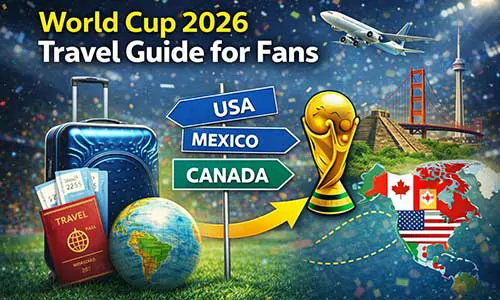
Where Is the FIFA World Cup 2026? Travel Guide for International Fans
The global football community is buzzing with anticipation as the FIFA World Cup 2026 approaches. For the first time in history, three nations are joining forces to host the grandest tournament on earth. Whether you are a dedicated supporter following your national team or a casual traveler seeking an unforgettable sporting adventure, planning ahead is the key to a smooth journey. This comprehensive guide provides essential travel tips, city profiles, and stadium details to help you navigate this massive tournament across North America.
Table of Contents
- Overview of the FIFA World Cup 2026 Host Countries
- The Expanded Format of the FIFA World Cup 2026
- Complete List of FIFA World Cup 2026 Host Cities and Stadiums
- Understanding the Regional Zones (East, Central, West)
- Visa and Entry Requirements for the FIFA World Cup 2026
- Transportation and Travel Logistics for the FIFA World Cup 2026
- Accommodation Strategy and Budgeting
- Frequently Asked Questions
- Conclusion and Next Steps
Overview of the FIFA World Cup 2026 Host Countries
The historic FIFA World Cup 2026 is jointly hosted by Canada, Mexico, and the United States. This remarkable collaboration brings the tournament back to the traditional Northern Hemisphere summer schedule, with matches scheduled to run from June 11 to July 19, 2026. This vast geographic span offers a diverse range of cultural, culinary, and climate experiences for visiting fans.
Historically, co-hosting has occurred only once before, during the 2002 tournament in South Korea and Japan. However, the scale of this upcoming edition is unprecedented. Consequently, fans will experience three distinct national cultures. Mexico brings its deep-rooted passion for football and vibrant cultural traditions. Canada offers diverse, welcoming cities surrounded by scenic natural landscapes. Meanwhile, the United States provides massive, state-of-the-art sporting arenas and highly developed urban centers.
Because the host nations are incredibly vast, traveling between them requires careful, strategic planning. Therefore, understanding the geography of the tournament is the first and most critical step for any international traveler preparing for this global sporting event.
The Expanded Format of the FIFA World Cup 2026
The tournament is not just expanding in terms of geography; it is also growing in size. The FIFA World Cup 2026 features an expanded field of 48 teams, up from the traditional 32. This means a total of 104 matches will be played, giving fans more opportunities than ever to witness live world-class football.
With more matches scheduled, the group stage format has been structured to minimize excessive travel for teams and supporters alike. Nevertheless, supporters should expect to log significant travel miles if they intend to follow their teams through the knockout rounds. By familiarizing yourself with the match structure and regional groupings, you can easily save time and money on your travel arrangements.
Furthermore, staying updated on the official ticket sales and match schedules is crucial. We highly recommend reviewing the complete World Cup match schedule to align your flight bookings with game days.
Complete List of FIFA World Cup 2026 Host Cities and Stadiums
The tournament will be played across 16 iconic host cities, including 11 in the United States, 3 in Mexico, and 2 in Canada. Each city features a world-class stadium capable of accommodating tens of thousands of passionate fans. In addition to regular seating, these venues offer modern amenities designed to enhance the spectator experience.
Below is a comprehensive list of the official host cities, their respective stadiums, and expected spectator capacities:
| Host City | Country | Official Stadium Name | Capacity |
|---|---|---|---|
| Vancouver | Canada | BC Place (Vancouver Stadium) | ~54,000 |
| Toronto | Canada | BMO Field (Toronto Stadium) | ~45,000 |
| Mexico City | Mexico | Estadio Azteca | ~87,500 |
| Guadalajara | Mexico | Estadio Akron (Guadalajara Stadium) | ~48,000 |
| Monterrey | Mexico | Estadio BBVA (Monterrey Stadium) | ~53,500 |
| New York / New Jersey | United States | MetLife Stadium (New York New Jersey Stadium) | ~82,500 |
| Dallas | United States | AT&T Stadium (Dallas Stadium) | ~80,000 |
| Kansas City | United States | Arrowhead Stadium (Kansas City Stadium) | ~76,400 |
| Houston | United States | NRG Stadium (Houston Stadium) | ~72,200 |
| Atlanta | United States | Mercedes-Benz Stadium (Atlanta Stadium) | ~71,000 |
| Los Angeles | United States | SoFi Stadium (Los Angeles Stadium) | ~70,200 |
| Philadelphia | United States | Lincoln Financial Field (Philadelphia Stadium) | ~69,700 |
| Seattle | United States | Lumen Field (Seattle Stadium) | ~69,000 |
| San Francisco Bay Area | United States | Levi’s Stadium (San Francisco Stadium) | ~68,500 |
| Boston | United States | Gillette Stadium (Boston Stadium) | ~65,800 |
| Miami | United States | Hard Rock Stadium (Miami Stadium) | ~64,700 |
Understanding the Regional Zones (East, Central, West)
To reduce travel stress, organizers have divided the host cities into three regional clusters: the East, Central, and West zones. This division helps limit transit times for teams and fans alike. Therefore, when booking your tickets, focusing on a single region is highly recommended to keep travel costs manageable.
The Eastern Region: Rich Culture and Coastal Vibes
The Eastern region consists of Toronto, Boston, New York/New Jersey, Philadelphia, Atlanta, and Miami. In addition to being easily accessible via international flights, these cities are relatively close to one another. Furthermore, efficient rail links, such as the Amtrak Acela in the US northeast, connect cities like Boston, New York, and Philadelphia, making train travel a viable and scenic option.
The Central Region: Heartlands and Heritage
The Central region brings together Kansas City, Dallas, Houston, Monterrey, Guadalajara, and Mexico City. This region showcases the deep-rooted passion of Mexican football culture alongside major American sporting hubs. On the other hand, temperatures can rise significantly during June and July. Therefore, fans should plan ahead by wearing light clothing, staying hydrated, and checking stadium cooling systems in advance.
The Western Region: Coastal Beauty and Modern Arenas
The Western region features Vancouver, Seattle, San Francisco, and Los Angeles. These host cities boast stunning coastal views and highly modern stadiums, such as SoFi Stadium and BC Place. However, distances between West Coast cities are substantial. Consequently, flying is usually the most practical option for traveling between matches in this zone.
Visa and Entry Requirements for the FIFA World Cup 2026
Since the matches are spread across three independent nations, international fans must understand that each country has its own sovereign immigration laws and entry requirements. Holding a ticket to a match does not automatically guarantee entry into Canada, Mexico, or the United States.
For a seamless travel experience, check the specific entry rules for your passport country well in advance. For the most accurate, real-time information, consult the U.S. Department of State Travel Website and equivalent official government portals for Canada and Mexico.
Entering the United States
Most international travelers entering the US will require either a valid B1/B2 visitor visa or an approved Electronic System for Travel Authorization (ESTA) under the Visa Waiver Program. Because visa appointment wait times can be extensive in certain countries, initiating your application as early as possible is highly recommended to avoid any last-minute stress.
Entering Canada
Canada requires most international visitors to obtain either a Temporary Resident Visa (TRV) or an Electronic Travel Authorization (eTA). The eTA is generally processed quickly online for visa-exempt travelers. On the other hand, if you require a standard visitor visa, processing times can vary considerably depending on your home country.
Entering Mexico
Many nationalities do not require a tourist visa for stays under 180 days in Mexico. However, you must fill out a Multiple Immigration Form (FMM) upon arrival. Additionally, travelers must show proof of a return flight and accommodation bookings. To ensure you have all the necessary paperwork, we recommend reviewing our essential travel packing checklist before heading to the airport.
Transportation and Travel Logistics for the FIFA World Cup 2026
Given the immense size of the North American continent, traveling between host cities requires careful logistical coordination. While European tournaments often rely on high-speed rail, transport in North America is heavily dominated by air travel and highway systems.
To assist in your travel planning, we have highlighted the primary modes of transportation you will rely on during the tournament below:
- Air Travel: For long-distance trips (e.g., from Los Angeles to New York), flying is the only practical option. Book domestic flights early, as prices are expected to surge during the peak summer period.
- Intercity Trains: The US Northeast Corridor (connecting Boston, New York, Philadelphia, and Washington D.C.) features reliable Amtrak passenger rail service. In other regions, however, long-distance train options are relatively limited.
- Ride-Sharing and Taxis: Apps like Uber, Lyft, and local taxi services operate extensively in almost all 16 host cities, providing convenient point-to-point transit.
- Public Transit: Cities like New York, Toronto, Montreal, and Mexico City feature expansive subway systems. Conversely, cities such as Houston, Dallas, and Atlanta are more car-centric, making car rentals a highly popular choice for tourists.
Before heading to any match, we suggest reading our comprehensive stadium safety guides to find local parking tips, shuttle route information, and public transit suggestions unique to each venue.
Accommodation Strategy and Budgeting
Finding a comfortable place to stay during a major sporting event can be challenging due to high demand. With millions of fans descending on North America, hotels, hostels, and vacation rentals in host cities will book up rapidly. Therefore, securing your lodging several months in advance is essential for getting reasonable rates.
Alternative Lodging Options
If central hotels are fully booked or beyond your budget, consider staying in nearby suburban towns connected to the city center via commuter rail. In addition to offering more budget-friendly rates, these quieter suburbs allow you to experience local life outside the bustling downtown core.
Budgeting Tips for International Fans
To help manage your expenses effectively, keep the following budgeting guidelines in mind:
- Currency Exchange: Keep in mind that you will be handling three different currencies: United States Dollars (USD), Canadian Dollars (CAD), and Mexican Pesos (MXN). Most establishments widely accept major credit and debit cards, but keeping some local cash on hand for small vendors and public transit is always wise.
- Tipping Culture: In the US and Canada, tipping is customary in restaurants, bars, and taxis, typically ranging from 15% to 20% of the total bill. In Mexico, tipping around 10% to 15% is standard practice for good service.
- Dining: Explore local food markets and street food, especially in Mexico, to experience authentic culinary traditions while keeping your food expenses manageable.
For more detailed event information and updates, make sure to visit the official source at the Official FIFA Website.
Frequently Asked Questions
1. Where is the FIFA World Cup 2026 taking place?
The tournament is co-hosted by three countries: Canada, Mexico, and the United States. Matches are distributed across 16 different host cities within these three nations.
2. Do I need separate visas for the United States, Canada, and Mexico?
Yes. Each of the three host countries maintains its own sovereign visa and entry requirements. Depending on your nationality, you may need separate travel authorizations (such as an ESTA for the US, an eTA for Canada, or tourist visas) to travel between them.
3. What is the easiest way to travel between host cities?
For long distances, domestic flights are the fastest and most practical method. For shorter distances, particularly in the northeastern United States, passenger trains are an efficient and highly convenient alternative.
4. When does the FIFA World Cup 2026 start and end?
The tournament is scheduled to run from June 11, 2026, with the opening match in Mexico City, through to July 19, 2026, culminating with the final match at the New York New Jersey Stadium (MetLife Stadium).
5. How many teams are participating in this edition?
This edition features an expanded lineup of 48 teams, a significant increase from the previous 32-team format, resulting in a total of 104 thrilling matches played across North America.
Conclusion and Next Steps
Attending the co-hosted games in North America is a once-in-a-lifetime opportunity for football fans worldwide. While the sheer scale of the three host nations presents unique travel challenges, careful planning, timely visa applications, and smart regional logistics will help ensure an incredible and hassle-free trip.
Take the time to review your travel itineraries, double-check your passports, and prepare for an incredible celebration of the beautiful game. For more travel tips, match updates, and packing checklists, bookmark our site and subscribe to our newsletter to receive the latest tournament guides directly in your inbox!