UEFA Champions League Winners List: Every Champion Since 1956
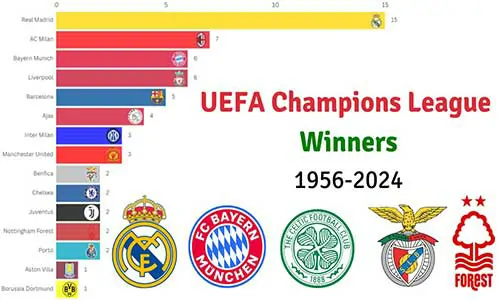
UEFA Champions League Winners List: Every Champion Since 1956 and the Road to FIFA World Cup 2026
The Evolution of European Club Football
The tournament began in 1955 as the European Champion Clubs’ Cup, primarily operating as a straight knockout bracket for domestic league champions. Initially, a select few dominant clubs managed to establish long-standing dynasties, showcasing a brand of football that was localized yet incredibly ahead of its time.
Subsequently, the competition underwent a monumental rebranding in the 1992–93 season to become the UEFA Champions League. This modernization introduced a round-robin group stage, allowing multiple top-tier clubs from high-ranking leagues to enter, which exponentially elevated the competitive balance and financial power of European football.
In the 2024–25 season, UEFA implemented another structural revolution by replacing the traditional group stage with a 36-team single-league phase. This format increased the number of high-stakes matches between elite clubs. As a result, players are now tested under continuous maximum intensity, which serves as optimal preparation for the physical demands of the upcoming FIFA World Cup 2026.
Complete UEFA Champions League Winners List (1956–2026)
Below is the complete historical record of every European Cup and UEFA Champions League final. This database tracks the evolution of tactical trends and the rise of legendary clubs whose standout performers will inevitably lead the charge in the FIFA World Cup 2026.
| Year | Winner | Runner-up | Score | Venue |
|---|---|---|---|---|
| 1956 | Real Madrid | Stade de Reims | 4–3 | Paris (Parc des Princes) |
| 1957 | Real Madrid | Fiorentina | 2–0 | Madrid (Santiago Bernabéu) |
| 1958 | Real Madrid | AC Milan | 3–2 (aet) | Brussels (Heysel Stadium) |
| 1959 | Real Madrid | Stade de Reims | 2–0 | Stuttgart (Neckarstadion) |
| 1960 | Real Madrid | Eintracht Frankfurt | 7–3 | Glasgow (Hampden Park) |
| 1961 | Benfica | Barcelona | 3–2 | Bern (Wankdorf Stadium) |
| 1962 | Benfica | Real Madrid | 5–3 | Amsterdam (Olympisch Stadion) |
| 1963 | AC Milan | Benfica | 2–1 | London (Wembley Stadium) |
| 1964 | Inter Milan | Real Madrid | 3–1 | Vienna (Praterstadion) |
| 1965 | Inter Milan | Benfica | 1–0 | Milan (San Siro) |
| 1966 | Real Madrid | Partizan Belgrade | 2–1 | Brussels (Heysel Stadium) |
| 1967 | Celtic | Inter Milan | 2–1 | Lisbon (Estádio Nacional) |
| 1968 | Manchester United | Benfica | 4–1 (aet) | London (Wembley Stadium) |
| 1969 | AC Milan | Ajax | 4–1 | Madrid (Santiago Bernabéu) |
| 1970 | Feyenoord | Celtic | 2–1 (aet) | Milan (San Siro) |
| 1971 | Ajax | Panathinaikos | 2–0 | London (Wembley Stadium) |
| 1972 | Ajax | Inter Milan | 2–0 | Rotterdam (De Kuip) |
| 1973 | Ajax | Juventus | 1–0 | Belgrade (Crvena Zvezda Stadium) |
| 1974 | Bayern Munich | Atlético Madrid | 4–0 (replay) | Brussels (Heysel Stadium) |
| 1975 | Bayern Munich | Leeds United | 2–0 | Paris (Parc des Princes) |
| 1976 | Bayern Munich | Saint-Étienne | 1–0 | Glasgow (Hampden Park) |
| 1977 | Liverpool | Borussia M’gladbach | 3–1 | Rome (Stadio Olimpico) |
| 1978 | Liverpool | Club Brugge | 1–0 | London (Wembley Stadium) |
| 1979 | Nottingham Forest | Malmö FF | 1–0 | Munich (Olympiastadion) |
| 1980 | Nottingham Forest | Hamburger SV | 1–0 | Madrid (Santiago Bernabéu) |
| 1981 | Liverpool | Real Madrid | 1–0 | Paris (Parc des Princes) |
| 1982 | Aston Villa | Bayern Munich | 1–0 | Rotterdam (De Kuip) |
| 1983 | Hamburger SV | Juventus | 1–0 | Athens (Olympic Stadium) |
| 1984 | Liverpool | AS Roma | 1–1 (4–2 pens) | Rome (Stadio Olimpico) |
| 1985 | Juventus | Liverpool | 1–0 | Brussels (Heysel Stadium) |
| 1986 | Steaua București | Barcelona | 0–0 (2–0 pens) | Seville (Ramón Sánchez Pizjuán) |
| 1987 | Porto | Bayern Munich | 2–1 | Vienna (Praterstadion) |
| 1988 | PSV Eindhoven | Benfica | 0–0 (6–5 pens) | Stuttgart (Neckarstadion) |
| 1989 | AC Milan | Steaua București | 4–0 | Barcelona (Camp Nou) |
| 1990 | AC Milan | Benfica | 1–0 | Vienna (Praterstadion) |
| 1991 | Red Star Belgrade | Marseille | 0–0 (5–3 pens) | Bari (Stadio San Nicola) |
| 1992 | Barcelona | Sampdoria | 1–0 (aet) | London (Wembley Stadium) |
| 1993 | Marseille | AC Milan | 1–0 | Munich (Olympiastadion) |
| 1994 | AC Milan | Barcelona | 4–0 | Athens (Olympic Stadium) |
| 1995 | Ajax | AC Milan | 1–0 | Vienna (Ernst-Happel-Stadion) |
| 1996 | Juventus | Ajax | 1–1 (4–2 pens) | Rome (Stadio Olimpico) |
| 1997 | Borussia Dortmund | Juventus | 3–1 | Munich (Olympiastadion) |
| 1998 | Real Madrid | Juventus | 1–0 | Amsterdam (ArenA) |
| 1999 | Manchester United | Bayern Munich | 2–1 | Barcelona (Camp Nou) |
| 2000 | Real Madrid | Valencia | 3–0 | Paris (Stade de France) |
| 2001 | Bayern Munich | Valencia | 1–1 (5–4 pens) | Milan (San Siro) |
| 2002 | Real Madrid | Bayer Leverkusen | 2–1 | Glasgow (Hampden Park) |
| 2003 | AC Milan | Juventus | 0–0 (3–2 pens) | Manchester (Old Trafford) |
| 2004 | Porto | Monaco | 3–0 | Gelsenkirchen (Arena AufSchalke) |
| 2005 | Liverpool | AC Milan | 3–3 (3–2 pens) | Istanbul (Atatürk Olympic Stadium) |
| 2006 | Barcelona | Arsenal | 2–1 | Paris (Stade de France) |
| 2007 | AC Milan | Liverpool | 2–1 | Athens (Olympic Stadium) |
| 2008 | Manchester United | Chelsea | 1–1 (6–5 pens) | Moscow (Luzhniki Stadium) |
| 2009 | Barcelona | Manchester United | 2–0 | Rome (Stadio Olimpico) |
| 2010 | Inter Milan | Bayern Munich | 2–0 | Madrid (Santiago Bernabéu) |
| 2011 | Barcelona | Manchester United | 3–1 | London (Wembley Stadium) |
| 2012 | Chelsea | Bayern Munich | 1–1 (4–3 pens) | Munich (Allianz Arena) |
| 2013 | Bayern Munich | Borussia Dortmund | 2–1 | London (Wembley Stadium) |
| 2014 | Real Madrid | Atlético Madrid | 4–1 (aet) | Lisbon (Estádio da Luz) |
| 2015 | Barcelona | Juventus | 3–1 | Berlin (Olympiastadion) |
| 2016 | Real Madrid | Atlético Madrid | 1–1 (5–3 pens) | Milan (San Siro) |
| 2017 | Real Madrid | Juventus | 4–1 | Cardiff (Millennium Stadium) |
| 2018 | Real Madrid | Liverpool | 3–1 | Kyiv (NSC Olimpiyskiy) |
| 2019 | Liverpool | Tottenham Hotspur | 2–0 | Madrid (Metropolitano) |
| 2020 | Bayern Munich | Paris Saint-Germain | 1–0 | Lisbon (Estádio da Luz) |
| 2021 | Chelsea | Manchester City | 1–0 | Porto (Estádio do Dragão) |
| 2022 | Real Madrid | Liverpool | 1–0 | Saint-Denis (Stade de France) |
| 2023 | Manchester City | Inter Milan | 1–0 | Istanbul (Atatürk Stadium) |
| 2024 | Real Madrid | Borussia Dortmund | 2–0 | London (Wembley Stadium) |
| 2025 | Paris Saint-Germain | Inter Milan | 5–0 | Munich (Allianz Arena) |
| 2026 | Paris Saint-Germain | Arsenal | 1–1 (4–3 pens) | Budapest (Puskás Aréna) |
How Champions League Success Prepares Players for the FIFA World Cup 2026
The transition from domestic dominance to international glory is a path well-traveled by the world’s finest footballers. Competing at the absolute peak of UEFA club matches builds the exact caliber of psychological resilience, physical stamina, and tactical understanding required to handle major tournaments.
Therefore, as national squad managers build their strategic foundations, the tactical patterns seen in European club tournaments serve as a primary guide. Players who consistently perform under the intense spotlights of Champions League knockout rounds become highly valuable assets. They subsequently bring that vital competitive edge to national teams competing in the FIFA World Cup 2026.
In addition to tactical familiarity, playing against international teammates at the club level breaks down stylistic barriers. This familiarity will prove crucial when players face each other as opponents on the pitches of the FIFA World Cup 2026, adding another layer of intrigue to the global tournament.
From Champions League Glory to FIFA World Cup 2026 Stardom
Individual performers often use the UEFA Champions League knockout stages to establish themselves on the global stage. For instance, players who excel during intense mid-week matches quickly transfer that momentum to their respective national colors.
This dynamic transfer of confidence is highly visible in modern cycles. As a result, the physical and mental peak achieved during a grueling European season equips athletes to handle the extreme pressure of the FIFA World Cup 2026. Analysts carefully observe these club-level metrics to project which international squads will have the deepest, most cohesive rosters.
Furthermore, the physical training regimes and recovery protocols utilized by top-tier European clubs ensure that their key players remain in prime athletic condition. This physical preparation is critical, ensuring these athletes are ready to transition smoothly into the summer heat and intense travel schedule of the FIFA World Cup 2026.
Tactical Innovation: From European Finals to the FIFA World Cup 2026
Tactical trends typically originate in the club game before trickling up to the international level. Over the past decade, we have observed a prominent shift toward high-intensity counter-pressing, fluid positional play, and building play directly from the back-line.
These sophisticated concepts require daily practice and deep squad chemistry, which are primarily nurtured at elite clubs. Consequently, national team managers must adapt these systems to suit limited international training windows, and these very same styles are expected to dominate the pitches of the FIFA World Cup 2026.
For example, the deployment of inverted fullbacks and hybrid midfielders has revolutionized modern defensive setups. National coaches will rely heavily on these versatile structures to maintain defensive solidity while optimizing attacking threat, directly influencing how national team coaches prepare their squads for the highly demanding environment of the FIFA World Cup 2026.
Most Successful Clubs and Nations in History
While some clubs achieve isolated successes, a select few have historically dominated the European landscape. Real Madrid remains the undisputed benchmark, securing an impressive 15 titles, followed by AC Milan with 7, and Bayern Munich alongside Liverpool with 6 titles apiece.
Meanwhile, on a national level, Spain leads the historical charts due to the combined efforts of Real Madrid and Barcelona. The competitive nature of these domestic leagues ensures a constant flow of elite talent, directly influencing the eventual championship predictions for the FIFA World Cup 2026.
| Country | Titles won | Winning Clubs |
|---|---|---|
| Spain | 20 | Real Madrid (15), Barcelona (5) |
| England | 15 | Liverpool (6), Manchester United (3), Chelsea (2), Nottingham Forest (2), Aston Villa (1), Manchester City (1) |
| Italy | 12 | AC Milan (7), Inter Milan (3), Juventus (2) |
| Germany | 8 | Bayern Munich (6), Borussia Dortmund (1), Hamburger SV (1) |
| Netherlands | 6 | Ajax (4), Feyenoord (1), PSV Eindhoven (1) |
| Portugal | 4 | Benfica (2), Porto (2) |
| France | 3 | Paris Saint-Germain (2), Marseille (1) |
In addition to these traditional football powerhouses, nations like France have seen a dramatic surge in club success. This development ensures that their domestic systems remain highly competitive, acting as premier talent feeders for the upcoming FIFA World Cup 2026.
The Modern Era: Power Shifts and Back-to-Back Champions (2020–2026)
The landscape of European football has experienced fascinating shifts in recent years. Following Bayern Munich’s treble-winning campaign in 2020, teams like Chelsea (2021) and Manchester City (2023) demonstrated the sheer competitive depth of the English Premier League.
Furthermore, Real Madrid’s triumph in 2024 once again underlined their unrivaled pedigree in this competition. However, the most notable modern storyline has been the spectacular rise of Paris Saint-Germain (PSG). Under the guidance of tactical mastermind Luis Enrique, the French club claimed their first-ever Champions League title in 2025 by defeating Inter Milan 5–0.
Subsequently, PSG proved their class was no fluke by successfully defending their title in 2026, defeating a resilient Arsenal side on penalties in Budapest. This back-to-back achievement places them in an elite bracket of modern football history, offering a clear glimpse of the top-tier tactical performances we will witness at the upcoming FIFA World Cup 2026.
These modern tactical configurations demand immense versatility from players. Consequently, athletes who can fluidly transition between different playing systems become highly valuable assets for their national teams targeting success in the FIFA World Cup 2026.
Frequently Asked Questions (FAQ)
1. Which club has won the most UEFA Champions League titles?
Real Madrid holds the absolute record with 15 European Cup/Champions League titles, followed by Italy’s AC Milan with 7 titles.
2. Who won the Champions League in 2025 and 2026?
Paris Saint-Germain (PSG) won consecutive titles, securing their first trophy in 2025 against Inter Milan, and defending it in 2026 against Arsenal.
3. How does Champions League experience help players at the FIFA World Cup 2026?
Playing in the Champions League exposes players to elite opponents and high-pressure situations, preparing them mentally and tactically for the FIFA World Cup 2026.
4. When did the European Cup rebrand to the UEFA Champions League?
The tournament rebranded for the 1992–93 season, moving away from a pure knockout format to include a modern group phase.
5. Which country has produced the most Champions League winners?
Spain leads with 20 total titles, followed closely by England with 15 and Italy with 12 championship victories.
6. Has any French team won the Champions League besides Marseille?
Yes, Paris Saint-Germain (PSG) became the second French club to lift the trophy, winning back-to-back titles in 2025 and 2026.
Conclusion
The rich history of the European Cup and UEFA Champions League highlights a legacy of continuous evolution and elite athletic standards. From the dominance of Real Madrid in the late 1950s to the modern era marked by Paris Saint-Germain’s consecutive titles, this competition remains the absolute gold standard of club soccer.
As we celebrate these iconic club triumphs, the excitement builds not only for future European campaigns but also for the historic FIFA World Cup 2026. The stars forged in the fires of Champions League nights are undoubtedly the ones who will shape the future of international soccer.
What are your thoughts on the evolution of European football? Which club heroes do you think will dominate the upcoming FIFA World Cup 2026? Let us know in the comments below!