Most Expensive Football Transfers Ever: Updated Record Rankings
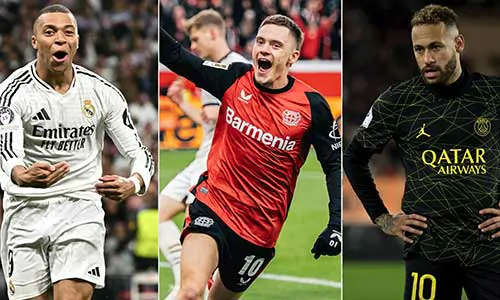
Most Expensive Football Transfers Ever: Updated Rankings Ahead of the FIFA World Cup 2026
The global football transfer market has evolved from a structured system of player movement into a multi-billion-dollar economy. As the global football community turns its eyes toward the upcoming FIFA World Cup 2026, the sport’s financial landscape continues to reach breathtaking new heights. Elite clubs are willing to pay unprecedented sums to secure elite talents who can deliver domestic glory and continental dominance. This trend of immense squad investments is particularly evident as national teams prepare for the FIFA World Cup 2026, urging clubs to secure elite talents before their valuations soar on the international stage.
Historically, transfer records were broken by incremental margins. However, the modern era has seen exponential spikes driven by wealthy ownership groups, lucrative broadcasting deals, and intense commercial competition among the richest football clubs in the world. Consequently, the threshold for a world-class player now frequently exceeds the nine-figure mark. In this updated guide, we analyze the most expensive football transfers of all time, their sporting impacts, and how the market continues to shift.
Table of Contents
- How the FIFA World Cup 2026 Shapes Global Transfer Valuations
- The Top 10 Most Expensive Transfers in Football History
- The Premier League’s Financial Might Before the FIFA World Cup 2026
- Emerging Spending Powers and Market Adjustments Ahead of the FIFA World Cup 2026
- Summary Table: All-Time Record Football Transfers
- Conclusion: The Future of the Transfer Market
- Frequently Asked Questions (FAQ)
How the FIFA World Cup 2026 Shapes Global Transfer Valuations
The anticipation surrounding the FIFA World Cup 2026 serves as a major catalyst for club boardrooms. Sporting directors recognize that international tournaments are the ultimate showcase for talent. Consequently, many clubs choose to execute high-value transfers in the windows leading up to the tournament, aiming to secure players before a standout performance drives their asking price out of reach.
Indeed, history shows that standout performers at tournaments like the FIFA World Cup 2026 can instantly see their market value double or triple overnight. Therefore, buying talent early is often viewed as a calculated financial risk. On the other hand, a failure to secure key targets beforehand can force clubs into frantic bidding wars after the tournament concludes. As we approach the historic expanded tournament in North America, this proactive recruitment strategy has never been more pronounced.
Furthermore, clubs are not just purchasing immediate on-pitch quality; they are investing in the long-term marketing potential of stars who will represent their countries on the world’s biggest stage. A player’s commercial value naturally spikes during a global tournament, allowing clubs to recoup portions of their transfer outlays through sponsorships, merchandise, and global brand expansion.
The Top 10 Most Expensive Transfers in Football History
To understand the current state of the transfer market, we must examine the specific deals that redefined the sport’s financial boundaries. Below is the detailed analysis of the ten most expensive transfers ever recorded.
1. Neymar Jr. — Barcelona to Paris Saint-Germain (€222 million)
In August 2017, Paris Saint-Germain shook the foundations of the sport by triggering Neymar’s astronomical €222 million release clause. This singular move effectively doubled the previous world transfer record and permanently altered player valuations globally. PSG’s objective was clear: to secure a global icon capable of bringing the UEFA Champions League trophy to Paris.
While Neymar delivered multiple domestic titles and guided PSG to the 2020 Champions League final, his tenure was frequently disrupted by injuries. While his career has transitioned to the Saudi Pro League with Al-Hilal, his legacy remains unmatched, and he continues to target a defining campaign with Brazil at the FIFA World Cup 2026.
2. Kylian Mbappé — Monaco to Paris Saint-Germain (€180 million)
Shortly after securing Neymar, PSG completed a sensational double-swoop by signing Kylian Mbappé from Monaco. Initially arriving on loan in 2017 to comply with Financial Fair Play regulations, the move was made permanent in 2018 for €180 million. Mbappé’s combination of explosive speed, elite finishing, and marketing appeal made him the premier young asset in football.
The transfer proved to be highly successful on a domestic level, as Mbappé became PSG’s all-time leading goalscorer. Following his high-profile free transfer to Real Madrid in 2024, he remains one of the sport’s central figures. With France aiming to reclaim global supremacy, Mbappé’s performance will be a central storyline during the FIFA World Cup 2026.
3. Alexander Isak — Newcastle United to Liverpool (£125 million / €145 million)
In September 2025, Liverpool shattered both their club transfer record and the British transfer record by acquiring Alexander Isak from Newcastle United for £125 million. The Swedish striker had established himself as one of the Premier League’s most lethal forwards, scoring 54 goals in 86 league appearances for Newcastle. Under Arne Slot, Liverpool sought a dynamic, technically gifted number nine to anchor their frontline.
This massive deal highlights the premium placed on elite goalscorers in the modern game. As Liverpool looks to defend their domestic titles, Isak’s international form with Sweden remains crucial, even if the team faces a steep road to the FIFA World Cup 2026. His ability to drop deep, link play, and finish ruthlessly makes him the modern prototype of a world-class striker.
4. João Félix — Benfica to Atlético Madrid (€126 million)
In the summer of 2019, Atlético Madrid utilized the funds from Antoine Griezmann’s departure to sign 19-year-old Portuguese prodigy João Félix from Benfica. Benfica’s highly regarded academy is celebrated for scouting elite youth talent, which allowed them to demand Félix’s full €126 million buyout clause after just one breakout season.
However, Félix struggled to adapt to Diego Simeone’s demanding defensive tactical framework. This stylistic mismatch led to inconsistent performances and eventual loan spells at Chelsea and Barcelona. Despite these challenges, Félix’s natural technical ability remains undeniable as he seeks to establish a steady club career and play a major role for the Portuguese squad at the FIFA World Cup 2026.
5. Enzo Fernández — Benfica to Chelsea (€121 million)
Following a sensational tournament in late 2022 where he won the Young Player Award, Enzo Fernández became the target of an intense pursuit by Chelsea. In January 2023, Benfica held firm on their valuation, forcing the London club to trigger his €121 million release clause on deadline day. The transfer was designed to provide Chelsea with a long-term midfield anchor.
Fernández possesses elite passing range and superb spatial awareness, making him a crucial asset in transition-heavy leagues. His development at Chelsea will be vital as Argentina seeks to retain their crown at the FIFA World Cup 2026. Consequently, his performances are monitored closely by both club and national team analysts.
6. Philippe Coutinho — Liverpool to Barcelona (€120 million base + €40 million add-ons)
In January 2018, Barcelona sought to fill the creative void left by Neymar’s departure by signing Philippe Coutinho from Liverpool. The deal was structured with a guaranteed €120 million fee, which eventually rose closer to €160 million with achievable add-ons. Unfortunately, this transfer is widely cited as one of the most financially challenging deals in modern football history.
Coutinho struggled to find a natural position within Barcelona’s tactical system, often overlapping with Lionel Messi’s zones. He was eventually sent on loan to Bayern Munich—where he ironically scored against Barcelona in a Champions League match—before permanently moving to Aston Villa. Conversely, Liverpool utilized the massive transfer fee to fund the acquisitions of Virgil van Dijk and Alisson Becker, transforming them into champions.
7. Antoine Griezmann — Atlético Madrid to Barcelona (€120 million)
In July 2019, Barcelona activated Antoine Griezmann’s €120 million release clause, adding another high-profile forward to their ranks. The transfer was met with immediate tactical scrutiny, as Griezmann preferred to operate in the same central spaces as Lionel Messi. Consequently, his impact at the Camp Nou was limited despite his hard-working defensive contributions.
After two challenging seasons, Griezmann returned to Atlético Madrid, initially on loan, before the move was made permanent for a fraction of the original fee. Back under Diego Simeone, he rediscovered his world-class form, proving that tactical fit is often far more important than a player’s nominal transfer fee.
8. Moisés Caicedo — Brighton to Chelsea (€117 million / £115 million)
The summer of 2023 witnessed one of the most intense transfer sagas in Premier League history. Both Liverpool and Chelsea submitted British-record bids for Brighton’s defensive midfield star Moisés Caicedo. Ultimately, Caicedo chose to honor his personal agreement with Chelsea, completing a transfer worth £115 million (approximately €117 million plus add-ons).
Caicedo’s primary strengths lie in his exceptional defensive coverage, tackle success rate, and physical resilience. The midfield anchor represents the modern athletic profile required to dominate both domestic leagues and the high-altitude venues of the FIFA World Cup 2026. Alongside Enzo Fernández, he forms the financial and tactical foundation of Chelsea’s midfield rebuild.
9. Declan Rice — West Ham to Arsenal (€116.8 million / £105 million)
In July 2023, Arsenal secured their primary target by signing West Ham United captain Declan Rice for a club-record £105 million. Unlike other nine-figure transfers that required long adjustment periods, Rice integrated seamlessly into Mikel Arteta’s system, instantly elevating Arsenal into consecutive Premier League title races.
Rice provides a unique combination of physical presence, ball-carrying ability, and leadership. His consistency has justified the immense financial outlay, establishing him as one of the premier midfielders in the world. Furthermore, Rice represents the tactical discipline that England’s national side will heavily rely on as they attempt to bring football home at the FIFA World Cup 2026.
10. Jack Grealish — Aston Villa to Manchester City (€117 million / £100 million)
In the summer of 2021, Manchester City made Jack Grealish the first English player to command a £100 million transfer fee. Pep Guardiola prized Grealish’s elite ball-retention capabilities, tactical intelligence, and ability to draw defenders out of position. While his first season required a significant adjustment to City’s rigid positioning rules, his second season was instrumental.
Grealish played a vital role in Manchester City’s historic continental treble in 2023, starting key matches in both the Premier League and the Champions League. His success demonstrated that high-value signings can flourish when integrated into a clear, functioning tactical framework rather than being relied upon to carry a team individually.
The Premier League’s Financial Might Before the FIFA World Cup 2026
The modern transfer market is heavily dominated by English clubs. Thanks to unparalleled global broadcasting revenue and wealthy ownership groups, even mid-table Premier League clubs can compete financially with traditional European giants. This economic disparity has essentially turned the Premier League into a de facto super league, capable of outbidding competitors across Spain, Italy, and Germany.
With the FIFA World Cup 2026 being hosted in North America, English clubs are capitalizing on increased commercial interest. This global expansion has further boosted club revenues, allowing teams to continue their aggressive recruitment strategies. Understanding Premier League tactical trends helps explain why physical, high-intensity midfielders like Declan Rice and Moisés Caicedo command such massive premiums.
In addition, the financial regulations within the league, such as the Profitability and Sustainability Rules (PSR), have forced clubs to become more strategic. While they continue to spend massive sums, they must balance their outlays with player sales, often targeting younger assets with high resale value. Elite Premier League squads are built to endure grueling seasons, ensuring their star players arrive in peak condition for the FIFA World Cup 2026.
Emerging Spending Powers and Market Adjustments Ahead of the FIFA World Cup 2026
While the Premier League remains the dominant financial force, the global landscape is shifting. The Saudi Pro League emerged as a significant disruptor in 2023, acquiring established stars like Neymar, Karim Benzema, and Sadio Mané. This influx of capital has created a secondary market where European clubs can sell aging assets for substantial fees, freeing up wage bills to reinvest in younger talent.
The expansion of global football networks means national team coaches are now tracking players across multiple continents ahead of the FIFA World Cup 2026. Consequently, playing outside of Europe is no longer an automatic barrier to international selection. The competitive standard in alternative leagues continues to rise, driven by structured coaching and state-backed investments.
A prime example of continued Premier League dominance was Manchester City’s acquisition of Ghanaian winger Antoine Semenyo from Bournemouth for €72 million in January 2026. This transfer highlights how elite clubs continue to raid domestic rivals to maintain squad depth. Whether a player competes in Europe or the Middle East, maintaining elite fitness is critical to securing a roster spot for the FIFA World Cup 2026.
Summary Table: All-Time Record Football Transfers
The following table lists the top 15 most expensive transfers in football history, utilizing data compiled from the Transfermarkt historical database. These figures represent the base transfer fees agreed upon by the clubs, excluding highly speculative future performance add-ons.
| Rank | Player | From Club | To Club | Fee (Estimated EUR) | Year |
|---|---|---|---|---|---|
| 1 | Neymar Jr. | Barcelona | Paris Saint-Germain | €222m | 2017 |
| 2 | Kylian Mbappé | Monaco | Paris Saint-Germain | €180m | 2018 |
| 3 | Alexander Isak | Newcastle United | Liverpool | €145m (£125m) | 2025 |
| 4 | João Félix | Benfica | Atlético Madrid | €126m | 2019 |
| 5 | Enzo Fernández | Benfica | Chelsea | €121m | 2023 |
| 6 | Philippe Coutinho | Liverpool | Barcelona | €120m | 2018 |
| 7 | Antoine Griezmann | Atlético Madrid | Barcelona | €120m | 2019 |
| 8 | Moisés Caicedo | Brighton | Chelsea | €117m (£115m) | 2023 |
| 9 | Declan Rice | West Ham United | Arsenal | €116.8m (£105m) | 2023 |
| 10 | Jack Grealish | Aston Villa | Manchester City | €117m (£100m) | 2021 |
| 11 | Romelu Lukaku | Inter Milan | Chelsea | €115m | 2021 |
| 12 | Ousmane Dembélé | Borussia Dortmund | Barcelona | €105m | 2017 |
| 13 | Paul Pogba | Juventus | Manchester United | €105m | 2016 |
| 14 | Jude Bellingham | Borussia Dortmund | Real Madrid | €103m | 2023 |
| 15 | Gareth Bale | Tottenham Hotspur | Real Madrid | €101m | 2013 |
Conclusion: The Future of the Transfer Market
The football transfer market shows no signs of slowing down. As long as revenues from TV rights, global sponsorships, and corporate investments continue to climb, top-tier transfer fees will remain high. The financial benchmarks that once seemed impossible are now standard for elite players.
The commercial revenue generated by the upcoming tournament will undoubtedly trickle down into club budgets, setting the stage for a new wave of record-breaking deals after the FIFA World Cup 2026. Consequently, the list of the most expensive transfers will likely be rewritten once more after the dust settles on the FIFA World Cup 2026.
What do you think? Which transfer on this list represents the best value for money, and which one was the biggest gamble? Let us know your thoughts in the comments section below, and share this article with your fellow football fans!
Frequently Asked Questions (FAQ)
1. How does the FIFA World Cup 2026 impact player transfer fees?
International tournaments like the World Cup act as global showcases. Standout performances can significantly inflate a player’s market value, which is why farsighted clubs prefer to finalize agreements early to avoid paying premium rates for breakout stars at the FIFA World Cup 2026.
2. Who remains the most expensive football transfer of all time?
Neymar Jr. remains the most expensive transfer in history. His move from Barcelona to Paris Saint-Germain in August 2017 cost €222 million, a record that has stood for nearly a decade.
3. What is the British transfer record?
As of late 2025, the British transfer record is held by Alexander Isak, who joined Liverpool from Newcastle United in a deal valued at £125 million (€145 million).
4. Why did Barcelona spend so much on Coutinho and Dembélé?
Following the unexpected departure of Neymar in 2017, Barcelona received a massive influx of €222 million. Consequently, selling clubs knew Barcelona had immense liquid cash, allowing them to demand premium prices for players like Ousmane Dembélé and Philippe Coutinho.
5. Has a defender ever broken into the top ten most expensive transfers?
No, the top ten list is entirely dominated by attacking players and central midfielders. While defenders like Harry Maguire and Joško Gvardiol commanded substantial fees (around €87m–€90m), they have not yet surpassed the €100 million mark required to enter the top ten.
6. Which of these players will star in the FIFA World Cup 2026?
Many of the top ten players—including Kylian Mbappé, Enzo Fernández, Declan Rice, and Moisés Caicedo—are expected to be pivotal figures for their respective nations during the FIFA World Cup 2026.
7. What role does Financial Fair Play (FFP) play in these transfers?
FFP and local profitability rules require clubs to balance their football-related expenditures with their actual generated revenues. Consequently, clubs often structure massive transfers using amortization (spreading the cost over the length of the contract) or initial loan deals to remain compliant.