Football Formations Guide: From 4-4-2 to Today’s Tactical Systems
Football Formations Guide: From 4-4-2 to the Tactics of the FIFA World Cup 2026
Football is a dynamic game of chess played on grass, where tactical innovations constantly reshape how teams compete. As anticipation builds for the upcoming FIFA World Cup 2026, coaches worldwide are refining their tactical blueprints to gain a competitive edge. Understanding these complex systems is crucial to appreciating the strategic battles we will witness on the pitch. Whether you are a casual viewer or a dedicated analyst, the sheer variety of systems on display at the FIFA World Cup 2026 will highlight how far football tactics have progressed over the decades.
Table of Contents
- How Tactical Systems Have Evolved Ahead of the FIFA World Cup 2026
- The Classic 4-4-2: The Foundation of Modern Structures
- The Fluid 4-3-3: Dominating Through Possession and Pressing
- The Balanced 4-2-3-1: The Transition Machine
- The Resurgence of Three-at-the-Back Formations
- The Role of Wing-Backs in the FIFA World Cup 2026 Systems
- Modern Hybrid Systems: Box Midfields and In-Game Fluidity
- Predicting the Dominant Formations at the FIFA World Cup 2026
- Formations Comparison Table
- Conclusion & Tactical Outlook
- Frequently Asked Questions (FAQs)
How Tactical Systems Have Evolved Ahead of the FIFA World Cup 2026
Historically, football formations were rigid structures where players strictly adhered to their designated zones. In the early days of the sport, ultra-offensive layouts like the W-M formation dominated the pitch. However, modern football demands absolute versatility, fluid positional interchanges, and intense physical conditioning from every player.
Consequently, managers preparing for the FIFA World Cup 2026 are focusing on hybrid models rather than static lineups. Players are now expected to execute multiple roles seamlessly within a single match. Therefore, a team might defend in one structure but immediately transition into an entirely different attacking shape when they regain possession.
To fully grasp these modern strategies, it is helpful to explore our comprehensive player roles guide. This guide highlights how individual responsibilities have evolved alongside team structures. Understanding these historical shifts helps us appreciate the advanced systems we will see on the global stage.
The Classic 4-4-2: The Foundation of Modern Structures
For decades, the 4-4-2 formation was the undisputed standard of global football, particularly across Europe. This system relies on two compact banks of four players and a strike partnership upfront. It offers an incredibly balanced distribution of space, making it easy for players to understand their defensive and offensive duties.
In addition, the 4-4-2 relies heavily on traditional wingers who look to deliver crosses into the penalty box. The two central strikers work in tandem, with one often dropping slightly deeper to link play. Meanwhile, the other striker remains high up the pitch to stretch the opposition’s defensive line.
On the other hand, a major weakness of the classic 4-4-2 is its vulnerability to being overrun in central midfield. When facing teams utilizing a three-man midfield, a two-man midfield can easily find themselves outnumbered. While we might not see many pure 4-4-2 lineups at the FIFA World Cup 2026, elements of this structure remain vital during defensive phases.
The Fluid 4-3-3: Dominating Through Possession and Pressing
The 4-3-3 formation represents the pinnacle of proactive, possession-based football. Originally popularized by the legendary Dutch “Total Football” philosophy, this system utilizes a single defensive anchor behind two creative central midfielders. Upfront, two wide wingers flank a central striker to create a dynamic three-man attack.
Furthermore, this system naturally creates passing triangles across every zone of the pitch, making it ideal for maintaining possession. It also facilitates aggressive counter-pressing, allowing teams to win the ball back high up the field. You can read more about these high-intensity strategies in our high-pressing tactics masterclass.
We expect this fluid approach to be a staple of top-tier nations at the FIFA World Cup 2026. Modern variations often feature “inverted wingers” who cut inside on their stronger foot to shoot. This movement creates space for overlapping full-backs to join the attack, turning the team into an offensive powerhouse.
The Balanced 4-2-3-1: The Transition Machine
The 4-2-3-1 formation became the dominant system of the 2010s, offering a perfect bridge between defense and attack. By utilizing a “double pivot” of two defensive midfielders, this structure provides immense protection to the backline. Ahead of them, a creative trio supports a lone center-forward.
Consequently, this system is highly effective for teams that excel in fast-paced transition play. The double pivot allows the full-backs to push forward with minimal risk of exposing the defense. In addition, the central attacking midfielder, or “number 10,” operates with significant creative freedom to unlock compact defenses.
Therefore, this formation provides a high level of tactical security, which will be crucial for the dense match schedule of the FIFA World Cup 2026. It allows managers to adapt easily to different phases of the game. A simple shift can transform the defensive 4-2-3-1 into an aggressive 4-3-3 or a compact 4-4-2 block.
The Resurgence of Three-at-the-Back Formations
In recent years, formations utilizing three central defenders, such as the 3-5-2 and 3-4-3, have experienced a massive resurgence. These systems offer unparalleled defensive solidity in central areas while creating numerical overloads in midfield. When defending, these structures quickly morph into a secure five-man backline.
Historically, three-back systems were viewed as primarily defensive, but modern coaching has transformed them into potent offensive frameworks. By deploying highly athletic players on the flanks, teams can dominate wide areas. These players must possess the stamina to defend deep and attack the opponent’s box.
With limited tournament preparation time, national coaches targeting success at the FIFA World Cup 2026 might favor the structural security of these systems. They offer immediate cover against counter-attacks while giving creative players the freedom to express themselves higher up the pitch.
The Role of Wing-Backs in the FIFA World Cup 2026 Systems
In three-at-the-back formations, the wing-backs are arguably the most influential players on the pitch. They are solely responsible for providing width in attack while maintaining defensive discipline. Consequently, this tactical battleground will define the group stages of the FIFA World Cup 2026.
In addition, the physical demands placed on modern wing-backs are higher than ever before. They must possess elite stamina, precise crossing ability, and strong defensive positioning. Therefore, teams with world-class wing-backs will hold a distinct advantage when competing against compact low-blocks during the tournament.
Modern Hybrid Systems: Box Midfields and In-Game Fluidity
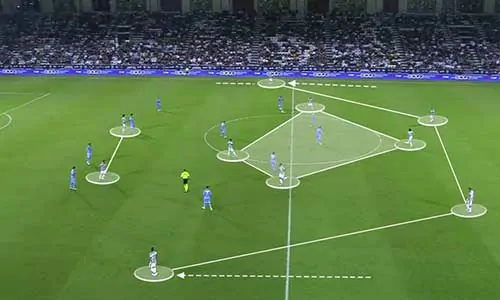
The cutting edge of modern football tactics involves hybrid systems that change shape depending on who has the ball. A prominent example is the “box midfield” structure, often written as a 3-2-4-1. In this setup, an inverting full-back or central defender steps forward to join the defensive midfielder during buildup play.
This tactical innovation creates a highly stable four-man box in the center of the pitch. Consequently, it allows teams to dominate possession and prevent easy counter-attacks through the middle. These are the kinds of sophisticated innovations that will certainly influence the FIFA World Cup 2026 coaching staffs.
To see how these concepts developed historically, you can explore our detailed review of the history of World Cup tactics. Understanding these dynamics is key to analyzing the FIFA World Cup 2026 games. It helps fans look past the initial TV graphic and see the true shapes players adopt on the field.
Predicting the Dominant Formations at the FIFA World Cup 2026
Analyzing recent international fixtures allows us to forecast how teams will structure their play in the upcoming tournament. The unique structure of the expanded FIFA World Cup 2026 means squads will face a wider variety of playing styles. As a result, versatility will be the ultimate key to progression.
We predict that the 4-3-3 and the 3-4-2-1 will be the most frequently utilized starting systems. Elite nations will likely use fluid possession systems to break down defensive opponents. Meanwhile, several dark horse teams at the FIFA World Cup 2026 will likely rely on disciplined 5-3-2 low blocks to frustrate heavy favorites.
Ultimately, tactical preparation for the FIFA World Cup 2026 involves managing fatigue and adapting to real-time match situations. The coaches who can successfully implement flexible hybrid systems will likely guide their teams deep into the knockout rounds.
Formations Comparison Table
To help you visualize the strengths and weaknesses of these strategic setups, we have compiled a quick comparison of the primary football formations:
| Formation | Primary Strength | Primary Weakness | Key Player Role |
|---|---|---|---|
| 4-4-2 | Excellent pitch coverage and clear defensive lines. | Can be easily outnumbered in central midfield. | Box-to-box midfielders |
| 4-3-3 | Superb passing triangles and high-pressing potential. | Vulnerable to rapid counters if full-backs commit forward. | Single pivot (No. 6) |
| 4-2-3-1 | Exceptional balance and strong defensive foundation. | Relies heavily on an elite, creative playmaker. | Attacking midfielder (No. 10) |
| 3-5-2 | Central defensive overload and strong counter-attacks. | Extreme physical demands on the wide players. | Athletic wing-backs |
Conclusion & Tactical Outlook
Football tactics have undergone a remarkable evolution, transitioning from the rigid structures of the past to the highly fluid, hybrid systems of today. Each system offers unique advantages, but their success ultimately depends on the players executing them on the pitch. Tactical innovation never stops, and the tactical masterclasses we expect to witness at the FIFA World Cup 2026 will undoubtedly showcase the next step in this evolution.
As we count down to the FIFA World Cup 2026, keeping an eye on these structural trends will greatly enhance your viewing experience. For more information on tournament preparations and updates, make sure to visit the official FIFA website. For in-depth match analysis, we also recommend checking out The Athletic’s tactical analysis section.
What is your favorite football formation? Let us know in the comments below, and share which system you think will lift the trophy!
Frequently Asked Questions (FAQs)
1. What is the most successful football formation in history?
There is no single “best” formation, as success depends on player profiles and coaching styles. Historically, the 4-4-2 dominated the late 20th century, while the 4-3-3 and 4-2-3-1 have been the most successful in the modern era of possession football.
2. How do modern coaches choose a tactical system?
Coaches select a system based on the strengths of their available squad, the weaknesses of the opposition, and their overall footballing philosophy. Modern managers prioritize flexibility over rigid starting structures.
3. Why did the classic 4-4-2 lose popularity?
The classic 4-4-2 fell out of favor primarily because it was easily overrun in central midfield by teams playing three-man midfields (like the 4-3-3). However, many teams still defend in a 4-4-2 shape due to its excellent structural coverage.
4. What is a “low block” in football tactics?
A low block is a defensive strategy where a team defends deep in their own half, keeping their defensive and midfield lines incredibly compact to deny the opposition space to play through them.
5. Which formation will be most popular at the FIFA World Cup 2026?
Teams participating in the FIFA World Cup 2026 are expected to rely heavily on the 4-3-3 and flexible three-at-the-back systems like the 3-4-2-1 to maximize both defensive stability and attacking output.
6. How will the expanded format of the FIFA World Cup 2026 impact tactics?
The 48-team expansion at the FIFA World Cup 2026 will bring a wider variety of tactical approaches. Elite teams will have to prepare extensively to unlock highly disciplined low blocks from defensive underdogs.