FIFA World Cup Trophy History: Who Owns and Keeps the Original Cup?
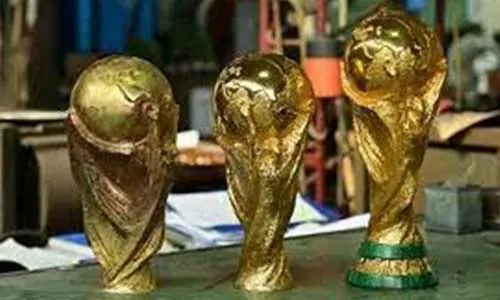
The ultimate dream of every professional football player is to lift the gold trophy at the end of the world’s most celebrated tournament. As global excitement builds and preparations intensify for the historic FIFA World Cup 2026, many fans find themselves wondering about the secrets, history, and protocols surrounding football’s ultimate prize.Does the winning country actually get to take the solid gold masterpiece home? Who owns the rights to this multi-million dollar icon, and where is it kept during the years between tournaments?
In addition to being a masterpiece of modern art, the trophy’s journey is filled with tales of high-stakes theft, wartime drama, and strict rules of custody. This comprehensive guide explores the complete history of the FIFA World Cup Trophy, explaining who really keeps the original cup and how the upcoming tournament will showcase this legendary symbol.
1. The Legendary Jules Rimet Trophy: Where It All Began
To appreciate the rules governing today’s prize, we must travel back to 1930. When the inaugural global tournament was launched by FIFA’s pioneering president, Jules Rimet, the governing body commissioned a distinct symbol of victory. Designed by the French sculptor Abel Lafleur, the original trophy was initially named “Victory”.
The statuette depicted Nike, the ancient Greek goddess of victory, holding an octagonal chalice aloft. It was crafted from gold-plated sterling silver and sat on a base of lapis lazuli, a deep-blue semi-precious stone. Consequently, it stood as a beacon of global football supremacy for several decades.
In 1946, the trophy was renamed the “Jules Rimet Cup” to honor the man whose vision brought the global tournament to life. Under the rules established during this era, a unique clause existed: any nation that won the tournament three times would earn the right to keep the original trophy permanently.
Brazil achieved this monumental feat in 1970 after winning their third title in Mexico under the leadership of Pelé. Therefore, FIFA officially and permanently awarded the Jules Rimet Trophy to the Brazilian Football Confederation (CBF). This historic transition paved the way for the tournament’s modern era, leading all the way to the highly anticipated FIFA World Cup 2026.
2. The Great Trophy Heists: A History of Drama
The historical path of the original trophy was not an easy one. During World War II, Ottorino Barassi, the Italian Vice-President of FIFA, secretly removed the trophy from a bank vault in Rome. To prevent it from falling into the hands of occupying forces, he hid it inside a shoebox under his bed for several years.
In 1966, the Jules Rimet Trophy was stolen from an public exhibition hall in Westminster, London, just months before the tournament began in England. A nationwide hunt ensued, ending successfully when a mixed-breed dog named Pickles discovered the gold package wrapped in newspaper under a garden hedge in South London.
Unfortunately, the trophy’s luck ran out in 1983. While housed in the headquarters of the Brazilian Football Confederation in Rio de Janeiro, thieves broke through a wooden protective frame and stole the original cup. It was never recovered, and historians widely believe the thieves melted the solid gold down into bullion.
As a result, security concerns have intensified with each passing era, leading to unprecedented logistical planning for the upcoming FIFA World Cup 2026. FIFA resolved to change the design and the rules of custody to ensure such losses would never happen again.
3. The Modern Masterpiece: The Silvio Gazzaniga Design
Following Brazil’s permanent acquisition of the Jules Rimet Trophy in 1970, FIFA had to commission a brand-new design for the 1974 tournament. The governing body launched a design competition, receiving 53 submissions from sculptors across 17 countries.
The winning concept was submitted by Italian artist Silvio Gazzaniga, who worked for the renowned GDE Bertoni trophy manufacturing company in Milan. Gazzaniga’s design departed from the traditional representation of victory goddesses, opting instead to focus on human connection and global triumph.
The current trophy depicts two stylized human figures emerging from the base to hold up a physical globe. This majestic design, which captures the joy of victory, will once again be the center of attention on the world stage during the FIFA World Cup 2026.
Physically, the contemporary trophy stands 36.8 centimeters (14.5 inches) tall and weighs precisely 6.175 kilograms (13.61 pounds). It is composed of 18-karat solid gold, sitting on a base of two concentric rings of malachite, a vibrant green mineral.
4. Who Keeps the Original Trophy? The Modern Golden Rule
Under the current regulations of FIFA, the original solid gold trophy is never given to a winning country to keep permanently. Unlike the Jules Rimet era, winning the tournament multiple times does not grant ownership. The physical ownership remains exclusively with the International Federation of Association Football (FIFA) at all times.
During the final whistle and the ensuing pitch celebration, the victorious team is handed the authentic solid gold trophy. However, this is only for the cameras and the immediate post-match ceremony. Before the team departs the stadium, the original trophy is reclaimed by FIFA officials.
In addition, this policy guarantees that the actual solid gold trophy never stays in any nation’s permanent possession, a rule that remains absolute for the winners of the FIFA World Cup 2026. Instead of the solid gold masterpiece, the team that triumphs in the FIFA World Cup 2026 will receive a meticulously crafted replica to take back to their home country.
This replica, officially known as the “FIFA World Cup Winner’s Trophy,” is made of gold-plated bronze or brass rather than solid gold. It features an engraved plaque highlighting the year, the tournament edition, and the winning country’s name, serving as a permanent exhibition piece for the nation’s football museum.
5. How the Modern Trophy Evolves Leading into FIFA World Cup 2026
The expansion of the global tournament introduces dramatic changes to how football’s ultimate symbol is managed. With the tournament expanding to include 48 teams across three host nations, the journey of the prize leading up to the FIFA World Cup 2026 represents a massive logistical effort.
Canada, Mexico, and the United States will share hosting duties, which means the trophy must cross international borders multiple times during promotional tours and public viewings. Consequently, the traveling schedule requires absolute precision.
In addition, the physical base of the trophy undergoes subtle modifications over time. The bottom of the trophy is engraved with the names of all winning nations since 1974. The names are arranged in a spiral pattern, written in the native language of each victorious country.
According to recent reports from GDE Bertoni, the base of the current trophy has enough physical space to accommodate the names of winners up until the 2038 edition of the tournament. Therefore, the name of the country that triumphs in the FIFA World Cup 2026 will be engraved directly onto the solid gold original before it is returned to the vault.
6. Why the Security Rules Matter for FIFA World Cup 2026
To avoid the security failures of the past, FIFA has put in place incredibly strict guidelines regarding who is allowed to handle the authentic trophy. Only a very select group of people in the world are officially permitted to touch the original solid gold cup with their bare hands.
This elite group includes former World Cup winners, current team captains during the presentation, and active Heads of State. Security staff, museum curators, and logistics experts must wear protective white gloves whenever they handle the item during its travels.
Therefore, the governing body restricts physical handling of the original piece to a very exclusive group, a policy that will be rigidly enforced during the final ceremonies of the FIFA World Cup 2026. The trophy is transported in a custom-designed, armored travel case created by the luxury brand Louis Vuitton, highlighting its status as one of the most protected objects in global culture.
7. Fascinating Trophy Facts for the FIFA World Cup 2026 Era
To understand the sheer magnitude of what is at stake, let us look at some of the most captivating facts that will surround the prize during the FIFA World Cup 2026. Below is a detailed historical comparison between the two trophies that have defined world football:
| Feature | Jules Rimet Trophy (1930–1970) | FIFA World Cup Trophy (1974–Present) |
|---|---|---|
| Primary Sculptor | Abel Lafleur (France) | Silvio Gazzaniga (Italy) |
| Height | 35 centimeters (13.8 inches) | 36.8 centimeters (14.5 inches) |
| Total Weight | 3.8 kilograms (8.4 lbs) | 6.175 kilograms (13.6 lbs) |
| Composition Material | Gold-plated sterling silver & lapis lazuli | 18-karat solid gold & malachite |
| Current Custody | Stolen in 1983 (believed melted down) | Permanently stored at FIFA Museum in Zurich |
In addition to the physical specs, here are some key trivia notes to keep in mind:
- Is It Hollow or Solid? Indeed, if the trophy were entirely solid gold, it would weigh far too much (roughly 70-80 kg) to be lifted comfortably by the victorious captain. It is actually hollow in the center to allow for realistic celebrations.
- Who Maintains the Trophy? Every four years, the original trophy returns to the GDE Bertoni workshop in Italy to undergo a deep cleaning, polishing, and restoration before the next world tour.
- The Unique Replica Case: The official replica given to the winning nation is the only one authorized by FIFA. Any attempt to create commercial look-alikes is highly regulated under trademark laws.
8. The Economic and Symbolic Value of the Trophy
The material worth of the trophy is staggering, but its historical and cultural valuation is practically immeasurable. The current design contains approximately 4,927 grams of pure gold. While the raw gold itself is valued at hundreds of thousands of dollars, the trophy’s cultural importance elevates its true market value.
Indeed, prominent sports appraisers and auction experts value the original FIFA World Cup Trophy at approximately $20 million USD. The material worth, combined with its cultural significance, makes it one of the most guarded physical objects on Earth as we head toward the FIFA World Cup 2026.
Consequently, FIFA has opted to store this priceless historical artifact in their high-security vault in Zurich, Switzerland, when it is not on official display. It only makes public appearances during carefully coordinated World Cup Trophy Tours and the opening and closing matches of the main tournament.
9. Conclusion: A Symbol of Unity and Glory
The journey of the World Cup trophy from the early days of Abel Lafleur’s Jules Rimet design to the iconic golden globe of Silvio Gazzaniga reflects the growth of football into a truly global religion. While winning nations no longer get to display the original solid gold cup in their local trophy cabinets, the gold-plated replica they take home represents the absolute pinnacle of sporting achievement.
In conclusion, the trophy is not just a piece of gold; it is a historical artifact that unites billions of fans, a sentiment that will be felt deeply during the FIFA World Cup 2026. With three major nations hosting the next grand event, the ultimate battle for this $20 million gold icon promises to write another legendary chapter in sports history.
Who Will Lift the Gold in 2026?
Which team will overcome the challenges of a 48-team tournament and hoist the iconic trophy? Share your tournament predictions in the comments below, and join the conversation!
Reliable External Resources:
- For official updates and tournament planning, visit the Official FIFA Website.
- Explore detailed historical archives and timeline on the Wikipedia FIFA World Cup Trophy History page.
Frequently Asked Questions (FAQ)
Q1: Will the winning team of the FIFA World Cup 2026 keep the actual solid gold trophy?
No, the winners do not get to keep the original trophy. Following the pitch celebrations, the solid gold cup is returned to FIFA, and the champions are given a gold-plated bronze replica to keep.
Q2: Where is the original trophy stored during the years leading up to the FIFA World Cup 2026?
The authentic trophy is permanently stored under high security at the FIFA Museum in Zurich, Switzerland. It only leaves the headquarters on special promotional events and the official World Cup Trophy Tour.
Q3: Who is officially authorized to touch the original trophy at the FIFA World Cup 2026 final?
Under strict security guidelines, only tournament champions (players and managers) and active Heads of State are allowed to touch the solid gold trophy with bare hands. All other support staff must wear white gloves.
Q4: What is the estimated monetary value of the trophy ahead of the FIFA World Cup 2026?
While the raw 18-karat gold of the trophy is worth several hundred thousand dollars, its cultural and historical significance makes its market valuation approximately $20 million USD.
Q5: How has the expansion of the tournament affected the trophy tour for the FIFA World Cup 2026?
With 48 teams competing across Canada, Mexico, and the United States, the trophy tour has expanded significantly. FIFA logistics teams coordinate advanced cross-border security protocols to transport the physical prize across North American regions.
Q6: Why is the modern World Cup trophy hollow on the inside?
The current trophy is engineered with a hollow interior. If it were solid 18-karat gold all the way through, it would weigh approximately 70-80 kg, making it impossible for athletes to safely lift above their heads.