FIFA World Cup 2026 Venues: Iconic Stadiums Hosting the Tournament
This comprehensive guide to the FIFA World Cup 2026 venues details the capacities, historical contexts, and critical matches scheduled for each arena. Whether you are planning your travel itinerary or following along from home, these architectural masterpieces are ready to make history.
Table of Contents
- A Historic Expansion: What Makes the FIFA World Cup 2026 Unique?
- Analyzing the United States Venues for the FIFA World Cup 2026
- Legendary Arenas: The Mexico and Canada Stadiums of the FIFA World Cup 2026
- Comparison Table of All 16 Venues
- Logistics and Travel Planning for the FIFA World Cup 2026
- Frequently Asked Questions About the FIFA World Cup 2026
- Conclusion: Embracing the FIFA World Cup 2026
A Historic Expansion: What Makes the FIFA World Cup 2026 Unique?
The upcoming tournament is groundbreaking in more ways than one. By shifting from the traditional 32-team format to a massive 48-team roster, the FIFA World Cup 2026 is opening the doors for more nations to experience the magic of the tournament. Consequently, the sheer scale of the event demands a highly advanced infrastructure, which is why the combined North American bid was chosen.
In addition to the increased number of teams, the geographical footprint of the event is immense. The host cities span four distinct time zones, presenting a unique operational challenge. Therefore, understanding the regional distributions of the matches is vital for teams and fans alike.
To help you keep track of all the developments, you can check out the official FIFA World Cup 2026 schedule to see how the group and knockout fixtures are distributed across North America.
Analyzing the United States Venues for the FIFA World Cup 2026
The United States is home to 11 of the 16 host stadiums. Most of these venues are state-of-the-art arenas originally built for the National Football League (NFL). These stadiums are well-equipped to handle the massive crowds and rigorous safety standards required for the tournament.
1. Dallas Stadium (AT&T Stadium) – Arlington, Texas
Dallas Stadium is a marvel of modern sports architecture. Boasting a standard tournament capacity of 70,122 (which can expand to over 90,000), it features a fully retractable roof and a giant, center-hung high-definition video board. Furthermore, Dallas has been selected to host nine matches during the FIFA World Cup 2026, including a highly anticipated semifinal fixture on July 14, 2026.
2. New York New Jersey Stadium (MetLife Stadium) – East Rutherford, New Jersey
Located just across the river from Manhattan, this massive open-air venue is the premier arena of the tournament. With an official tournament capacity of 82,500, this stadium will host eight matches. Most notably, it will serve as the battleground for the prestigious FIFA World Cup 2026 Final on July 19, 2026.
3. Los Angeles Stadium (SoFi Stadium) – Inglewood, California
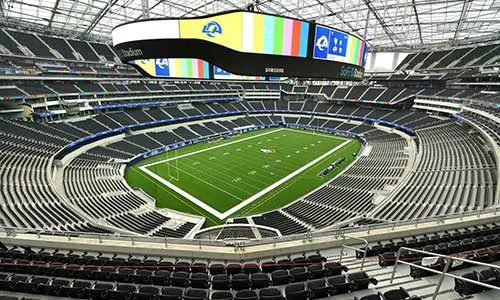
Representing a flagship hub for the FIFA World Cup 2026, Los Angeles Stadium features a translucent roof canopy and the double-sided 4K “Infinity Screen” by Samsung. With a tournament capacity of 70,240, this venue will host eight matches, including the US Men’s National Team’s (USMNT) opening match on June 12, 2026.
4. Atlanta Stadium (Mercedes-Benz Stadium) – Atlanta, Georgia
This stadium is renowned for its pinwheel retractable roof and iconic 360-degree halo video board. Holding a LEED Platinum green building certification, it accommodates 67,382 spectators for the tournament. Atlanta will host eight matches, including a high-stakes semifinal on July 15, 2026.
5. Boston Stadium (Gillette Stadium) – Foxborough, Massachusetts
Boston Stadium has a capacity of 63,815 and features a recently renovated signature lighthouse and a massive outdoor curved video board. The arena has staged matches during previous tournaments and will continue that legacy during the FIFA World Cup 2026, hosting seven matches, including key knockout rounds.
6. Houston Stadium (NRG Stadium) – Houston, Texas
Houston Stadium is an engineering milestone, known as the first NFL venue to feature a retractable roof. With a seating capacity of 72,220, this stadium offers an intense, air-conditioned environment during the hot summer months. It will host seven matches, including several crucial knockout games.
7. Kansas City Stadium (Arrowhead Stadium) – Kansas City, Missouri
Kansas City Stadium holds the Guinness World Record for the loudest outdoor sports arena, reaching a deafening 142.2 decibels. Boasting a tournament capacity of 73,000, this legendary venue will host six matches, including a quarterfinal on July 11, 2026, where the atmosphere is bound to be electric.
8. Miami Stadium (Hard Rock Stadium) – Miami Gardens, Florida
Miami Stadium is a multi-purpose venue featuring a massive open-air canopy that protects fans from the elements. With a tournament capacity of 64,767, it will host seven matches, including the bronze medal match on July 18, 2026. The city’s strong multicultural identity will make it a vibrant party zone.
9. Philadelphia Stadium (Lincoln Financial Field) – Philadelphia, Pennsylvania
This eco-friendly stadium has a capacity of 69,796 and is powered in part by 11,000 solar panels and 14 wind turbines. It will host six matches, bringing the global game to one of America’s most historic cities as the nation simultaneously celebrates its 250th anniversary in 2026.
10. San Francisco Bay Area Stadium (Levi’s Stadium) – Santa Clara, California
Located in the heart of Silicon Valley, this highly technological stadium has a tournament capacity of 68,500. It is designed to be highly sustainable, featuring a green roof and advanced eco-friendly irrigation systems. The venue will host six matches during the tournament.
11. Seattle Stadium (Lumen Field) – Seattle, Washington
Seattle Stadium is famous for its unique acoustic design, where overhanging roofs help bounce crowd noise back onto the pitch. With a tournament capacity of 69,000, the stadium will host six matches, making it a highly anticipated stop for fans during the FIFA World Cup 2026, especially for the USMNT’s second group-stage match.
Legendary Arenas: The Mexico and Canada Stadiums of the FIFA World Cup 2026
While the United States hosts the majority of the matches, some of the tournament’s most culturally significant moments will occur in Mexico and Canada, adding cultural depth and unparalleled passion to the FIFA World Cup 2026.
Mexico: A Soccer Heartland
Football is deeply woven into the cultural fabric of Mexico. Consequently, the three selected stadiums are prepared to deliver unparalleled passion and historical atmosphere.
12. Mexico City Stadium (Estadio Azteca) – Mexico City
No stadium in the world carries the historical weight of Estadio Azteca. Having hosted the World Cup finals in 1970 and 1986, it will make history as the first venue to host matches in three separate tournament editions. With a tournament capacity of 72,766, it will host the official opening match of the FIFA World Cup 2026 on June 11, featuring Mexico against South Africa.
13. Guadalajara Stadium (Estadio Akron) – Zapopan, Jalisco
Guadalajara Stadium is one of the most architecturally striking arenas in the world. Designed to look like an exploding volcano, the exterior slopes are covered in natural grass. With a tournament capacity of 44,330, it will host four matches, making it a visually unique setting for the FIFA World Cup 2026.
14. Monterrey Stadium (Estadio BBVA) – Guadalupe, Nuevo León
Commonly referred to as “El Gigante de Acero” (The Steel Giant), Monterrey Stadium is famous for its stunning backdrop of the Cerro de la Silla mountain. With a capacity of 50,113, this ultra-modern venue offers breathtaking sightlines and will host four matches, promising an unforgettable experience for fans during the FIFA World Cup 2026.
Canada: Expanding the Football Frontier
Canada will host the men’s tournament for the first time in history, utilizing two premier venues that have undergone significant preparations to meet elite requirements.
15. Toronto Stadium (BMO Field) – Toronto, Ontario
Toronto Stadium is the most intimate venue in the tournament, with its capacity expanded to approximately 44,315 for the FIFA World Cup 2026. Located right on the shores of Lake Ontario, this stadium will host six matches, including Canada’s opening fixture on June 12, 2026. Its close proximity to downtown offers fans a fantastic matchday experience.
16. Vancouver Stadium (BC Place) – Vancouver, British Columbia
Vancouver Stadium features a state-of-the-art retractable roof system and a massive center-hung scoreboard. Boasting a tournament capacity of 48,821, it is the northernmost venue of the competition and is expected to provide the coolest environmental conditions during the summer matches of the FIFA World Cup 2026. It will host seven matches, including Canada’s second and third group fixtures.
Comparison Table of All 16 Venues
To help you compare the stadiums, we have compiled a quick reference table showing the location, capacity, and major match roles of each venue hosting matches in the tournament.
| Official Venue Name | Host City & Country | Tournament Capacity | Key Match / Role |
|---|---|---|---|
| New York New Jersey Stadium | East Rutherford, USA | 82,500 | World Cup Final (July 19) |
| Mexico City Stadium | Mexico City, Mexico | 72,766 | Opening Match (June 11) |
| Dallas Stadium | Arlington, USA | 70,122 | Semifinal (July 14) |
| Atlanta Stadium | Atlanta, USA | 67,382 | Semifinal (July 15) |
| Los Angeles Stadium | Inglewood, USA | 70,240 | USMNT Opening Match (June 12) |
| Miami Stadium | Miami Gardens, USA | 64,767 | Bronze Medal Match (July 18) |
| Boston Stadium | Foxborough, USA | 63,815 | 7 Matches (Knockouts) |
| Houston Stadium | Houston, USA | 72,220 | 7 Matches (Knockouts) |
| Kansas City Stadium | Kansas City, USA | 73,000 | Quarterfinal (July 11) |
| Philadelphia Stadium | Philadelphia, USA | 69,796 | 6 Matches (Round of 16) |
| San Francisco Bay Area Stadium | Santa Clara, USA | 68,500 | 6 Matches (Knockouts) |
| Seattle Stadium | Seattle, USA | 69,000 | USMNT Match 2 (June 19) |
| Guadalajara Stadium | Zapopan, Mexico | 44,330 | 4 Group Stage Matches |
| Monterrey Stadium | Guadalupe, Mexico | 50,113 | 4 Group Stage Matches |
| Toronto Stadium | Toronto, Canada | 44,315 | Canada Opening Match (June 12) |
| Vancouver Stadium | Vancouver, Canada | 48,821 | 7 Matches (Knockouts) |
Logistics and Travel Planning for the FIFA World Cup 2026
Navigating three different host countries requires a high degree of preparation. Fans planning to follow their teams across multiple regions must keep travel distances and international border crossings in mind. Consequently, preparing your travel itinerary for the FIFA World Cup 2026 requires careful planning.
In addition, public transportation setups differ significantly between the host cities. For example, Dallas Stadium (AT&T Stadium) has no direct light rail access, meaning fans will need to rely on host-committee shuttles or ride-share apps. On the other hand, stadiums like Toronto Stadium (BMO Field) and Vancouver Stadium (BC Place) are incredibly walkable and heavily integrated with local rapid transit systems.
If you are still finalizing your travel arrangements, make sure you know how to buy World Cup 2026 tickets through official and verified channels before starting your journey.
Frequently Asked Questions About the FIFA World Cup 2026
Q1: What is the opening match of the FIFA World Cup 2026?
The opening match of the FIFA World Cup 2026 will take place on June 11, 2026, at the historic Mexico City Stadium (Estadio Azteca), featuring the Mexican national team playing against South Africa.
Q2: Where will the final of the FIFA World Cup 2026 be played?
The final of the FIFA World Cup 2026 will be played on July 19, 2026, at the New York New Jersey Stadium (MetLife Stadium) located in East Rutherford, New Jersey.
Q3: Why are the stadiums named differently for the tournament?
FIFA requires that stadium names be free of corporate sponsorship during the tournament unless the brand is an official FIFA partner. Consequently, commercial names are replaced with neutral geographical titles, such as “Dallas Stadium” instead of AT&T Stadium.
Q4: How many teams are participating in the tournament?
A total of 48 national teams are participating in the tournament, representing a historic expansion from the previous 32-team format.
Q5: Are there any newly built stadiums constructed specifically for this World Cup?
No new stadiums were constructed solely for the tournament. Instead, the venues are existing world-class arenas that have received major renovations to meet strict FIFA regulations, particularly regarding pitch sizes and grass surface conditions.
Q6: How can I check which teams are qualified?
To view the final roster of competing nations, you can read our detailed breakdown of the qualified teams for the tournament.
Conclusion: Embracing the FIFA World Cup 2026
Ultimately, the FIFA World Cup 2026 is set to write an incredible new chapter in sports history. The selection of these 16 spectacular venues ensures that players and spectators alike will experience top-tier facilities, electric atmospheres, and distinct regional hosting styles.
As the tournament countdown ticks away, make sure you are fully prepared to follow the action. For updates, ticketing alerts, and more structural guides, visit the Official FIFA World Cup Portal and keep up to date with regional developments on the CONCACAF Official Site.
Join the Discussion!
Which stadium are you most excited to see host a match during the tournament? Leave a comment below or share this guide with your fellow football fans!