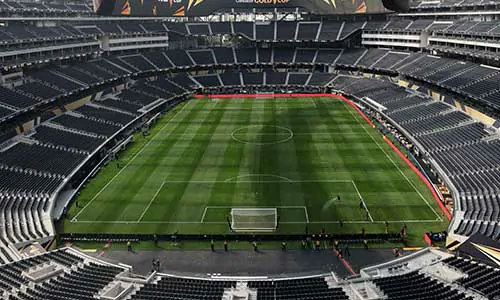
With the opening whistle scheduled for June 11, 2026, millions of fans are planning journeys across North America. Navigating this vast sports spectacle requires detailed knowledge of the tournament’s playing fields. Consequently, understanding the locations, structural highlights, and seating plans of the tournament is vital. This guide provides a detailed breakdown of all 16 host stadiums to ensure your matchday experience is seamless.
Table of Contents
- An Overview of the FIFA World Cup 2026 Host Nations
- Canada’s Host Venues
- Mexico’s Historic Arenas
- The United States’ Modern Coloseums
- Complete FIFA World Cup 2026 Stadium Table
- Sustainability and Technological Advancements
- Logistics and Travel Planning
- Conclusion & Call to Action
- Frequently Asked Questions About the FIFA World Cup 2026
An Overview of the FIFA World Cup 2026 Host Nations
Organizing a tournament of this scale is a massive collaborative effort. Each host nation brings a unique cultural heritage and soccer history. Mexico holds the distinction of being the first country to host or co-host the tournament three times, having previously hosted in 1970 and 1986. Their legendary venues are deeply rooted in global football folklore.
On the other hand, the United States is hosting the men’s tournament for the second time, with its first occurrence in 1994. The country boasts massive, high-tech stadiums that routinely host major sporting spectacles like the Super Bowl. In addition, Canada is making its debut as a men’s World Cup co-host, having successfully organized the FIFA Women’s World Cup in 2015. Therefore, the combination of these three nations offers an incredible variety of environments for fans and players.
Key Changes in the FIFA World Cup 2026 Format
The expansion from 32 to 48 teams has significantly altered the tournament’s structure. Instead of the traditional 64 matches, the FIFA World Cup 2026 will feature 104 matches. This change ensures that more nations have the opportunity to compete on the global stage. Consequently, the group stage will consist of 12 groups of four teams each, with the top two teams and the eight best third-place teams advancing to a new Round of 32.
To manage this massive schedule, FIFA has grouped the matches regionally. This planning helps minimize travel fatigue for players and reduce the carbon footprint for fans. The tournament is divided into Western, Central, and Eastern regions. This division ensures that teams and their supporters remain within logical geographic corridors during the early stages of the competition.
Canada’s Host Venues
Canada’s contribution to the tournament is centered in two vibrant metropolitan hubs. Both selected venues have a history of staging major sports events and are fully prepared to welcome international fans.
1. Toronto Stadium (BMO Field)
Located in Toronto’s Exhibition Place, Toronto Stadium is Canada’s premier soccer-specific venue. Originally built in 2007, the stadium is undergoing temporary expansions to increase its capacity to approximately 45,000 seats. It has a classic layout, with steep stands that bring spectators close to the pitch.
The stadium is highly accessible via public transit, linking fans directly to downtown Toronto. Because of its location near Lake Ontario, evening matches can experience cool lake breezes. This makes it a pleasant environment for both players and spectators during the summer heat.
2. BC Place Vancouver
BC Place in Vancouver is famous for its distinctive cable-supported retractable roof, which is the largest of its kind in the world. Nestled along the False Creek waterfront, this stadium has a tournament capacity of approximately 54,000. It has hosted several major events, including the 2015 Women’s World Cup Final.
For the tournament, a temporary natural grass surface is being installed over the stadium’s synthetic turf. The venue’s excellent public transport connections make it easy for fans to access the stadium from anywhere in the metropolitan area, enhancing the spectator experience.
Mexico’s Historic Arenas
Mexico’s three selected venues offer a mix of historic prestige and modern design. Football is deeply woven into the country’s culture, ensuring an incredibly passionate atmosphere at every match.
3. Estadio Azteca Mexico City
No stadium in world football carries more historic weight than Estadio Azteca in Mexico City. Having hosted the historic finals of 1970 and 1986, this legendary venue is undergoing massive renovations to prepare for its third World Cup. It features a tournament capacity of 72,766.
The stadium is located at an altitude of over 2,200 meters. This high altitude presents a unique physical challenge for visiting players. However, the electric atmosphere generated by local fans makes it one of the most iconic sporting environments in the world.
4. Estadio Guadalajara (Estadio Akron)
Located in Zapopan near Guadalajara, this modern stadium is famous for its striking architectural design. The exterior resembles a grass-covered volcano, with a white canopy roof that looks like a cloud floating above it. It has a tournament capacity of 44,330.
The stadium is designed to provide excellent sightlines from every seat. It features modern amenities, ample parking, and comfortable hospitality spaces, making it a favorite venue for domestic and international matches alike.
5. Estadio Monterrey (Estadio BBVA)
Estadio Monterrey, nicknamed “The Steel Giant” (El Gigante de Acero), is one of the most visually stunning venues in North America. Located in Guadalupe, Nuevo León, the stadium offers spectacular views of the nearby Cerro de la Silla mountain. It has a tournament capacity of 50,113.
The stadium features a metallic exterior structure that pays tribute to Monterrey’s industrial history. It is equipped with advanced sustainable features, including water-recycling systems and energy-efficient lighting, ensuring it meets strict modern standards.
The United States’ Modern Coloseums
The United States features the largest number of venues for the tournament. These eleven NFL stadiums offer massive capacities and top-tier hospitality features, representing the cutting edge of sports venue design.
6. Atlanta Stadium (Mercedes-Benz Stadium)
Atlanta’s signature stadium is famous for its unique eight-panel retractable roof that opens like a camera lens. It also features a massive 360-degree halo video board that circles the top of the bowl. The stadium will accommodate approximately 67,382 spectators for the tournament.
To meet FIFA’s strict requirements, the stadium is installing a temporary natural grass system on top of its artificial surface. The venue is centrally located in downtown Atlanta, offering easy access to hotels, restaurants, and public transit.
7. Boston Stadium (Gillette Stadium)
Located in Foxborough, Massachusetts, Boston Stadium serves as the home of the NFL’s New England Patriots. The stadium features a distinct lighthouse and bridge feature in the north end zone. It has a tournament capacity of 63,815.
The stadium is undergoing major renovations, including updates to its video boards and hospitality spaces, to prepare for the matches. It is located about 30 miles from downtown Boston, with special commuter trains running on matchdays to transport fans.
8. Dallas Stadium (AT&T Stadium)
Dallas Stadium in Arlington, Texas, is one of the largest and most luxurious venues in the world. It features a retractable roof and a massive suspended high-definition screen that stretches over 170 feet. The tournament capacity is listed at approximately 70,122, but can expand to hold over 90,000 fans.
The stadium will host a highly anticipated semifinal match. To prepare for the tournament, the venue is raising its playing surface to accommodate a wider grass pitch that meets FIFA dimensions. This modification ensures a premium experience for players and fans alike.
9. Houston Stadium (NRG Stadium)
Houston Stadium is famous for being the first NFL stadium built with a retractable roof. It has hosted several major international soccer events, including Copa América matches. The stadium has a tournament capacity of 72,220.
Like other turf venues, Houston Stadium is installing a temporary natural grass pitch for the tournament. The venue features excellent air conditioning systems, which will keep spectators comfortable during the warm summer months in Texas.
10. Kansas City Stadium (Arrowhead Stadium)
Kansas City Stadium is famous for its intense crowd noise, holding the Guinness World Record for the loudest outdoor sports stadium. The open-air venue has a tournament capacity of 73,000.
To meet FIFA pitch regulations, the stadium is undergoing minor seating modifications in the corners to widen the playing area. Located a few miles from downtown Kansas City, the venue is surrounded by massive parking lots that are perfect for pre-match fan gatherings.
11. Los Angeles Stadium (SoFi Stadium)
Located in Inglewood, California, Los Angeles Stadium is a modern architectural masterpiece. It features a translucent canopy roof and a massive double-sided “Infinity Screen” that hangs over the field. It has a tournament capacity of 70,000.
The stadium is undergoing seating modifications in the corners to accommodate a wider soccer pitch. The venue’s modern design and close proximity to Los Angeles International Airport make it highly convenient for international travelers.
12. Miami Stadium (Hard Rock Stadium)
Miami Stadium in Miami Gardens, Florida, has extensive experience hosting international soccer matches, including several Copa América games. The stadium features a massive shade canopy that covers 90% of the spectator seats, while keeping the pitch open to sunlight. It has a tournament capacity of 64,767.
The stadium’s vibrant, multi-cultural location makes it an ideal host for international teams. It is equipped with premium hospitality clubs and outdoor viewing plazas, ensuring a festive environment on matchdays.
13. New York New Jersey Stadium (MetLife Stadium)
Located in East Rutherford, New Jersey, this massive open-air stadium has been confirmed as the venue for the highly anticipated final match of the FIFA World Cup 2026. It has a tournament capacity of 82,500.
The stadium has hosted major events, including the Copa América Centenario Final. It features excellent sightlines and is connected to New York City via a dedicated rail link, making it easily accessible for international travelers.
14. Philadelphia Stadium (Lincoln Financial Field)
Philadelphia Stadium is renowned for its eco-friendly design, featuring over 11,000 solar panels and wind turbines that generate clean energy for the venue. The stadium has a tournament capacity of 69,796.
Located in the South Philadelphia Sports Complex, the stadium is highly accessible via public transit. It offers clear sightlines from every seat, ensuring a fantastic viewing experience for fans.
15. San Francisco Bay Area Stadium (Levi’s Stadium)
Located in Santa Clara, California, this stadium is a showcase of sustainable design. It features a green roof planted with native species and a solar-paneled terrace. The stadium has a tournament capacity of 68,500.
The venue is equipped with advanced technology systems, offering fans fast Wi-Fi connectivity and easy mobile ordering options. It is well-connected to the surrounding region via light rail and commuter trains, making it easy to access.
16. Seattle Stadium (Lumen Field)
Seattle Stadium is located just south of downtown Seattle. It features a vertical seating structure with overhanging roofs that channel crowd noise onto the field. The stadium has a tournament capacity of 69,000.
The venue is installing a temporary natural grass pitch to meet tournament standards. Its downtown location offers fans easy access to local restaurants, hotels, and tourist attractions like the Pike Place Market.
Complete FIFA World Cup 2026 Stadium Table
Below is a quick reference table showing the official tournament names, locations, and seating capacities for all 16 host stadiums:
| Official Tournament Name | Common / Local Name | Host City & Country | Tournament Capacity |
|---|---|---|---|
| Toronto Stadium | BMO Field | Toronto, Canada | 45,000 |
| BC Place Vancouver | BC Place | Vancouver, Canada | 54,000 |
| Estadio Azteca Mexico City | Estadio Azteca | Mexico City, Mexico | 72,766 |
| Estadio Guadalajara | Estadio Akron | Guadalajara, Mexico | 44,330 |
| Estadio Monterrey | Estadio BBVA | Monterrey, Mexico | 50,113 |
| Atlanta Stadium | Mercedes-Benz Stadium | Atlanta, USA | 67,382 |
| Boston Stadium | Gillette Stadium | Boston, USA | 63,815 |
| Dallas Stadium | AT&T Stadium | Dallas, USA | 70,122 |
| Houston Stadium | NRG Stadium | Houston, USA | 72,220 |
| Kansas City Stadium | Arrowhead Stadium | Kansas City, USA | 73,000 |
| Los Angeles Stadium | SoFi Stadium | Los Angeles, USA | 70,000 |
| Miami Stadium | Hard Rock Stadium | Miami, USA | 64,767 |
| New York New Jersey Stadium | MetLife Stadium | New York / New Jersey, USA | 82,500 |
| Philadelphia Stadium | Lincoln Financial Field | Philadelphia, USA | 69,796 |
| San Francisco Bay Area Stadium | Levi’s Stadium | San Francisco, USA | 68,500 |
| Seattle Stadium | Lumen Field | Seattle, USA | 69,000 |
Sustainability and Technological Advancements
A core priority for the tournament organizers is minimizing the environmental impact of the event. Consequently, several stadiums feature advanced green designs. Many of the stadiums have earned LEED (Leadership in Energy and Environmental Design) gold certifications. For example, Levi’s Stadium in Santa Clara uses reclaimed water for field irrigation, and Lincoln Financial Field in Philadelphia is powered by local wind and solar installations.
Moreover, modern technological innovations will dramatically enhance the fan experience inside the stadiums. High-density Wi-Fi networks, mobile ordering apps, and cashless payment options are standard across all US venues. In addition, real-time transportation updates will help fans navigate matchdays easily, reducing traffic and long waits at transit hubs.
Ultimately, these venues are setting a new standard for sustainable sports architecture. By combining green energy solutions with smart technologies, the tournament organizers aim to deliver an environmentally responsible global sporting event.
Logistics and Travel Planning
Because the tournament is spread across three countries, travel planning requires careful coordination. To assist you in preparing for this historic event, we recommend reviewing our comprehensive tournament travel guide, which offers detailed tips on visas, local transit, and accommodation options near each venue.
Furthermore, fans should pay close attention to the official match schedule when planning their itineraries. Since matches are grouped regionally, staying within one region (such as the West Coast or East Coast) during the group stage can help reduce travel times and cost.
Finally, make sure to secure your stadium admission passes only through the official FIFA ticket booking portal to avoid scams. With millions of fans traveling to North America, planning your accommodation and transportation early is essential for a smooth and enjoyable experience.
Conclusion & Call to Action
To summarize, the FIFA World Cup 2026 will showcase some of the most impressive and modern sports venues in the world. From the historic turf of Estadio Azteca in Mexico City to the high-tech innovations of SoFi Stadium in Los Angeles, each venue is ready to offer a unique and memorable experience for football fans worldwide.
As the tournament approaches, staying informed is key to making the most of your journey. Ensure you keep up to date with travel guidelines, security rules, and match schedules by visiting the official FIFA World Cup Portal.
Are you ready for the ultimate football adventure? Subscribe to our newsletter today to receive exclusive stadium guides, local travel tips, and real-time updates directly in your inbox. Don’t miss out on any of the action—join our global community of passionate soccer fans now!
Frequently Asked Questions About the FIFA World Cup 2026
Which stadium will host the FIFA World Cup 2026 final match?
The final match of the tournament will be held at the New York New Jersey Stadium, commonly known as MetLife Stadium, located in East Rutherford, New Jersey.
Are all host stadiums using natural grass for the matches?
Yes, FIFA requires all matches to be played on high-quality natural grass. Stadiums that normally use artificial turf are installing temporary natural grass systems for the tournament.
How many host cities are there in the FIFA World Cup 2026?
The tournament will be hosted in 16 cities across North America: 11 in the United States, 3 in Mexico, and 2 in Canada.
What is the largest stadium by capacity in the tournament?
Dallas Stadium (AT&T Stadium) features the largest potential capacity, which can expand to over 90,000 seats for major sporting events.
Will public transportation be available to the venues?
Yes, most host cities are providing dedicated public transit services, shuttle buses, and park-and-ride systems to help fans access the stadiums easily on matchdays.
Is this the first time three nations are hosting the World Cup?
Yes, this is the first tournament in history to be jointly hosted by three countries: Canada, Mexico, and the United States.