FIFA World Cup 2026 Format: How the New 48-Team Tournament Works
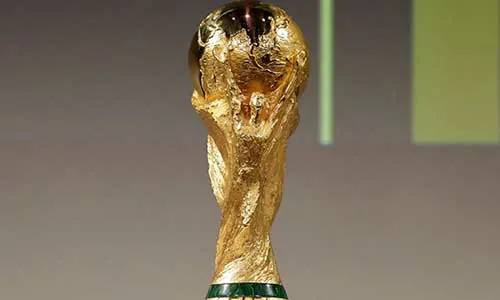
The global football landscape is experiencing its most monumental shift in decades, and the FIFA World Cup 2026 is the centerpiece of this transformation. This year, the tournament breaks away from traditional structures to deliver an expanded, highly inclusive, and action-packed tournament. Historically hosted in single or dual nations, this edition of the FIFA World Cup 2026 is co-hosted by three giants of North America: Canada, Mexico, and the United States.With the opening match scheduled in Mexico City on June 11, 2026, fans around the world are preparing for a massive festival of sport. This grand tournament marks the debut of a brand-new 48-team structure, a format engineered to give more countries the opportunity to shine on the global stage. If you are wondering how the expanded matches, new knockout rounds, and complex group permutations will work, you have come to the right place.
Table of Contents
- 1. The Road to Expansion: Why the FIFA World Cup 2026 Changed
- 2. New Confederation Slot Allocations
- 3. The FIFA World Cup 2026 Group Stage: 12 Groups of 4 Explained
- 4. How Third-Place Teams Advance in the FIFA World Cup 2026
- 5. The New Round of 32 Knockout Phase
- 6. Key Dates and Venues for the FIFA World Cup 2026
- 7. The Broader Impact: How the New Format Changes the Game
- 8. Frequently Asked Questions (FAQ)
- 9. Conclusion: Embracing a Bold New Era
The Road to Expansion: Why the FIFA World Cup 2026 Changed
The decision to expand the FIFA World Cup 2026 was approved by the FIFA Council back in January 2017. The primary driver behind this expansion was the desire to democratize global football, granting more spots to underrepresented confederations. Consequently, regions like Africa (CAF) and Asia (AFC) have received a significant boost in qualifying allocations, allowing rising football nations to experience the magic of the world’s biggest tournament.
Originally, FIFA officials proposed a structure featuring 16 groups of three teams. However, this model faced heavy criticism from football analysts and fans alike. The primary concern was that three-team groups could encourage collusion or passive play during the final group matches, as one team would sit out while the other two played. Therefore, to protect the competitive sporting integrity of the competition, FIFA modified the plan in March 2023.
The resulting 12-group format maintains the classic four-team dynamic while seamlessly scaling the tournament up. In other words, the FIFA World Cup 2026 will offer a massive 104 matches, compared to the 64 games played during Qatar 2022. This change ensures that every team is guaranteed at least three high-stakes matches, keeping the dramatic final-matchday scenarios that fans around the world love.
New Confederation Slot Allocations
To accommodate 48 countries, FIFA reorganized how qualification slots are distributed across the six continental confederations. This change means that nearly every region has a greater representation, raising the stakes during continental qualifying campaigns.
Below is a breakdown of how the 48 available slots are distributed among the various regional confederations:
- UEFA (Europe): 16 direct slots (up from 13)
- CAF (Africa): 9 direct slots (up from 5)
- AFC (Asia): 8 direct slots (up from 4.5)
- CONMEBOL (South America): 6 direct slots (up from 4.5)
- CONCACAF (North/Central America & Caribbean): 6 direct slots, which includes the three co-host countries: Canada, Mexico, and the United States
- OFC (Oceania): 1 direct slot (guaranteeing Oceania a permanent representative for the first time)
- Intercontinental Play-Offs: 2 slots (featuring six teams from various confederations battling for the final spots)
Consequently, the tournament will see the debut of several rising nations, broadening the cultural and athletic diversity of the event. Fans can learn more about how these qualifying journeys wrapped up by reading our comprehensive complete 2026 qualification results.
The FIFA World Cup 2026 Group Stage: 12 Groups of 4 Explained
Under the new system for the FIFA World Cup 2026, teams are placed into 12 groups of four, lettered from Group A to Group L. In the group stage, every nation will play three matches against their group opponents. Consequently, the traditional points system remains intact: three points for a win, one point for a draw, and zero for a loss.
The top two teams from each of the 12 groups will automatically book their place in the next round. This accounts for 24 teams. To fill the remaining slots for the brand-new Round of 32, the tournament will also admit the eight best third-placed teams across all 12 groups. Moreover, this setup keeps the group stage highly engaging until the final whistle, as almost every team will have something to play for in their final match.
On the other hand, critics note that this format could dilute the intensity of the group stage. Since a team might qualify for the knockout stage with only three points (or even less in rare, high-draw scenarios), some of the high-stakes tension of previous editions could be slightly reduced. Nevertheless, the guarantee of protecting the integrity of the final matches in the FIFA World Cup 2026 group stage outweighs these minor concerns.
Comparison: Old Format vs. New 48-Team Format
To help visualize how the scale of the tournament is changing, here is a direct comparison of the fundamental tournament rules:
| Tournament Stage | Old Format (1998-2022) | New Format (2026) |
|---|---|---|
| Total Teams | 32 Teams | 48 Teams |
| Total Matches | 64 Matches | 104 Matches |
| Group Structure | 8 Groups of 4 | 12 Groups of 4 |
| Knockout Starts At | Round of 16 (16 teams) | Round of 32 (32 teams) |
| Matches to Win Trophy | 7 Matches | 8 Matches |
| Tournament Duration | ~28-32 Days | 39 Days |
How Third-Place Teams Advance in the FIFA World Cup 2026
With 12 third-placed teams competing for just eight knockout spots, a specialized ranking system is implemented. This adjustment makes the FIFA World Cup 2026 highly competitive across all groups, as goal difference and fair play records can determine whether a nation advances.
If two or more third-placed teams are tied on points at the end of the group stage, the following tiebreakers will be applied in strict order to determine who proceeds:
- Goal Difference: The difference between goals scored and goals conceded in all group matches.
- Goals Scored: The total number of goals a team scores during the three group games.
- Disciplinary Points (Fair Play): Teams receive negative points for yellow and red cards. The team with the fewest negative points ranks higher.
- Drawing of Lots: In the highly unlikely scenario that teams remain perfectly equal, the FIFA organizing committee will conduct a random draw to decide the advancing nation.
Therefore, coaches and players must realize that every single goal matters. A late consolation goal in a 3-1 defeat could be the precise difference-maker that secures a path into the Round of 32 knockout stage.
The New Round of 32 Knockout Phase
For the first time in history, the FIFA World Cup 2026 will feature a Round of 32. This represents a monumental shift from previous iterations, where only 16 teams advanced from the groups. Consequently, the knockout stage will now demand an extra layer of stamina and mental resilience from the competing squads.
In previous editions, a national team needed to win seven matches to lift the coveted trophy. However, under the new 48-team guidelines, the eventual champions must play eight matches in total. This additional match increases the physical demands on players, making squad depth and rotation strategies more vital than ever before.
Furthermore, the knockout phase is a pure single-elimination tournament. If a game is tied at the end of the regulation 90 minutes, the teams will play 30 minutes of extra time. If the deadlock remains unbroken, a penalty shootout will determine who progresses. This straightforward, high-stakes system guarantees the raw drama and emotion that fans expect from the world’s premier football event.
Key Dates and Venues for the FIFA World Cup 2026
The matches for the FIFA World Cup 2026 are distributed across 16 world-class venues in three host nations. Specifically, there are 11 host cities in the United States, three in Mexico, and two in Canada. Additionally, the final of the FIFA World Cup 2026 will take place on July 19, 2026, at the iconic MetLife Stadium in East Rutherford, New Jersey, promising a historic conclusion to this expansive tournament.
Logistics and Travel Clusters in the FIFA World Cup 2026
Because of the vast continental scale of North America, traveling between host cities could pose a major challenge for squads. Therefore, organizers of the FIFA World Cup 2026 have grouped the 16 host cities into three regional travel clusters. This strategic decision helps reduce the carbon footprint of the FIFA World Cup 2026 while protecting players from extreme travel fatigue and timezone disruption.
These three distinct geographical clusters include:
- West Region: Vancouver, Seattle, San Francisco, Los Angeles, and Guadalajara.
- Central Region: Kansas City, Dallas, Houston, Atlanta, Monterrey, and Mexico City.
- East Region: Toronto, Boston, New York/New Jersey, Philadelphia, and Miami.
During the group stage, teams will play their matches primarily within a single cluster. This ensures that travel is minimized during the early, high-intensity phases of the competition. If you want to learn more about the specific venues, feel free to check out our detailed FIFA World Cup 2026 stadiums guide. Furthermore, we have compiled a useful overview on how to buy tickets for the 2026 tournament to help you plan your journey.
The Broader Impact: How the New Format Changes the Game
The shift to a 48-team tournament has sparked immense debate within the global football community. On one hand, expanding the competition provides unprecedented opportunities for smaller nations to compete on the biggest stage. On the other hand, critics worry about the physical strain this format places on elite players who already endure packed club schedules.
To mitigate player burnout, FIFA has strictly mandated that club teams must release their players. Moreover, the total combined preparation and tournament window remains at 56 days, matching previous editions. Consequently, players will still receive adequate recovery time, even though the road to the final now requires an extra match.
For fans, the expanded format is a dream come true. With 104 matches scheduled over 39 days, the tournament will dominate global sports conversations. In addition, the inclusion of debutant nations who successfully battled through the complete 2026 qualification results promises to bring incredibly passionate fanbases and fresh, unique tactical approaches to the global stage.
The tactical diversity of the FIFA World Cup 2026 is also expected to reach unprecedented heights as new regional powers qualify. Teams from Asia, Africa, and North America will bring unique footballing styles, forcing traditional powerhouses from Europe and South America to adapt quickly.
Frequently Asked Questions (FAQ)
1. How many teams are playing in the FIFA World Cup 2026?
There will be 48 national teams participating in the tournament, representing an increase of 16 teams compared to previous editions. This expansion allows more nations from every continent to compete on the global stage.
2. Where is the final of the FIFA World Cup 2026 being played?
The final match will be played at MetLife Stadium in East Rutherford, New Jersey (New York/New Jersey area) on July 19, 2026. This state-of-the-art venue was selected to host the grand finale of this historic event.
3. How many matches will be played in the FIFA World Cup 2026 in total?
A total of 104 matches will be played over the course of 39 days. Consequently, this is a major increase from the 64 matches played in the previous 32-team tournament format.
4. How do third-place teams qualify for the knockout stage?
The 12 groups of four teams will produce 24 automatic qualifiers (the top two from each group). To complete the 32-team knockout bracket, the eight third-placed teams with the best records (points, goal difference, goals scored, and fair play points) will also advance.
5. What is the official match ball for the FIFA World Cup 2026?
The official match ball, manufactured by Adidas, is named the “Trionda”. The name translates from Spanish to “three waves,” and its design features a vibrant red, green, and blue color palette to pay tribute to the three host nations.
6. When does the tournament start and end?
The tournament is scheduled to begin on June 11, 2026, with the opening match hosted at the historic Estadio Azteca in Mexico City. It will conclude with the final match on July 19, 2026, in New Jersey.
Conclusion: Embracing a Bold New Era
Ultimately, the FIFA World Cup 2026 is set to be a groundbreaking tournament that reshapes the future of international football. By expanding the tournament to 48 teams, FIFA has unlocked the door for more global communities to experience the joy of competing at the highest tier. While the new structure demands more endurance from players and meticulous planning from coaches, the scale of matches promises to deliver unparalleled spectacle for billions of viewers across the globe.
For additional details regarding travel guidelines, stadium layouts, and team lists, you can refer to the official FIFA Website or explore the historical background on Wikipedia’s 2026 FIFA World Cup Page.
Are You Ready for the Ultimate Football Tournament?
Let us know in the comments below which country you are backing to win the historic trophy! Don’t forget to share this guide with your fellow football fans.