FIFA World Cup 2026 Dates: Complete Tournament Timeline
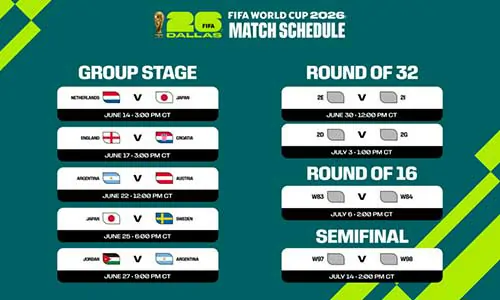
In this guide, we provide a complete, stage-by-stage timeline of the tournament. From the historic opening whistle in Mexico City to the final match in New Jersey, you will find every critical date, venue transition, and tournament milestone detailed below. Therefore, this resource serves as your go-to roadmap for navigating the historic 39-day football festival across North America.
How the FIFA World Cup 2026 Redefines Global Football
To fully appreciate the timeline of the upcoming tournament, it is essential to understand the structural modifications introduced for this iteration. Historically, the tournament featured thirty-two nations divided into eight groups. However, the tournament introduces an expanded format designed to invite more countries and foster global inclusivity.
Consequently, a total of forty-eight teams will compete in the finals, marking a massive shift in how the FIFA World Cup 2026 operates. Instead of the traditional setup, teams will now be divided into twelve groups of four. As a result, the tournament structure now accommodates an entirely new knockout round: the Round of 32.
This development increases the total match count from sixty-four to a staggering 104 matches. While this expansion means the tournament will span a longer duration of thirty-nine days, it guarantees that fans will experience a denser and more thrilling football calendar. Furthermore, this multi-host model represents a unique logistical achievement.
Matches will be played concurrently across three sovereign countries: Canada, Mexico, and the United States. Therefore, carefully tracking the timeline is essential for anyone following the matches across various time zones and regional climates. During the summer of 2026, the FIFA World Cup 2026 will bring together diverse cultures, creating a massive celebration of the sport.
Historical Significance of the Host Nations
The selection of Canada, Mexico, and the United States as co-hosts carries profound historical weight. Each nation brings a unique footballing pedigree to the stage, combining to create a vibrant tapestry of sports culture. Therefore, understanding the background of these host nations provides essential context for the upcoming matches.
Mexico is making history by becoming the first country to host or co-host the men’s tournament three times. Having hosted memorable editions in 1970 and 1986, iconic venues like the Estadio Azteca are already etched into football folklore. Consequently, the addition of the 2026 games solidifies Mexico’s legendary status in international sports history.
On the other hand, the United States is hosting the men’s tournament for the second time, following its highly successful 1994 edition. The 1994 tournament still holds the record for the highest overall attendance in history. Consequently, the return of the event to American soil promises massive crowds and state-of-the-art facilities.
For Canada, this tournament marks their first time hosting or co-hosting the men’s senior tournament. Having successfully hosted the FIFA Women’s World Cup in 2015, Canada is prepared to welcome the global community to venues in Toronto and Vancouver. Additionally, this historic opportunity will likely inspire a new generation of players across the country.
Detailed Stage-by-Stage Timeline for the FIFA World Cup 2026
The 39-day competition is carefully structured to balance player rest with intense match action. Below is the precise breakdown of each stage, helping you plan your viewing schedule from the opening group matches to the historic final.
1. The Group Stage (June 11 – June 27, 2026)
The tournament kicks off in spectacular fashion on Thursday, June 11, 2026, at the legendary Estadio Azteca. This opening fixture marks a historic moment, as Mexico City becomes the first venue to host three different opening matches in tournament history. On the following day, Friday, June 12, both Canada and the United States will host their respective opening matches in Toronto and Los Angeles.
Over the course of seventeen days, the group stage matches of the FIFA World Cup 2026 will unfold across all sixteen host cities. Specifically, forty-eight teams will battle in their respective groups of four. In addition to the top two teams from each of the twelve groups, the eight best third-place finishers will also earn a spot in the knockout phase.
This unique rule maintains high stakes for every single group match, reducing the chance of dead-rubber fixtures late in the opening stage. Consequently, teams must remain competitive until the final whistle of the group phase on June 27, 2026.
2. The Round of 32 (June 28 – July 3, 2026)
Following a brief transition, the knockout phase commences with the newly introduced Round of 32 on Sunday, June 28, 2026. This stage is making its debut in the FIFA World Cup 2026, acting as an intermediate buffer that heightens the drama of single-elimination matches.
Over six days of intense competition, thirty-two nations will be whittled down to sixteen. Because there is no room for error, matches that end in a draw will proceed directly to extra time and, if necessary, a penalty shootout. Consequently, fans can expect thrilling encounters as underdogs clash with traditional giants in this expanded bracket.
3. The Round of 16 (July 4 – July 7, 2026)
As the field narrows further, the business end of the FIFA World Cup 2026 begins on Saturday, July 4, 2026. This stage aligns beautifully with Independence Day celebrations in the United States, promising an electric atmosphere across the American host venues.
From Boston to Vancouver, the remaining sixteen teams will compete for a coveted spot in the quarter-finals. Historically, the Round of 16 produces some of the most memorable tactical battles and individual masterclasses, and this edition will likely be no exception.
4. The Quarter-finals (July 9 – July 11, 2026)
After a short, much-needed two-day rest period for the surviving squads, the quarter-finals will take place from Thursday, July 9 to Saturday, July 11, 2026. During this period, the final eight teams will face off in high-stakes matches located in major North American hubs.
Specifically, the four quarter-final matches are scheduled to take place in Boston, Los Angeles, Miami, and Kansas City. Consequently, the travel demands on teams will begin to consolidate as the tournament moves toward its final week in the United States.
5. The Semi-finals (July 14 – July 15, 2026)
The penultimate stage of the tournament is set for Tuesday, July 14, and Wednesday, July 15, 2026. These two fixtures will determine which two nations earn the right to play for the ultimate prize in global sports.
The first semi-final match will be hosted at the massive AT&T Stadium in Dallas on July 14, while the second semi-final will take place at the state-of-the-art Mercedes-Benz Stadium in Atlanta on July 15. Both venues feature retractable roofs, ensuring optimal playing conditions regardless of the summer heat.
6. Third-Place Play-off (July 18, 2026)
On Saturday, July 18, 2026, the two semi-final runners-up will meet in Miami at Hard Rock Stadium to compete for the bronze medal. While the main focus remains on the grand finale, the third-place play-off historically delivers open, high-scoring, and highly entertaining football.
7. The Grand Final (July 19, 2026)
Finally, the tournament reaches its dramatic climax on Sunday, July 19, 2026. The eyes of billions around the globe will turn to MetLife Stadium in East Rutherford, New Jersey, where the ultimate champion of the FIFA World Cup 2026 will be crowned.
This match marks the conclusion of an incredible 39-day journey. In addition to crowning a new world champion, the final promises to be a cultural phenomenon, complete with a highly anticipated half-time show produced with the collaboration of world-class performers like Coldplay.
Venues Hosting the FIFA World Cup 2026 Matches
To accommodate 104 matches, sixteen world-class stadiums selected to host the FIFA World Cup 2026 are divided into three distinct geographical regions: West, Central, and East. This division helps minimize travel times for teams during the group stages, though travel naturally increases as teams advance through the knockout rounds.
Below is a detailed breakdown of the cities, stadiums, and their regional classifications:
| Region | City | Stadium Name | Country |
|---|---|---|---|
| West Region | Vancouver | BC Place | Canada |
| Seattle | Lumen Field | United States | |
| San Francisco | Levi’s Stadium | United States | |
| Los Angeles | SoFi Stadium | United States | |
| Guadalajara | Estadio Akron | Mexico | |
| Central Region | Kansas City | Arrowhead Stadium | United States |
| Dallas | AT&T Stadium | United States | |
| Houston | NRG Stadium | United States | |
| Atlanta | Mercedes-Benz Stadium | United States | |
| Monterrey | Estadio BBVA | Mexico | |
| Mexico City | Estadio Azteca | Mexico | |
| East Region | Toronto | BMO Field | Canada |
| Boston | Gillette Stadium | United States | |
| Philadelphia | Lincoln Financial Field | United States | |
| Miami | Hard Rock Stadium | United States | |
| New York / NJ | MetLife Stadium | United States |
Each of these venues offers unique historical significance and state-of-the-art infrastructure. For instance, the Estadio Azteca has witnessed some of the most iconic moments in football history under the boots of legends like Pelé and Diego Maradona. On the other hand, newer facilities like SoFi Stadium in Los Angeles provide ultra-modern architectural design and sensory fan experiences.
Consequently, spectators will be treated to diverse environments as they travel across North America during the tournament. To make the most of your trip, researching host cities and local transport systems early is highly recommended.
Key Dates for Fans and Attendees
For those intending to travel to one of the sixteen host cities, timing is everything. Planning your itinerary around the match schedule requires careful coordination, particularly regarding travel logistics between Canada, Mexico, and the United States.
Therefore, keeping these critical preparation milestones in mind is highly recommended:
- Ticketing Windows: Ticket distribution and application phases occur in structured blocks. Fans should monitor the official ticketing portals early to participate in the random selection draws and secure their seats legally.
- Visa and Customs Preparation: Traveling across three countries means navigating different border controls. If you are planning to attend the FIFA World Cup 2026, checking visa requirements for Canada, Mexico, and the United States well in advance is highly advisable.
- Accommodation Booking: With millions of travelers expected, hotel and short-term rental availability in host cities will tighten quickly. Consequently, securing housing close to stadium transit routes several months before June 2026 is crucial.
- Local Transportation Schedules: Many host cities are expanding public transit routes to handle stadium traffic. Understanding local train, shuttle, and parking arrangements will significantly enhance your game-day experience.
In addition to matching tickets to your travel dates, understanding the regional weather is crucial. Because matches take place during June and July, southern venues like Dallas, Houston, and Miami will experience high summer temperatures, whereas northern destinations like Vancouver and Toronto will offer cooler conditions. Consequently, packing appropriately and staying hydrated during match days is highly encouraged.
Embracing the Spectacle of the FIFA World Cup 2026
In summary, this tournament represents a bold step forward for international football. With forty-eight competing countries, sixteen host cities, and a packed 39-day schedule, the scale of this event is unmatched in the history of sports.
By familiarizing yourself with the complete timeline—starting on June 11 in Mexico City and culminating on July 19 in New Jersey—you can appreciate the rhythm of this massive tournament. Whether you are supporting your country from the stands or cheering from your living room, keeping this timeline handy will ensure you never miss a moment of the action.
Therefore, start preparing your schedule, connect with fellow fans, and get ready to witness history in the making. Are you planning to travel to North America for the games? Share this timeline with your fellow fans, and explore official FIFA resources to secure your tickets and travel accommodation today!
Frequently Asked Questions
Below are essential answers to help you navigate the FIFA World Cup 2026 timeline, locations, and match formats.
When does the FIFA World Cup 2026 start and end?
The tournament is scheduled to begin on Thursday, June 11, 2026, with the opening match at the Estadio Azteca in Mexico City. It will officially conclude on Sunday, July 19, 2026, with the final match played at MetLife Stadium in East Rutherford, New Jersey. This represents a 39-day tournament window.
How many teams are participating in the FIFA World Cup 2026?
For the first time in history, forty-eight teams will participate in the finals, which is an expansion from the thirty-two teams that competed in previous editions. This expansion allows more nations from every continent to showcase their talent on the global stage.
Where will the final of the FIFA World Cup 2026 be played?
The grand final will take place at MetLife Stadium (referred to as the New York New Jersey Stadium during the tournament) in East Rutherford, New Jersey. The venue has a seating capacity of over 82,500 and is located just across the Hudson River from New York City.
How many matches will be played in the FIFA World Cup 2026?
Due to the expanded format of forty-eight teams and the addition of the Round of 32 knockout stage, a total of 104 matches will be played throughout the tournament. This is a significant increase from the sixty-four matches played in the 2022 edition.
Which countries are hosting the FIFA World Cup 2026?
The tournament is being co-hosted by three North American countries: Canada, Mexico, and the United States. This marks the first time that three nations have jointly hosted a World Cup.
How does the group stage qualification work under the new format?
The forty-eight teams are divided into twelve groups of four. The top two teams from each group automatically qualify for the Round of 32. In addition, the eight best third-place teams across all twelve groups will also advance, keeping the competition fierce until the very last group stage match.