FIFA 2026: Complete Guide to the International Football Calendar
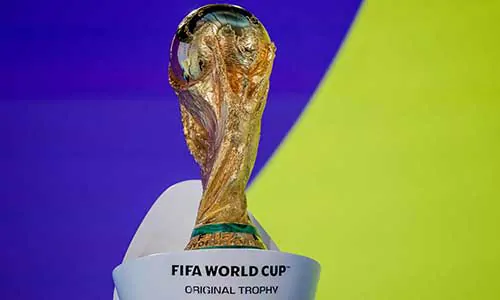
FIFA World Cup 2026: Complete Guide to the International Football Calendar
The global football landscape is preparing for one of the most significant transformations in its history. As anticipation builds, fans, players, and leagues are turning their attention to the upcoming FIFA World Cup 2026. This tournament is set to shatter previous records, introducing an expanded format that will redefine the international football calendar. For the first time, three nations—the United States, Canada, and Mexico—will co-host the event, bringing together diverse cultures and 48 national teams for a massive celebration of the beautiful game.
In this comprehensive guide, we will break down the essential dates, structures, and schedules you need to know. From the opening whistle in Mexico City to the final match in New Jersey, we explore how the footballing world will adapt to this expanded, 104-match tournament. This detailed guide provides everything you need to know about the FIFA World Cup 2026 schedule and format.
Table of Contents
- 1. The Revolutionary Format of the FIFA World Cup 2026
- 2. Key Dates and Phases in the FIFA World Cup 2026 Calendar
- 3. Opening Days: Mexico, USA, and Canada Debut Matches in the FIFA World Cup 2026
- 4. Host Cities and Stadiums for the FIFA World Cup 2026
- 5. How the FIFA World Cup 2026 Affects the Domestic Club Calendar
- 6. Frequently Asked Questions About the FIFA World Cup 2026
- 7. Conclusion: Preparing for the FIFA World Cup 2026
1. The Revolutionary Format of the FIFA World Cup 2026
The upcoming tournament marks a historic departure from tradition. With 48 nations participating, the FIFA World Cup 2026 represents a major shift in how the tournament operates. Previously, 32 teams competed in a 64-match tournament. By expanding the playing field, football’s governing body has significantly increased global representation, opening doors for teams that have historically struggled to qualify.
Consequently, the matches of the FIFA World Cup 2026 will be played in an entirely new structure. This larger pool of teams means more excitement, more regional representation, and a broader global reach. Furthermore, the format change ensures that the tournament remains highly competitive while giving emerging football nations a platform to showcase their talent on the grandest stage of all.
How the 48-Team Expansion Works in the FIFA World Cup 2026
In this newly structured tournament, the 48 qualified teams will be divided into 12 groups of four. This design replaces the previously discussed three-team group concept, ensuring that the integrity of the final group games remains intact. Teams will play round-robin matches within their respective groups to determine who moves forward.
This expansion within the FIFA World Cup 2026 means that fans will enjoy 104 matches over a span of 39 days. To progress to the knockout stages, teams must finish in the top two of their group. In addition, the eight best third-placed teams across all 12 groups will secure a spot in the next stage.
Therefore, the group stage of the FIFA World Cup 2026 will serve as a high-stakes battleground where every single goal matters. This structure adds an entire round of direct elimination, starting with a brand-new Round of 32. It heightens the drama and guarantees that the road to the final is more challenging than ever before.
2. Key Dates and Phases in the FIFA World Cup 2026 Calendar
To help you navigate this massive event, the complete roadmap of the FIFA World Cup 2026 is outlined across several distinct phases. Because of the sheer volume of matches, understanding the timeline is crucial for football enthusiasts. The action kicks off in early June and runs through mid-July, providing nearly six weeks of non-stop international action.
Anyone planning to attend the FIFA World Cup 2026 must keep these dates in mind to properly schedule travel and purchase match tickets. Below is a detailed chronological breakdown of the entire tournament, guiding you from the group stages to the crowning of the new world champion.
| Tournament Phase | Start Date | End Date | Total Matches |
|---|---|---|---|
| Group Stage | June 11, 2026 | June 27, 2026 | 72 Matches |
| Round of 32 | June 28, 2026 | July 3, 2026 | 16 Matches |
| Round of 16 | July 4, 2026 | July 7, 2026 | 8 Matches |
| Quarter-Finals | July 9, 2026 | July 11, 2026 | 4 Matches |
| Semi-Finals | July 14, 2026 | July 15, 2026 | 2 Matches |
| Third-Place Play-off | July 18, 2026 | July 18, 2026 | 1 Match |
| The Grand Final | July 19, 2026 | July 19, 2026 | 1 Match |
The initial stage of the FIFA World Cup 2026 across 16 host cities will set an energetic tone, offering fans multiple games per day. Following the intense group phase, the elimination matches of the FIFA World Cup 2026 start immediately with the Round of 32. This rapid transition leaves no room for error, as teams compete in a single-elimination bracket where one loss means going home.
3. Opening Days: Mexico, USA, and Canada Debut Matches in the FIFA World Cup 2026
The tournament begins on June 11, 2026, with a spectacular opening match featuring co-host Mexico against South Africa. This opening day fixture will be hosted at the iconic Estadio Azteca in Mexico City, a historic venue that has previously welcomed some of the greatest legends in football history. The local crowd will undoubtedly create a passionate environment to mark the beginning of this global soccer festival.
On the subsequent day, June 12, the other two host nations will enter the spotlight. Canada will play its opening fixture against Bosnia and Herzegovina, while the United States will face Paraguay. These matches will represent the first time the host nations take the field, creating a truly continent-spanning celebration on the second day of the tournament.
Furthermore, the introduction of co-hosts makes the FIFA World Cup 2026 highly unique, as travel demands and distinct climates will test the adaptability of the squads. Group stage fixtures will feature fascinating matchups of both veteran nations and newcomers. Some of the highly anticipated early clashes include:
- June 14: Germany vs. Curacao – Curacao’s historic World Cup debut.
- June 15: Spain vs. Cape Verde – Cape Verde makes its first-ever appearance at a world tournament.
- June 16: Argentina vs. Algeria – The defending champions start their title defense campaign.
- June 16: Austria vs. Jordan – Jordan competes in its first-ever World Cup match.
- June 17: Portugal vs. Democratic Republic of the Congo – Highlighting the start of Portugal’s path.
- June 17: Uzbekistan vs. Colombia – Uzbekistan’s historic first appearance on the global stage.
As a result, the early schedule of the FIFA World Cup 2026 features back-to-back matches that promise to keep viewers glued to their screens. The mixture of debuting nations and powerhouse squads adds an element of unpredictability that makes this tournament highly anticipated by football enthusiasts worldwide.
4. Host Cities and Stadiums for the FIFA World Cup 2026
The selected venues hosting the FIFA World Cup 2026 are legendary, modern, and geographically diverse. In order to manage travel distances and reduce the carbon footprint, FIFA has divided the 16 host cities into three geographic regions: West, Central, and East. This structured grouping allows teams and fans to remain in a concentrated area during the group stages, minimizing extensive cross-continental travel.
The host cities are spread across three nations, with the United States hosting matches in 11 cities, Mexico in 3 cities, and Canada in 2 cities. Each city brings its own culture, history, and passion for sports to the global stage.
The distribution of the host cities is structured as follows:
- West Region: Vancouver, Seattle, San Francisco, Los Angeles, and Guadalajara.
- Central Region: Kansas City, Dallas, Houston, Atlanta, Monterrey, and Mexico City.
- East Region: Toronto, Boston, New York/New Jersey, Philadelphia, and Miami.
Each of the stadiums of the FIFA World Cup 2026 will offer state-of-the-art facilities designed to enhance the fan experience. Iconic venues such as SoFi Stadium in Los Angeles, AT&T Stadium in Dallas, and the historic Estadio Azteca will host crucial matches. The final match of the tournament will take place at the MetLife Stadium in East Rutherford, New Jersey, providing a spectacular setting for the crowning of the world champions on July 19, 2026.
5. How the FIFA World Cup 2026 Affects the Domestic Club Calendar
The global football community must adjust to the heavy footprint of the FIFA World Cup 2026. Because this tournament returns to its traditional Northern Hemisphere summer window, domestic leagues around the world must adjust their schedules. Unlike the 2022 tournament in Qatar, which took place in November and December, the 2026 edition requires a significant restructuring of the spring and autumn league fixtures.
This adjustment affects not only major European leagues like the English Premier League, Spain’s La Liga, and Italy’s Serie A, but also continental club tournaments. Leagues must coordinate closely with national federations to ensure that players are physically prepared while keeping club duties balanced.
The Pre-Tournament Release Period
To ensure players have adequate time to prepare and rest, FIFA has mandated an official pre-tournament release period. Clubs must release their selected international players to their respective national teams by late May 2026. Consequently, leagues had to squeeze domestic fixtures to accommodate the FIFA World Cup 2026, forcing many leagues to conclude their seasons earlier than usual.
This compression of the calendar means that domestic matches will be played at a faster rate during the winter and spring months. On the other hand, the preparation camp is essential for national team coaches to establish tactical cohesion before competing on the world stage.
Post-Tournament Recovery and the 2026/27 Season Start
Players competing in the FIFA World Cup 2026 will need adequate rest after the tournament ends on July 19. Those who reach the later stages will have spent nearly two months in intense training and match environments. Therefore, domestic leagues starting their 2026/27 campaigns in August will face challenges regarding player fatigue and recovery.
Leagues and clubs must manage the workloads of their star players carefully to prevent long-term injuries. This situation requires a collaborative effort between club medical staffs and national federations, ensuring that players receive a proper off-season break before returning to highly competitive club football.
6. Frequently Asked Questions About the FIFA World Cup 2026
Here are the essential answers about the FIFA World Cup 2026 to help you stay informed about the structure, schedule, and hosting details of this historic tournament.
Q1: When does the FIFA World Cup 2026 start and end?
A1: The FIFA World Cup 2026 officially kicks off on June 11, 2026, and concludes with the final match on July 19, 2026.
Q2: Which countries are hosting the FIFA World Cup 2026?
A2: The tournament is being jointly hosted by three North American countries: the United States, Canada, and Mexico. This is the first time in history that a World Cup has been co-hosted by three nations.
Q3: How many teams are participating in this edition?
A3: The tournament has expanded to include 48 national teams, up from the traditional 32-team format used in previous tournaments.
Q4: How many total matches will be played?
A4: Fans will enjoy a total of 104 matches played over a 39-day period, providing the largest schedule in World Cup history.
Q5: Where will the final match take place?
A5: The highly anticipated final match will be held at MetLife Stadium in East Rutherford, New Jersey, on Sunday, July 19, 2026.
Q6: How will the 48 teams be grouped?
A6: The teams will be divided into 12 groups of four. The top two teams from each group, along with the eight best third-placed teams, will advance to the Round of 32.
7. Conclusion: Preparing for the FIFA World Cup 2026
The upcoming tournament is set to be an historic celebration of global football. With its expanded 48-team format, co-hosting across three nations, and a massive 104-match schedule, the tournament will provide football fans with an unprecedented level of action and excitement. The legacy of the FIFA World Cup 2026 will be felt for generations, inspiring young athletes and fans worldwide.
Whether you plan to travel to the stadiums of North America or watch the games from home, staying informed about the schedule is key to enjoying the event. Consider this guide your ultimate resource for navigating the FIFA World Cup 2026. What matches are you looking forward to the most? Leave a comment below, and don’t forget to share this guide with your fellow football fans!