False 9 Explained: Role, Tactical Impact and Legendary Players
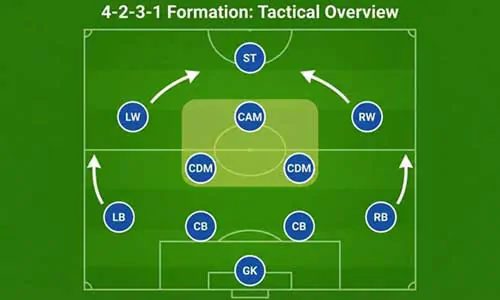
False 9 Explained: Tactical Impact and Evolution Ahead of the FIFA World Cup 2026
Modern football is a continuous game of spatial chess. Over the decades, tactical innovations have transformed how teams exploit space, construct attacks, and break down stubborn defensive lines.
As football tactical systems adapt rapidly ahead of the FIFA World Cup 2026, the demand for fluid, intelligent, and versatile attacking play has reached an all-time high.
Among the most fascinating tactical innovations in football history is the “False 9” role. This position blends the responsibilities of a traditional striker with the creative instincts of an advanced playmaker.
This comprehensive guide explores the structural nuances, historical evolution, and modern applications of the False 9, showcasing why it remains a vital tactical weapon today.
Table of Contents
- What is a False 9? A Comprehensive Definition
- The Tactical Anatomy of a False 9
- Traditional Striker vs. False 9
- The Evolution of the False 9 Towards the FIFA World Cup 2026
- Why Modern Managers at the FIFA World Cup 2026 Favor Tactical Flexibility
- Legendary Players Who Defined the Role Before the FIFA World Cup 2026 Era
- How to Defend Against a False 9
- The Future of the False 9 in Elite Football
- Frequently Asked Questions (FAQ)
What is a False 9? A Comprehensive Definition
In traditional football formations, the player wearing the number 9 jersey is the focal point of the attack. This player typically occupies the opposition’s center-backs, playing with their back to goal or making direct runs into the penalty area.
Conversely, a False 9 is an unconventional center-forward who systematically drops deep into the midfield space between the opposition’s defensive and midfield lines.
By vacating the traditional center-forward position, this player disrupts the defensive structure of the opposition. They refuse to give the opposing center-backs a physical target to mark or press.
This calculated withdrawal creates a massive tactical dilemma. Center-backs must choose whether to follow the dropping forward into midfield or stay in position and allow them time to turn and pass.
Analyzing international squads preparing for the FIFA World Cup 2026, coaches are actively designing modern variations of this system to unlock highly organized, deep defensive blocks.
The primary objective of a False 9 is not necessarily to be the sole goalscorer. Instead, they act as a facilitator, pulling defenders out of alignment to create space for dynamic teammates.
The Tactical Anatomy of a False 9
To understand the tactical impact of this role, one must analyze the specific movement patterns and spatial relationships it creates on the pitch.
When the False 9 drops deep into the area known as “Zone 14” (the zone right outside the penalty box), they create a temporary numerical overload in the midfield.
If the opposition plays a standard 4-3-3 with three midfielders, the dropping forward adds a fourth passing option, effectively creating a 4v3 advantage in the central corridor.
This overload allows the attacking team to dominate possession, control the tempo of the game, and construct progressive passing sequences with high efficiency.
Furthermore, as the False 9 drops deep, they drag one of the opposition’s central defenders with them. This movement creates a gaping structural hole in the defensive line.
Winger systems, particularly those utilizing inside forwards, are designed to exploit this exact space. As the center-back steps out, the winger makes a diagonal run into the vacated central channel.
Additionally, the False 9 must possess exceptional spatial awareness, flawless first-touch control, and elite passing vision. They must be comfortable playing under immense physical pressure from behind.
Without these technical attributes, dropping into congested midfield zones often results in cheap turnovers and dangerous counter-attacks for the opposition.
Traditional Striker vs. False 9
Understanding the fundamental differences between these two roles is crucial for appreciating modern team sheets and tactical setups.
| Tactical Attribute | Traditional Striker (Number 9) | False 9 |
|---|---|---|
| Primary Positioning | Stays high, occupying the opposition center-backs. | Drops deep into the space between midfield and defense. |
| Main Tactical Duty | Finishing chances, holding up play, and pinning defenders. | Creating numerical overloads, linking play, and vacating space. |
| Key Physical Traits | Height, aerial strength, and explosive acceleration. | Low center of gravity, agility, and quick spatial turns. |
| Key Technical Traits | Clinical finishing, heading accuracy, and box movement. | Elite passing vision, close dribbling, and spatial awareness. |
| Defensive Role | Initiates the press on central defenders. | Screens passing lanes and presses holding midfielders immediately. |
Many elite national teams heading into the FIFA World Cup 2026 will choose their attacking profiles based on these distinct tactical profiles, adapting to specific opponents.
The Evolution of the False 9 Towards the FIFA World Cup 2026
While many fans associate the False 9 with modern tactical masterminds, the roots of this system stretch back nearly a century.
In the 1930s, the famous Austrian “Wunderteam” featured Matthias Sindelar, a slender forward who constantly dropped deep to avoid physical battles with burly defenders.
Later, in the 1950s, the “Magical Magyars” of Hungary utilized Nándor Hidegkuti in a similar deep-lying forward role, completely dismantling traditional English defensive markings.
As we transition into the modern era, the physical demands, tactical analysis tools, and pressing structures have evolved exponentially.
This historical tactical innovation will be a core talking point during the FIFA World Cup 2026 broadcast analyses, as teams encounter varied defensive systems across the tournament.
Today, the role is no longer just about dropping deep; it is about coordinated rotations where midfielders, wingers, and the forward constantly swap zones to confuse the defensive block.
The physical preparation for the modern game means players occupying this role must possess elite stamina to transition from creative playmakers to primary pressers instantly.
Why Modern Managers at the FIFA World Cup 2026 Favor Tactical Flexibility
Modern defensive systems have become incredibly compact, with teams masterfully implementing low-block structures that deny space in the final third.
Static attacking players are remarkably easy for well-drilled defensive lines to manage, neutralize, and isolate over ninety minutes.
Therefore, as national squads lock in their strategic blueprints for the FIFA World Cup 2026, the choice between rigid and fluid formations becomes a defining factor for success.
By utilizing a fluid attacking system, coaches can bypass the opponent’s defensive mid-block without relying solely on low-probability long balls or crossing hope-plays.
Furthermore, national teams competing in the FIFA World Cup 2026 will rely heavily on fluid passing lines to tire out opponents during intense tournament schedules.
A False 9 naturally encourages horizontal and vertical rotations, making the attacking structure unpredictable and incredibly difficult to plan against on short preparation times.
Legendary Players Who Defined the Role Before the FIFA World Cup 2026 Era
Several generational talents have elevated the False 9 role from an occasional tactical experiment into a legendary, system-defining football art form.
Francesco Totti (AS Roma)
In 2005, AS Roma manager Luciano Spalletti faced an acute striker crisis. Out of necessity, he deployed Francesco Totti as a lone central forward in a fluid 4-6-0 formation.
Totti, possessing sublime playmaking vision, naturally dropped deep into midfield. This movement created absolute chaos in the Italian Serie A, as defenders simply did not know how to handle his movements.
Lionel Messi (FC Barcelona)
The absolute gold standard of the modern False 9 was established on May 2, 2009, during El Clásico at the Santiago Bernabéu.
Pep Guardiola famously instructed Lionel Messi to drop deep between the lines, completely bypassing Real Madrid’s central midfield and isolating their central defenders.
Messi excelled spectacularly in this role, scoring and assisting at historic rates while redefining how modern academies teach attacking movements.
Today, young talents aiming to make an impact at the FIFA World Cup 2026 are studying video tapes of Messi’s movement patterns during this legendary Barcelona era.
Roberto Firmino (Liverpool FC)
Under Jürgen Klopp, Roberto Firmino developed the modern concept of the “defensive False 9.” His work rate was central to Liverpool’s pressing system.
Firmino sacrificed individual goalscoring statistics to press opposition defensive midfielders, drag center-backs out of position, and feed flying wingers Mohamed Salah and Sadio Mané.
This variation is particularly true for teams in the FIFA World Cup 2026 that lack a traditional world-class goalscorer but possess lightning-fast, clinical wingers.
How to Defend Against a False 9
Defending against an elite deep-lying forward requires immense communication, tactical discipline, and physical coordination between the midfield and defensive lines.
The traditional method of man-to-man marking is highly dangerous, as following the attacker into midfield leaves a massive gap for inside forwards to exploit.
Modern tactical adjustments ahead of the FIFA World Cup 2026 are forcing center-backs to communicate constantly and pass marking responsibilities seamlessly to their defensive midfielders.
If a defensive midfielder drops deep to screen the space, they can pick up the False 9, allowing the central defenders to maintain a compact, flat backline.
Another common solution is the implementation of an aggressive zonal defensive system, where players defend specific spaces rather than individual opponents.
By squeezing the vertical distance between the defensive line and the midfield line, teams can effectively eliminate the “pocket of space” that the forward seeks to exploit.
The Future of the False 9 in Elite Football
As tactics evolve, some analysts claim the traditional False 9 is being phased out by the resurgence of physical, highly mobile, complete strikers like Erling Haaland.
However, football tactics operate in cyclical patterns. The upcoming FIFA World Cup 2026 will serve as the ultimate testing ground for this ongoing tactical battle.
Instead of a pure False 9, we are now seeing the rise of the “Hybrid 9″—players who can play on the shoulder of the last defender, yet drop deep when the game demands build-up assistance.
When watching the FIFA World Cup 2026, pay close attention to the movements of world-class forwards as they transition dynamically between these phases.
The tactical flexibility to alternate between a focal point and a creative midfielder mid-game will likely determine which nations lift the trophy.
Tactical Summary and Takeaways
- Unpredictability: By vacating the box, the False 9 makes defensive marking assignments incredibly difficult.
- Midfield Overload: This role creates a numerical advantage in central midfield, allowing teams to dominate ball possession.
- Space Creation: The movement pulls central defenders out of position, opening up massive central lanes for inside forwards.
- Defensive Contribution: Players in this role must lead the counter-press, screening progressive passing lanes immediately upon losing the ball.
The tactical evolution we will witness at the FIFA World Cup 2026 proves that soccer is a dynamic sport where fluid positioning always triumphs over rigid systems.
What are your thoughts on this tactical setup? Do you believe a team utilizing a False 9 system will dominate the upcoming tournament? Share this analysis with your fellow football fans and join the tactical debate!
Frequently Asked Questions (FAQ)
1. What is the main difference between a False 9 and a traditional striker?
A traditional striker plays as a high focal point, pinning the opposition’s center-backs. A False 9 systematically drops deep into midfield to create numerical overloads and vacate central space for wingers.
2. Will we see the False 9 used at the FIFA World Cup 2026?
Yes, many top nations at the FIFA World Cup 2026 will likely deploy fluid attacking systems with deep-lying forwards to break down compact low-block defenses.
3. How did Pep Guardiola revolutionize this role?
Pep Guardiola famously positioned Lionel Messi as a False 9 in 2009, exploiting the space behind Real Madrid’s midfield and creating an iconic, trophy-winning system at FC Barcelona.
4. Can any playmaker play as a False 9?
Not necessarily. While elite passing is required, a False 9 must also have the physical strength to shield the ball with their back to goal and the tactical intelligence to lead the team’s defensive pressing trigger.
5. How does a False 9 create space for wingers?
When the False 9 drops deep into midfield, they often drag an opposing center-back out of the defensive line. This creates a structural gap that inside forwards can exploit with quick diagonal runs.
6. How will the tactical trends of the FIFA World Cup 2026 impact grassroots football coaching?
The fluid movements of elite teams at the FIFA World Cup 2026 will encourage youth coaches to prioritize spatial awareness, scanning, and tactical flexibility over rigid positional play.