Estadio Azteca and FIFA World Cup 2026: A Historic Stadium’s New Chapter
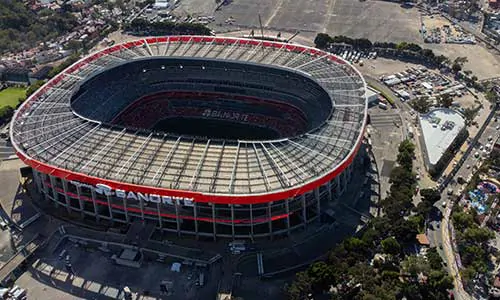
Steeped in historical significance, the stadium represents more than just concrete and steel; it is the physical heart of Mexican sports heritage. In this detailed guide, we explore the deep legacy of this incredible venue, the massive modernization efforts undertaken to prepare it for the modern era, and what fans can expect as North America prepares to host the most expansive tournament to date.
Table of Contents
- 1. A Storied Legacy: From Pelé and Maradona to the FIFA World Cup 2026
- 2. Making History: The First Venue with Three World Cup Openers
- 3. Major Renovations: Preparing Estadio Azteca for the FIFA World Cup 2026
- 4. The Match Schedule: What to Expect during the FIFA World Cup 2026
- 5. Logistics and Infrastructure: Managing the “Last Mile” in Mexico City
- 6. Fan Experience: Visiting the Famous “Coloso de Santa Úrsula”
- 7. Conclusion and Final Thoughts
A Storied Legacy: From Pelé and Maradona to the FIFA World Cup 2026
No other sporting venue on Earth holds the same mystical aura as the “Coloso de Santa Úrsula”. Built in 1966 in the southern neighborhood of Santa Úrsula Coapa in Mexico City, the stadium has served as the stage for some of the most iconic moments in human sporting history . Its inclusion in the FIFA World Cup 2026 marks yet another chapter in a long book of triumphs .
In 1970, the stadium bore witness to the absolute peak of Pelé’s international career. It was on this very turf that the legendary Brazilian national team dismantled Italy 4-1 in the final, securing Pelé his third Jules Rimet trophy and cementing Brazil’s legacy as one of the finest squads ever assembled.
Sixteen years later, during the 1986 edition, the venue acted as the canvas for Diego Armando Maradona’s masterpiece . It was here, in the quarterfinal match against England, that Maradona scored both the controversial “Hand of God” goal and the “Goal of the Century”—a dazzling, 60-yard solo run that left opposing defenders trailing in his wake .
These historic landmarks set an incredibly high standard for the upcoming matches. In 2026, a new generation of football superstars will seek to write their names in the stadium’s legendary history books, performing under the watchful gaze of the passionate Mexican crowd.
Making History: The First Venue with Three World Cup Openers
While several stadiums around the world have hosted multiple World Cup matches, none match the unique milestone achieved by the Azteca. By hosting the opening match of the FIFA World Cup 2026, it becomes the first venue to open three separate editions of the tournament .
The journey started on May 31, 1970, when a crowd of over 100,000 gathered to watch Mexico play out a tense goalless draw against the Soviet Union. In 1986, the opening ceremony was followed by a 1-1 draw between the defending champions, Italy, and Bulgaria. In 2026, the tradition continues with a highly anticipated fixture between Mexico and South Africa .
This achievement highlights Mexico’s enduring passion for football. Along with other stadiums hosting matches in Mexico—such as Estadio Akron in Guadalajara and Estadio BBVA in Monterrey—the legendary Azteca stands as a symbol of pride for the entire North American sporting landscape .
Major Renovations: Preparing Estadio Azteca for the FIFA World Cup 2026
To meet the strict technical standards of football’s international governing body, the aging coliseum required extensive upgrades. Preparing the 1960s-era stadium for the demands of the FIFA World Cup 2026 has been an ambitious engineering task, with total renovation costs rising to approximately 2 billion Mexican pesos (roughly €110 million) .
Local authorities and stadium operators had to balance modern requirements with the critical need to preserve the historical soul of the arena . Key upgrades designed specifically for the tournament include:
- Pitch Reconstruction: A complete replacement of the old playing surface with a modern hybrid grass system, accompanied by advanced subterranean drainage and irrigation technologies .
- Media and Broadcast Facilities: The installation of a cutting-edge press area, ultra-high-definition LED interactive screens, and fiber-optic cabling to support global broadcasting standards .
- Structural Upgrades: Modernized changing rooms built underneath the VIP boxes, a renovated player tunnel, and improved security systems, including high-resolution surveillance networks .
- Seating and Accessibility: Overhauling the stadium’s seating arrangements to improve comfort, safety, and wheelchair access, bringing the total tournament capacity to approximately 83,000 spectators .
These enhancements ensure the arena meets FIFA’s strict international standards . Although construction encountered early logistical delays due to the stadium’s continuous use, engineers completed the final structural checks in early 2026, ensuring the venue is fully prepared for opening day .
The Match Schedule: What to Expect during the FIFA World Cup 2026
Under its official tournament name, “Mexico City Stadium”, the venue is scheduled to host five high-profile fixtures . These games span the group stages, the Round of 32, and the highly anticipated Round of 16 . For fans using our guide to securing tournament tickets, tracking these specific dates is essential:
| Date | Tournament Stage | Matchup Details |
|---|---|---|
| June 11, 2026 | Group Stage (Opening Match) | Mexico vs. South Africa |
| June 17, 2026 | Group Stage | Group K Matchup |
| June 24, 2026 | Group Stage (Final Group Match) | Mexico vs. Opponent TBD |
| June 30, 2026 | Round of 32 | Elimination Stage Match |
| July 5, 2026 | Round of 16 | Elimination Stage Match |
With Mexico playing two of its group-stage matches in front of a home crowd, the local support is guaranteed to be electric . If you are keeping up with El Tri’s match fixtures and schedule, keeping a close eye on these specific matchdays will give you the best insight into Mexico’s potential path to the knockout stages.
Logistics and Infrastructure: Managing the “Last Mile” in Mexico City
Managing the transport of hundreds of thousands of international visitors in a metropolitan area of over 20 million people is a massive challenge for local authorities . To address this, Mexico City’s Department of Mobility has introduced a specialized “last mile” transit policy .
On matchdays, personal vehicles will be prohibited within a secure perimeter surrounding the stadium . Fans will need to park in designated park-and-ride lots and take shuttle buses or utilize public transport .
Furthermore, key transit networks—specifically Metro Line 2 and the local light rail—have undergone extensive safety upgrades, signaling updates, and track maintenance to ensure safe, rapid transport directly to the gates of the venue . On the highly anticipated opening day of June 11, local governments have recommended remote work and school closures to alleviate road congestion across the capital .
Fan Experience: Visiting the Famous “Coloso de Santa Úrsula”
Attending a match at the Estadio Azteca during the FIFA World Cup 2026 is more than just watching 90 minutes of football. It is a sensory immersion into Mexican culture. The air around the stadium is regularly filled with the appetizing aroma of local street food, ranging from tacos al pastor and tlacoyos to fresh churros.
The altitude of Mexico City—sitting at approximately 2,240 meters (7,350 feet) above sea level—plays a major role in the fan and player experience. The air is thinner, causing the ball to travel faster and requiring visitors to pace themselves to avoid altitude fatigue. When combined with the singing of tens of thousands of passionate fans, the stadium creates a unique sensory experience that visitors will remember for a lifetime.
Whether you are a seasoned match-goer or visiting Mexico City for the first time, exploring the surrounding neighborhood of Coyoacán or taking in the historic center’s colonial architecture before heading to Santa Úrsula is highly recommended. The city’s warmth and hospitality will undoubtedly make this one of the most memorable chapters in World Cup history.
Conclusion and Final Thoughts
The FIFA World Cup 2026 represents a monumental milestone for Estadio Azteca . By blending its rich footballing heritage with modern technology and infrastructure, the stadium is fully prepared to welcome the global community once again , .
With massive infrastructure improvements, historical opening matches, and an electric atmosphere, the “Coloso de Santa Úrsula” is set to provide an incredible experience for all who visit. The legend of Estadio Azteca continues, and its newest chapter promises to be as captivating as those that came before.
What are your thoughts?
Will Mexico be able to leverage their home advantage to secure a historic run, or will the pressure of the home crowd prove too much? Share your predictions in the comments section below, and subscribe to our newsletter for more tournament updates!
Frequently Asked Questions (FAQ)
How many matches will be hosted at Estadio Azteca during the FIFA World Cup 2026?
A total of five matches will be played at the stadium during the tournament, including three group-stage games, one Round of 32 match, and one Round of 16 elimination fixture .
Why is the stadium called “Mexico City Stadium” for the tournament?
Due to FIFA’s strict policies regarding commercial sponsorships and commercial naming rights, Estadio Azteca (sponsored locally as Estadio Banorte) is referred to as the “Mexico City Stadium” for all official tournament proceedings .
What updates were made to the stadium during the renovation period?
The extensive 2-billion-peso renovation included a transition to a high-performance hybrid grass pitch, brand-new LED illumination and interactive screens, fully updated changing rooms, and accessibility and safety enhancements .
When is the opening match at Estadio Azteca, and who is playing?
The opening match takes place on June 11, 2026, featuring the host country, Mexico, playing against South Africa , .
How can fans travel to the stadium on matchdays?
Due to the secure “last mile” transit zones, fans are advised to avoid personal vehicles . Specialized transport links like public park-and-ride shuttles and the upgraded Metro Line 2 are the most efficient ways to reach the gates .