Easiest FIFA World Cup 2026 Host Cities to Travel Between
Easiest FIFA World Cup 2026 Host Cities to Travel Between
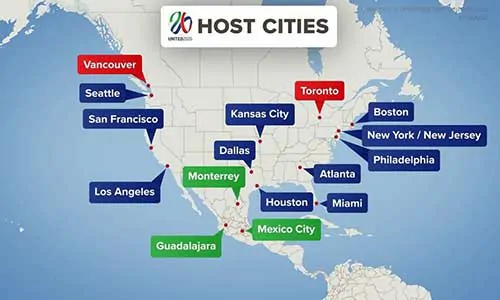
The FIFA World Cup 2026 will be a historic tournament, stretching across three nations: Canada, Mexico, and the United States. Because of the massive geographical scale of this event, traveling between matches could prove highly challenging for fans. Fortunately, certain geographic clusters offer highly convenient transit connections, allowing you to catch multiple matches with minimal stress. In this travel guide, we will analyze the easiest FIFA World Cup 2026 host cities to navigate between, comparing trains, highways, and flight routes.
Table of Contents
- Why Logistics Matter for the FIFA World Cup 2026
- 1. The Northeast Corridor: Best Connection for the FIFA World Cup 2026
- 2. The Pacific Northwest: Easiest Cross-Border Route for the FIFA World Cup 2026
- 3. The Texas Triangle: Regional Travel for the FIFA World Cup 2026
- 4. The California Connection: Scenic Travel for the FIFA World Cup 2026
- Comparative Travel Matrix for the FIFA World Cup 2026
- Essential Travel Tips for the FIFA World Cup 2026
- Exploring Beyond the Stadiums During the FIFA World Cup 2026
- Summary and Planning for the FIFA World Cup 2026
- Frequently Asked Questions (FAQ)
Why Logistics Matter for the FIFA World Cup 2026
The upcoming tournament features 48 teams competing across 16 different host cities. This expansion means that teams and fans alike will face unprecedented travel distances. Therefore, understanding how to transition efficiently from one stadium venue to another is vital for a smooth experience.
Some countries will endure thousands of miles of travel between their group stage matches. On the other hand, spectators who plan their itineraries around localized clusters can save significant time and money. By focusing on specific regional hubs, you can bypass long-haul flights and instead rely on efficient ground transportation.
For instance, traveling from Miami to Seattle requires crossing the entire continent, which results in high costs and physical fatigue. Consequently, smart travelers are looking at neighboring cities to maximize their matchday experiences during the FIFA World Cup 2026. Let us explore the regions that offer the most seamless travel networks.
1. The Northeast Corridor: Best Connection for the FIFA World Cup 2026
The undisputed champion of transit convenience for the FIFA World Cup 2026 is the Northeast region of the United States. Boston, New York/New Jersey, and Philadelphia are situated remarkably close to each other. Furthermore, they are linked by an extensive, high-frequency passenger rail network.
Unlike many other parts of North America, you do not need to rely on domestic flights to move between these host cities. Amtrak, the national passenger railroad, operates frequent daily services along this corridor. This makes it incredibly easy to attend a game in Philadelphia one afternoon and watch another in New York the next day.
Transit Options and Travel Times for the FIFA World Cup 2026
The crown jewel of this corridor is the Amtrak Acela, a high-speed train reaching up to 150 mph (240 km/h). In addition, the Amtrak Northeast Regional provides a slightly slower but more budget-friendly alternative. Both options deliver passengers directly into downtown transit hubs, such as Penn Station in New York and 30th Street Station in Philadelphia.
If you prefer driving, Interstate 95 (I-95) connects all three metropolitan areas. However, heavy traffic congestion remains a frequent issue in this densely populated region. Therefore, rail travel is highly recommended to ensure you arrive at the stadiums on time without road-related stress.
- New York/New Jersey to Philadelphia: The train journey takes between 1 hour and 1 hour and 30 minutes. Driving typically takes around 2 hours, depending on traffic conditions.
- New York/New Jersey to Boston: The train takes approximately 3.5 to 4 hours. Driving via I-95 covers 215 miles and can take anywhere from 4 to 6 hours.
- Philadelphia to Boston: Amtrak trains complete this route in about 5 to 6 hours. A regional flight takes roughly 1 hour and 15 minutes.
Each of these cities features world-class stadium venues that are well-integrated into local transit systems. MetLife Stadium in East Rutherford, New Jersey, is accessible via NJ Transit trains from Manhattan. Lincoln Financial Field in Philadelphia sits directly on the Broad Street Subway Line. Meanwhile, Gillette Stadium in Foxborough is connected to Boston via special commuter rail event trains on matchdays.
2. The Pacific Northwest: Easiest Cross-Border Route for the FIFA World Cup 2026
Another highly convenient cluster for the FIFA World Cup 2026 is the Pacific Northwest corridor. Seattle, Washington, and Vancouver, British Columbia, are separated by only 140 miles (225 km). This geographical proximity makes it one of the easiest cross-border routes of the tournament.
Traveling between these two coastal hubs is remarkably straightforward, offering scenic coastal vistas along the way. Furthermore, it allows fans to easily experience the tournament across two different countries. Both cities possess highly enthusiastic soccer cultures, making this a highly desirable path for international visitors.
Pacific Northwest Transit Solutions
The most relaxing way to travel between Seattle and Vancouver is the Amtrak Cascades passenger train. This service runs directly between King Street Station in Seattle and Pacific Central Station in Vancouver. The trip takes approximately 4 hours and 30 minutes, allowing you to avoid highway border queues.
Alternatively, you can drive via Interstate 5 (I-5). While driving gives you more flexibility, you must account for potential delays at the Peace Arch border crossing. Several regional shuttle bus services also operate daily between the two cities, providing a cost-effective alternative to flights.
- Seattle to Vancouver by Train: Approximately 4 hours and 30 minutes via the scenic Amtrak Cascades.
- Seattle to Vancouver by Car: Roughly 3 hours of driving time, excluding custom clearance delays at the international border.
- Seattle to Vancouver by Air: Direct flights take only 50 minutes, though airport security and transit times can add up.
Lumen Field in Seattle is located right next to downtown train and light rail stations. Similarly, BC Place in Vancouver is highly accessible via the local SkyTrain network. Consequently, fans will find navigating these cities to be a highly pleasant and efficient experience.
3. The Texas Triangle: Regional Travel for the FIFA World Cup 2026
For fans hoping to experience the passionate soccer atmosphere of the American South during the FIFA World Cup 2026, the pairing of Dallas and Houston is an excellent choice. These two Texas giants are located roughly 240 miles (386 km) apart, offering a straightforward travel route.
Texas is known for its sprawling highways and massive stadiums. Therefore, renting a car is the most popular way to travel between these host cities. The drive between Dallas and Houston consists of a direct route along Interstate 45 (I-45), making navigation remarkably simple.
Travel Times and Logistics in Texas
Driving from Dallas to Houston takes approximately 3.5 to 4 hours. Along the way, travelers can experience classic Texan road stops, including the famous Buc-ee’s convenience stores. In addition, numerous commercial airlines operate high-frequency, short-duration flights between Dallas-Fort Worth International Airport (DFW) and Houston Intercontinental Airport (IAH).
These flights take just under an hour, though you must factor in the time spent at the airports. While there is currently no passenger rail operating directly between the cities, several express bus services offer comfortable, Wi-Fi-enabled coaches for budget-conscious fans.
- Dallas to Houston by Car: A direct 3.5 to 4-hour drive down Interstate 45.
- Dallas to Houston by Air: Under 1 hour of flight time, with dozens of departures scheduled daily.
- Dallas to Houston by Bus: Around 4.5 to 5 hours of travel time on regional express lines.
AT&T Stadium in Arlington (representing Dallas) and NRG Stadium in Houston are both massive, modern structures equipped with retractable roofs. However, both stadiums are located outside of their respective downtown cores. Consequently, renting a car or utilizing rideshare services is often necessary to reach the venues comfortably.
4. The California Connection: Scenic Travel for the FIFA World Cup 2026
The state of California offers another fascinating travel route for the FIFA World Cup 2026. Los Angeles and the San Francisco Bay Area (with matches hosted in Santa Clara) are separated by about 350 miles (560 km). While this distance is greater than other clusters, the transit infrastructure makes it highly accessible.
Moreover, traveling along the California coast provides spectacular tourism opportunities between matches. Fans can enjoy world-class beaches, iconic cities, and scenic views. Consequently, combining soccer with a classic West Coast road trip is a highly appealing option for international visitors.
Transit Methods Along the Pacific Coast
For those prioritizing speed, flights between Los Angeles (LAX) and San Francisco (SFO) or San Jose (SJC) take just over an hour. Because these are two of the busiest travel markets in the world, flights are extremely frequent and highly competitive in pricing. Therefore, air travel is the most efficient option for busy fans.
On the other hand, if you prefer a scenic journey, Amtrak’s Coast Starlight train offers an incredibly beautiful rail route. The train trip takes roughly 9 to 10 hours, winding along the breathtaking Pacific coastline. For fans looking to travel to Levi’s Stadium in Santa Clara, the train stops conveniently at San Jose Diridon station, located just 8 miles away.
- Los Angeles to San Francisco by Air: Approximately 1 hour and 15 minutes of flight time.
- Los Angeles to San Francisco by Car: Around 5.5 to 6 hours via Interstate 5 (fastest) or 8 hours via the scenic Highway 101.
- Los Angeles to San Francisco by Train: Roughly 9.5 hours via the Coast Starlight, offering premium observation cars.
SoFi Stadium in Inglewood (representing Los Angeles) and Levi’s Stadium in Santa Clara are both state-of-the-art venues. While SoFi Stadium is best reached via rideshares or dedicated shuttle buses from local Metro stations, Levi’s Stadium features direct light rail access right outside the gates.
Comparative Travel Matrix for the FIFA World Cup 2026
To help you plan your journey during the FIFA World Cup 2026, we have compiled a transit matrix. This table compares the four easiest city pairings, their primary modes of transportation, and the estimated travel times.
| City Pairing | Distance | Primary Transit Option | Estimated Travel Time | Border Crossing Required? |
|---|---|---|---|---|
| New York to Philadelphia | 95 miles (153 km) | Amtrak Train (Acela/Regional) | 1.5 Hours | No |
| Seattle to Vancouver | 140 miles (225 km) | Amtrak Cascades Train / Car | 4.5 Hours | Yes (US-Canada Border) |
| Dallas to Houston | 240 miles (386 km) | Car (I-45) / Regional Flight | 3.5 to 4 Hours | No |
| Los Angeles to San Francisco | 350 miles (560 km) | Regional Flight / Highway 101 | 1.2 Hours (Flight) / 6 Hours (Car) | No |
This comparison demonstrates that the Northeast corridor provides the absolute shortest transit times. Consequently, if your goal is to minimize time spent on the road or in the air, focusing your FIFA World Cup 2026 matches around New York and Philadelphia is the most efficient strategy.
Essential Travel Tips for the FIFA World Cup 2026
Navigating between different cities during a major international tournament requires careful preparation. Due to the high volume of fans, transit routes will experience unprecedented demand. Therefore, we have gathered a list of professional tips to ensure your travel plans remain as stress-free as possible.
Book Transit and Accommodation Far in Advance
Transit prices are expected to rise significantly as matchdays approach. Consequently, booking your train tickets, rental cars, and domestic flights early is highly recommended. For example, Amtrak tickets on the Northeast Corridor can be reserved months ahead, which often secures the best pricing.
In addition, hotel rooms near the stadium venues will book up rapidly. If you are traveling between cities, consider staying in intermediate towns with good commuter rail links. This approach can help you avoid surge pricing in downtown metro areas while still keeping you within easy reach of the stadiums.
Prepare for International Border Crossings
If you plan to follow matches along the Pacific Northwest corridor, you will cross the US-Canada border between Seattle and Vancouver. Because this is an international boundary, you must ensure your passport, visas, and travel authorizations are completely in order beforehand.
When traveling by the Amtrak Cascades train, customs processing takes place at the train stations, which is generally faster than driving. On the other hand, if you choose to drive via Interstate 5, expect substantial delays at the Peace Arch border crossing. Consequently, you should allocate several extra hours to your travel itinerary to avoid missing kickoff.
Manage Your Luggage Efficiently
Moving between multiple host cities with heavy luggage can quickly become exhausting. Many stadiums have strict bag policies that prohibit suitcases and large backpacks. Therefore, it is wise to utilize hotel luggage storage services or professional baggage forwarding companies.
By traveling light, you can navigate busy train stations and subway lines with ease. Moreover, it allows you to head straight from a transit hub to a stadium venue without the need to check in to your accommodation first. This level of flexibility is incredibly valuable when managing tight schedules during the FIFA World Cup 2026.
Exploring Beyond the Stadiums During the FIFA World Cup 2026
While the exciting soccer matches are the primary focus of your journey, each host city offers rich cultural experiences that are well worth exploring. Therefore, planning your transit routes to include some sightseeing can greatly enrich your overall trip.
For instance, traveling along the Northeast Corridor allows you to visit iconic historical landmarks, such as the Liberty Bell in Philadelphia, Central Park in New York, and the Freedom Trail in Boston. Meanwhile, the Pacific Northwest cluster of Seattle and Vancouver provides stunning natural landscapes, including majestic mountains and pristine coastal waters.
Savoring Local Cuisine and Fan Zones
Each region boasts a unique culinary identity that reflects its diverse population. In Texas, you can indulge in world-famous barbecue and Tex-Mex dishes. In California, the emphasis is on fresh, farm-to-table cuisine and coastal seafood. Consequently, your travel itinerary can easily double as a culinary tour of North America.
Furthermore, official FIFA fan zones will be set up in every host city, offering giant outdoor screens, live music, and interactive games. Even if you do not have tickets for every match, joining fellow supporters in these festive areas is an excellent way to soak up the tournament atmosphere.
By choosing cities that are easy to travel between, you spend less time in transit and more time enjoying these cultural offerings. This balance ensures that your trip remains highly memorable and deeply rewarding from start to finish.
Helpful Resources for Fans
To assist with your journey, we recommend checking out our comprehensive guide on World Cup stadium security policies to make sure your matchday is seamless. Additionally, if you are looking for budget tips, read our article on how to find affordable accommodation during the tournament. For those planning a longer vacation, our ultimate 39-day itinerary planner offers daily scheduling suggestions.
To secure your match tickets and check the official schedules, visit the official FIFA World Cup Website. For booking fast and reliable rail transit across the Northeast, you can check the schedule on the Amtrak Passenger Rail Website.
Summary and Planning for the FIFA World Cup 2026
In summary, while the geographical scale of the upcoming tournament is vast, focusing on close-proximity clusters makes travel highly manageable. The Northeast Corridor (Boston, New York, Philadelphia) stands out as the absolute easiest route due to its stellar train connections. In addition, the Pacific Northwest, Texas, and California offer excellent options for fans wanting to explore diverse regions without spending days in transit.
By mapping out your route carefully, booking your transit early, and staying informed about local transit options, you can ensure a comfortable experience. Do not let the logistics overwhelm you—with the right preparation, you can focus on what truly matters: the beautiful game.
Are you ready to plan your journey? Start booking your transit options today, and make sure to share this travel guide with your fellow soccer fans. Safe travels, and enjoy the matches!
Frequently Asked Questions (FAQ)
1. Which host cities are the absolute closest to each other?
New York/New Jersey and Philadelphia are the closest host cities, separated by only 95 miles (153 km). They are connected by frequent Amtrak trains that make the journey in under 90 minutes.
2. Can I travel by train between the host cities in Mexico?
No, it is currently impossible to travel by passenger train between Mexico’s host cities (Mexico City, Guadalajara, and Monterrey). You will need to rely on domestic flights or regional buses to travel between them.
3. Do I need a visa to travel between Seattle and Vancouver?
Yes, because Seattle is in the United States and Vancouver is in Canada, you must meet the entry requirements for both nations. Depending on your nationality, you may need a visa or an Electronic Travel Authorization (eTA) for Canada, and an ESTA or visa for the US.
4. What is the fastest train in the Northeast Corridor?
The Amtrak Acela is the fastest train on the Northeast Corridor, reaching speeds up to 150 mph (240 km/h). It connects Boston, New York, and Philadelphia quickly and comfortably.
5. Is it easy to drive between Dallas and Houston?
Yes, driving between Dallas and Houston is very straightforward. The two cities are connected by a direct route along Interstate 45, which takes about 3.5 to 4 hours of driving time.
6. How early should I book my travel for the FIFA World Cup 2026?
You should book your transit and accommodation as early as possible. High demand will lead to increased prices and limited availability for trains, flights, and hotels during the FIFA World Cup 2026.
7. What is the best way to manage heavy luggage during the tournament?
The best approach is to travel light and utilize hotel baggage holding services or luggage forwarding companies. This avoids the hassle of carrying heavy bags through busy transit hubs and allows you to go directly to stadiums.