Box-to-Box Midfielder Explained: Duties, Skills and Tactical Importance
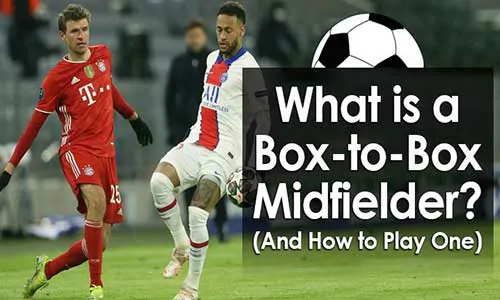
The Evolution of the Box-to-Box Midfielder: Tactical Guide Ahead of the FIFA World Cup 2026
Table of Contents
- 1. What is a Box-to-Box Midfielder?
- 2. Key Duties of a Box-to-Box Midfielder
- 3. Why Box-to-Box Midfielders Will Define Tactics at the FIFA World Cup 2026
- 4. Essential Skills Required for the Modern No. 8
- 5. Physical Demands and the Impact of the FIFA World Cup 2026
- 6. Tactical Systems That Maximize the Box-to-Box Midfielder
- 7. Top Box-to-Box Midfielders to Watch at the FIFA World Cup 2026
- 8. Comparative Analysis of Midfield Roles
- 9. How the Demands of the FIFA World Cup 2026 Are Reshaping the Midfield Role
- 10. Frequently Asked Questions (FAQ)
- 11. Conclusion & Tactical Outlook
1. What is a Box-to-Box Midfielder?
Historically, the box-to-box midfielder was defined by sheer stamina. Players like Roy Keane, Patrick Vieira, Steven Gerrard, and Frank Lampard patrolled the pitch from one penalty area (“box”) to the other. They were expected to win tackles, carry the ball forward, and score crucial goals.
In the modern era, the role has evolved. While physical endurance remains non-negotiable, the position now demands high-level technical proficiency and tactical adaptability. Today’s No. 8 must be comfortable playing under intense pressure, finding passing lanes in tight spaces, and executing complex pressing triggers.
In addition, modern tactical setups often blur the lines between positions. A box-to-box midfielder is no longer just a runner; they are the transitional engine of the team. They link the defense to the attack, ensuring structural balance during both possession and defensive phases.
2. Key Duties of a Box-to-Box Midfielder
The duties of a box-to-box midfielder can be broadly categorized into three distinct phases: defensive, transitional, and offensive. Because they operate across the entire length of the pitch, their responsibilities change continuously depending on the state of the match.
Defensive Responsibilities
- Breaking up play: Intercepting opposition passes and executing tackles in the middle third of the pitch.
- Pressing and tracking: Applying immediate pressure on opponents to disrupt build-up play and tracking runners who make late moves from midfield.
- Low-block support: Dropping deep into their own penalty area to support the central defenders and clear dangerous crosses.
Transitional Responsibilities
- Ball progression: Moving the ball from deep defensive areas into the attacking third, either via progressive passing or direct ball-carrying.
- Retaining possession: Acting as a reliable passing outlet for defenders under pressure, helping to recycle possession and control the tempo.
- Spatial awareness: Occupying half-spaces to offer passing lanes and stretch the opponent’s defensive structure.
Offensive Responsibilities
- Late runs into the box: Arriving late in the penalty box to meet crosses or loose balls, making them difficult for defenders to mark.
- Creating chances: Providing key passes, through-balls, and crosses for the forwards.
- Shooting from distance: Threatening the opposition goal with long-range shots when defenders drop deep to protect the box.
3. Why Box-to-Box Midfielders Will Define Tactics at the FIFA World Cup 2026
The tactical battleground of international football has evolved dramatically over the last decade. As we analyze the setups prepared for the upcoming tournament, it is clear that tactical diversity and athletic demands will reach unprecedented levels during the FIFA World Cup 2026.
Modern international football is highly focused on transitional moments. Because national teams have limited training time compared to club teams, complex, highly-synchronized possession systems can be difficult to implement. Consequently, many national coaches rely on robust, transition-heavy tactics that require players capable of covering massive amounts of space quickly.
Therefore, having a highly capable No. 8 is a critical asset, and their presence will shape how matches are won or lost at the FIFA World Cup 2026. These players act as tactical shock absorbers. They turn defensive recoveries into instant counter-attacks, ensuring that the team remains compact and dangerous in every phase of play.
4. Essential Skills Required for the Modern No. 8
To excel as a box-to-box midfielder, an athlete must possess a unique blend of physical, technical, and mental attributes. Lacking even one of these components can leave a team vulnerable in the center of the pitch.
Physical Endurance and Work Rate
A standard box-to-box midfielder often covers between 11 and 13 kilometers per match. This requires elite aerobic capacity and the ability to perform repeated, high-intensity sprints over 90 minutes. Without exceptional recovery speed, a midfielder will struggle to track back during quick opposition transitions.
Technical Versatility
Because they operate in congested areas, modern No. 8s must have an immaculate first touch and the ability to shield the ball under pressure. Their passing range must be diverse, encompassing short, quick exchanges to escape tight presses, as well as sweeping long balls to switch the play to the flanks.
Tactical Intelligence and Anticipation
Knowing when to join the attack and when to hold back to maintain defensive balance is a key indicator of tactical intelligence. A great box-to-box midfielder reads the game two steps ahead, anticipating where the ball will land and positioning themselves to intercept or exploit space.
5. Physical Demands and the Impact of the FIFA World Cup 2026
The physical environment of the upcoming tournament will present unique logistical and physical challenges during the FIFA World Cup 2026. Hosted across three countries—Canada, Mexico, and the United States—the event will feature diverse climates, high altitudes, and extensive travel schedules.
Playing matches in high-altitude locations, such as Mexico City, or under intense summer heat in southern US cities, will place extreme stress on the players’ cardiovascular systems. In these environments, the physical resilience of a team’s central midfield engines will be tested to the absolute limit.
Furthermore, the expanded 48-team format means that teams reaching the later stages of the tournament must play more matches than in previous editions, which makes squad rotation and elite stamina key success factors for the FIFA World Cup 2026. Coaches will rely heavily on midfielders who can sustain high-intensity running without experiencing a drop-off in technical execution.
6. Tactical Systems That Maximize the Box-to-Box Midfielder
Different tactical setups utilize the box-to-box midfielder in distinct ways. Let’s look at three of the most popular formations in modern football and how they leverage the No. 8 role.
The 4-3-3 System
In a classic 4-3-3, the box-to-box midfielder usually plays as one of the twin “eights” alongside a defensive anchor (the No. 6) and an attacking playmaker. This structure gives the No. 8 the freedom to push forward and occupy the half-spaces, knowing they have defensive coverage behind them.
The 4-2-3-1 Double Pivot
In this system, the box-to-box midfielder typically operates in a two-man midfield unit. While one partner acts as a deep-lying playmaker or defensive screen, the box-to-box player is given license to drive forward, linking the defensive line directly to the attacking midfield trio.
The 3-5-2 Wingback System
This formation places a heavy physical burden on the central midfield trio. The box-to-box midfielders must support the wingbacks defensively while also making runs into the half-spaces to support the two strikers. It is an extremely demanding setup that requires elite tactical discipline.
7. Top Box-to-Box Midfielders to Watch at the FIFA World Cup 2026
Several world-class players are expected to play defining roles for their respective countries. Let’s examine some of the standout box-to-box midfielders who are projected to make a major impact at the FIFA World Cup 2026.
Jude Bellingham (England)
Bellingham represents the ultimate modern prototype of the position. Combining incredible physicality with elite technical skills, his ability to drive forward and score crucial goals makes him a core player to watch closely during the FIFA World Cup 2026.
Federico Valverde (Uruguay)
Known for his relentless stamina and powerful long-range shooting, Valverde is the heartbeat of the Uruguayan midfield. His work rate and defensive tenacity will be absolutely crucial to Uruguay’s tactical execution at the FIFA World Cup 2026.
Declan Rice (England)
While often deployed in deep roles, Rice has evolved into a dynamic box-to-box threat. His ability to intercept play and carry the ball forward rapidly through transition phases makes him indispensable to England’s hopes of lifting the trophy at the FIFA World Cup 2026.
8. Comparative Analysis of Midfield Roles
To better understand how the box-to-box midfielder differs from other midfield profiles, review the comparison table below:
| Midfield Role | Primary Objective | Key Attributes | Typical Heatmap Zone |
|---|---|---|---|
| Defensive Midfielder (No. 6) | Shield the defense, break up play, circulate possession from deep. | Tackling, positioning, short passing, physical strength. | Defensive third & lower middle third. |
| Box-to-Box Midfielder (No. 8) | Transition play, support both attack and defense, late runs. | Stamina, ball-carrying, work rate, tactical intelligence. | Entire pitch (box-to-box). |
| Attacking Midfielder (No. 10) | Create scoring opportunities, assist forwards, score goals. | Vision, dribbling, creativity, finishing ability. | Upper middle third & final third. |
9. How the Demands of the FIFA World Cup 2026 Are Reshaping the Midfield Role
The evolution of football tactics does not stop, and the preparation for the upcoming games is accelerating several key tactical trends. One of the most prominent shifts is the rise of the “hybrid” midfielder, a player who must seamlessly transition between multiple tactical systems within a single match.
Modern managers are moving away from rigid positioning. During the FIFA World Cup 2026, we are likely to see teams utilize fluid structures where the box-to-box midfielder must temporarily fill in as a temporary fullback or a second striker. This fluidity requires an unprecedented level of tactical understanding and split-second decision-making.
In addition, the integration of advanced sports science and data analytics is changing how these players are utilized. Coaches will use real-time physical metrics to manage the workload of their box-to-box players. Since these athletes cover the most ground, optimizing their recovery windows during the intensive tournament schedule will be a defining tactical characteristic of the FIFA World Cup 2026.
10. Frequently Asked Questions (FAQ)
Q1: What is the main difference between a No. 6 and a No. 8 midfielder?
A No. 6 (defensive midfielder) primarily shields the defense, breaks up opposition attacks, and acts as a deep playmaker. A No. 8 (box-to-box midfielder) is far more dynamic, operating from penalty box to penalty box, participating heavily in both defensive recoveries and final-third attacks.
Q2: Why is stamina the most critical attribute for a box-to-box midfielder?
Because they are required to support both the defense and the attack, they cover more distance than almost any other player on the pitch. Elite cardiovascular endurance is required to maintain tactical discipline and technical quality throughout 90 minutes.
Q3: How will the expanded format of the FIFA World Cup 2026 affect midfielders?
The expansion to 48 teams means squads must play an additional knockout round to reach the final. This extended schedule, combined with the extreme travel demands across North America, highlights the critical importance of managing player fatigue and tactical flexibility during the FIFA World Cup 2026.
Q4: Can a box-to-box midfielder also play as an attacking midfielder?
Yes, many modern No. 8s have the technical skill to play as a No. 10. However, when playing as an attacking midfielder, they may not be required to defend as deep, which does not fully utilize their defensive work rate and transitional attributes.
Q5: Who are some historical examples of legendary box-to-box midfielders?
Players like Steven Gerrard, Frank Lampard, Patrick Vieira, Roy Keane, and Lothar Matthäus are widely regarded as the historical benchmarks for the modern box-to-box midfielder.
Q6: Which young box-to-box midfielder is expected to stand out at the FIFA World Cup 2026?
Young talents like Jude Bellingham, Eduardo Camavinga, and Jamal Musiala are highly anticipated to play pivotal roles for their respective national teams, making them players to keep an eye on during the FIFA World Cup 2026.
11. Conclusion & Tactical Outlook
As football tactics continue to become more dynamic and physically demanding, the box-to-box midfielder remains a vital component of successful teams. Combining physical power with tactical intelligence and technical skill, these players serve as the engine rooms of their squads.
With national coaches looking for the perfect formula to navigate the challenging tactical landscapes of the upcoming matches, the performances of these central players will be a key storyline. To follow the tournament’s key tactical developments, make sure to watch these players closely during the FIFA World Cup 2026.
What do you think?
Which box-to-box midfielder do you think will have the biggest impact at the tournament? Let us know your thoughts in the comments section below, and subscribe to our newsletter for more deep tactical football analyses!
Suggested Internal Links (Add these to relevant existing articles on your site):
- Link 1 (Anchor: “modern football formations”): Connect to your comprehensive guide on football formations.
- Link 2 (Anchor: “defensive midfielder”): Connect to your deep-dive article explaining the role of the modern No. 6.
- Link 3 (Anchor: “tactical transitions”): Connect to your tactical guide analyzing transition play in football.
Suggested High-Quality External Links:
- Link 1: Official FIFA Tournament Updates (Anchor: “FIFA World Cup 2026”)
- Link 2: Elite Midfield Tactics and Player Analysis (Anchor: “Coaches’ Voice”)