BMO Field World Cup 2026 Upgrades: How Toronto Is Preparing for FIFA
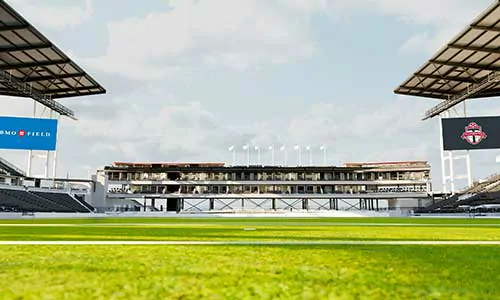
Toronto, one of the most culturally diverse and soccer-passionate cities in North America, is preparing to step onto the biggest sporting stage in the world. As Canada co-hosts the FIFA World Cup 2026 alongside the United States and Mexico, the city’s primary soccer venue, BMO Field, has undergone a massive, multi-million-dollar transformation.
Rebranded as “Toronto Stadium” for the duration of the tournament to comply with strict non-commercial sponsorship guidelines, this iconic venue is ready to welcome hundreds of thousands of international fans. This world-class tournament, the FIFA World Cup 2026, represents a monumental step for soccer in North America, promising to ignite unprecedented interest in the sport across the nation.
To prepare the municipally owned facility for this prestigious event, the City of Toronto collaborated with Maple Leaf Sports & Entertainment (MLSE) on a comprehensive, two-phase renovation project. With a total budget of $157.9 million, the upgrades ensure that the venue meets the rigorous global standards set by FIFA, covering everything from seat capacity and pitch quality to high-tech broadcasting infrastructure and premium fan comfort.
Table of Contents
- The Grand Evolution: Why Toronto Stadium is the Heart of the FIFA World Cup 2026 in Canada
- A Detailed Breakdown of the BMO Field Infrastructure Renovation Phases
- Key Structural Upgrades for the FIFA World Cup 2026
- Enhancing the Fan Experience at Toronto Stadium
- The Financial Investment Behind Toronto’s Preparation
- The Complete Schedule of Matches at Toronto Stadium
- The Legacy of the Upgrades: What Happens After the FIFA World Cup 2026?
- Frequently Asked Questions (FAQ) About the Stadium Renovations
- Conclusion & Call to Action (CTA)
The Grand Evolution: Why Toronto Stadium is the Heart of the FIFA World Cup 2026 in Canada
Securing a spot as an official host city for the FIFA World Cup 2026 has forced local authorities and venue operators to elevate Toronto’s primary outdoor sporting venue to heights never seen before. Located on the historic grounds of Exhibition Place, BMO Field has long served as the beloved home of Toronto FC in Major League Soccer (MLS) and the Toronto Argonauts of the Canadian Football League (CFL). However, hosting games on a global scale requires a standard of infrastructure that goes far beyond regular domestic league operations.
In addition to expanding the sheer size of the stadium, the renovations have completely modernized the facility’s underlying technologies. Consequently, Toronto Stadium is now uniquely positioned to offer an intimate yet electrifying viewing experience. Unlike massive suburban American arenas, Toronto’s stadium is situated close to the pitch, offering phenomenal sightlines and an unmatched, concentrated atmosphere. This unique spatial setup will allow international audiences to experience Canadian soccer culture at its absolute closest and most vibrant.
A Detailed Breakdown of the BMO Field Infrastructure Renovation Phases
To minimize disruption to the active MLS and CFL playing seasons, the City of Toronto and MLSE executed the renovations in two distinct phases between December 2024 and March 2026. This careful planning allowed Toronto FC and the Argonauts to continue playing home matches while construction progressed behind the scenes.
Phase 1: Establishing the Tech and Broadcast Backbone
The first phase of the renovation project was successfully completed in September 2025. This phase laid the vital structural and technical groundwork for the entire project. Specifically, crews worked on upgrading the broadcast capability of the venue to support the immense global demand of television and radio networks.
New high-efficiency LED broadcast-ready lighting was installed, alongside state-of-the-art audio systems and a modernized fiber-optic network. Furthermore, Phase 1 delivered expanded kitchen facilities, new team hospitality lounges, and structural modifications to the stadium’s north end to prepare for the massive seating additions scheduled in the following phase. These permanent upgrades will ensure the stadium remains a jewel long after the FIFA World Cup 2026 concludes.
Phase 2: Transitioning to Temporary Grandstands and Pitch Perfection
Starting in December 2025 and concluding in March 2026, the second phase focused entirely on tournament-specific demands to meet the strict stadium requirements dictated by the governing body for the FIFA World Cup 2026. During this winter construction window, workers erected massive temporary grandstands at the north and south ends of the stadium.
In addition, this phase introduced the high-spec natural hybrid turf field, modernized team locker rooms, expanded player facilities, and a widened playing surface. By completing these upgrades on schedule, Toronto showed its commitment to matching the expectations of international players and coaching staffs alike.
Key Structural Upgrades for the FIFA World Cup 2026
To accommodate the massive crowds expected during the FIFA World Cup 2026, a complete rethink of the venue’s physical structure was required. The physical transformation of BMO Field into Toronto Stadium involves several landmark structural achievements.
The Seating Capacity Expansion
BMO Field’s standard capacity sits at approximately 28,000 seats. However, to meet FIFA’s strict minimum hosting requirements, the stadium needed to expand to at least 45,000 seats. To achieve this, engineers designed and constructed massive temporary grandstands.
These soaring structures added an extra 17,756 seats, bringing the total tournament capacity to an impressive 45,736 seats. Consequently, this temporary addition is crucial for meeting the capacity thresholds for the FIFA World Cup 2026 and allowing tens of thousands of extra fans to experience the tournament live.
The Brand-New Hybrid Grass Playing Surface
Historically, BMO Field has utilized various grass mixtures, but international tournament play demands a perfectly level, high-durability surface. Because the pitch must withstand intensive matches during the FIFA World Cup 2026, a new hybrid system was installed.
This system combines natural Kentucky bluegrass with synthetic fibers stitched deep into the root zone. This advanced technology ensures that the pitch remains stable, drains exceptionally well under heavy rainfall, and maintains its premium cosmetic appearance throughout the grueling tournament schedule. Additionally, the playing field was widened slightly to 105 by 68 meters to comply with official regulations.
Cutting-Edge Technology: Video Boards, Sound, and Connectivity
To support international broadcasters and ensure fans do not miss a single second of the action during the FIFA World Cup 2026, a major upgrade to the venue’s technology suite was deployed. The old centralized scoreboard was removed and replaced with four massive corner LED videoboards, ensuring perfect viewing angles from every seat in the house.
In addition, a stadium-wide high-density Wi-Fi system was installed, enabling tens of thousands of spectators to seamlessly share their experiences online without experiencing network bottlenecks. Meanwhile, the broadcast compound was significantly expanded to accommodate the global media influx.
Enhancing the Fan Experience at Toronto Stadium
While structural stability and pitch quality are critical for players and officials, the upgrades have also focused heavily on improving the user experience for general ticket holders.
Upgraded Food Concessions and New Kitchen Facilities
A key objective of the city during the FIFA World Cup 2026 is to ensure that visiting fans enjoy quick, convenient access to food and beverages. Therefore, the stadium’s concourses have been retrofitted with expanded concession stands and cutting-edge self-serve technology.
These additions are supported by a brand-new, state-of-the-art production kitchen, which increases the venue’s overall food service capacity. Ultimately, these measures will reduce waiting times, allowing fans to grab their refreshments quickly and return to their seats without missing critical match moments.
Premium Lounges and Hospitality Viewing Spaces
For corporate guests and premium ticket holders, the stadium upgrades introduce several highly sophisticated viewing areas. Most notable among these is the brand-new, center-field lounge, which offers a dramatic, panoramic view of the action during the FIFA World Cup 2026.
Moreover, existing luxury suites have been completely modernized with high-end finishes, advanced climate control, and dedicated catering services. These private spaces reflect Toronto’s reputation as a premium host city, ensuring comfort for VIP visitors from across the globe.
Improved Circulation and the 360-Degree Concourse
To ease pedestrian traffic throughout the tournament, designers implemented a 360-degree concourse around the stadium. This allows fans to move seamlessly around the entire venue, exploring different amenities and taking in the pre-game atmosphere from diverse angles.
In addition, the upgrades have introduced significant improvements to accessibility, including step-free access routes, upgraded elevators, and enhanced wayfinding signage. Consequently, the venue is now far better equipped to assist fans of all mobility levels.
The Financial Investment Behind Toronto’s Preparation
A renovation of this scale requires substantial financial backing. The financial plan behind Toronto’s contribution to the FIFA World Cup 2026 highlights a highly cooperative public-private partnership. The total cost of the Toronto Stadium upgrades reached $157.9 million, divided between municipal taxpayers and private sports management.
The following table outlines the exact funding breakdown and allocation of these resources:
| Funding Partner | Contribution Amount | Primary Allocation Areas |
|---|---|---|
| City of Toronto | $132.9 Million | Seating expansion, public infrastructure, accessibility, safety |
| MLSE (Maple Leaf Sports & Ent.) | $25.0 Million | High-end hospitality upgrades, broadcast improvements, food service tech |
| Total Project Cost | $157.9 Million | Full stadium preparation and modernization |
These funds have been carefully managed to ensure that every dollar spent contributes not only to the immediate success of the tournament but also to the long-term viability of the stadium as a leading community asset.
The Complete Schedule of Matches at Toronto Stadium
The newly named Toronto Stadium will be the focal point for six matches during the FIFA World Cup 2026. This includes five highly anticipated group-stage matches and one thrilling knockout-round fixture in the Round of 32.
Below is the official schedule of matches to be played on Toronto’s newly upgraded pitch:
| Match Date | Stage of Tournament | Competing Teams / Notes |
|---|---|---|
| June 12, 2026 | Group Stage (Match 3) | Canada vs. Bosnia-Herzegovina (Canada’s Opening Match) |
| June 17, 2026 | Group Stage (Match 21) | Group Match |
| June 20, 2026 | Group Stage (Match 33) | Group Match |
| June 23, 2026 | Group Stage (Match 46) | Group Match |
| June 26, 2026 | Group Stage (Match 59) | Group Match |
| July 2, 2026 | Round of 32 | Knockout Stage Match |
The opening match on June 12 is expected to draw a record-breaking crowd as Canada’s Men’s National Team kicks off its journey on home soil in front of over 45,000 passionate fans.
The Legacy of the Upgrades: What Happens After the FIFA World Cup 2026?
One of the most common concerns regarding major international sporting events is the issue of “white elephants”—expensive venues built for a single event that fall into disuse afterward. Fortunately, the City of Toronto and MLSE have drafted a highly sustainable legacy plan.
Specifically, the massive temporary grandstands that boost the seating capacity to 45,736 will be disassembled after the final whistle of the FIFA World Cup 2026. This return to the standard configuration ensures that the stadium remains right-sized for regular domestic events.
On the other hand, the vast majority of the infrastructure upgrades are entirely permanent. The state-of-the-art hybrid pitch, the four high-definition corner videoboards, the upgraded broadcasting facilities, the expanded kitchens, and the 360-degree concourse will remain in place. These enhancements will provide long-lasting benefits to Toronto FC, the Toronto Argonauts, and other major events, including international rugby matches, concerts, and community festivals. Consequently, the local sporting community will enjoy a vastly improved stadium experience for decades to come.
While Toronto is making massive strides with its stadium, other Canadian cities are also preparing for this grand event; for instance, you can read about the BC Place Upgrades in Vancouver to see how the West Coast is readying its stadium for its matches.
Frequently Asked Questions (FAQ) About the Stadium Renovations
Why is BMO Field being renamed for the FIFA World Cup 2026?
FIFA guidelines strictly prohibit the use of commercial sponsor names on stadiums during official tournaments unless the sponsor is also an official partner of FIFA. Because BMO (Bank of Montreal) is not an official FIFA tournament sponsor, the venue will be known simply as “Toronto Stadium” for the duration of the matches.
How many matches will Toronto host during the FIFA World Cup 2026?
Toronto will host a total of six matches during the tournament. This includes five initial group-stage games (including the historic opening match for the Canadian Men’s National Team on June 12, 2026) and one single-elimination match in the Round of 32.
What is the new seating capacity of Toronto Stadium for the FIFA World Cup 2026?
Through the installation of major temporary grandstands in the north and south ends, the stadium’s seating capacity has been temporarily expanded from its standard 28,000 seats to a tournament-ready 45,736 seats.
What kind of grass surface is installed at the stadium?
The stadium now features a state-of-the-art hybrid grass surface that combines high-quality natural Kentucky bluegrass with artificial fibers stitched into the roots. This hybrid system provides maximum durability, outstanding water drainage, and a consistent, professional-grade playing field.
Are the stadium upgrades permanent after the FIFA World Cup 2026 concludes?
While the temporary grandstands will be disassembled to return the stadium to its standard configuration, almost all other upgrades are permanent. This includes the hybrid turf, the high-density Wi-Fi, the new corner LED videoboards, the expanded production kitchens, the modernized locker rooms, and the enhanced accessibility features.
How much did the BMO Field renovations cost, and who paid for them?
The total cost of the renovations was $157.9 million. The project was financed through a cost-sharing partnership between the City of Toronto, which contributed $132.9 million, and Maple Leaf Sports & Entertainment (MLSE), which contributed $25 million.
Conclusion & Call to Action (CTA)
The extensive upgrades to BMO Field highlight Toronto’s unwavering commitment to hosting the FIFA World Cup 2026. From expanding seating capacity to over 45,000 to installing a pristine hybrid turf pitch and utilizing cutting-edge crowd-management technologies, Toronto Stadium is fully prepared to take its place on the international stage. These upgrades not only guarantee an unforgettable experience for soccer fans during the FIFA World Cup 2026 but also secure a high-quality, sustainable legacy for Toronto’s local athletic community for years to come.
As the historic opening match on June 12 approaches, anticipation is reaching a fever pitch. Are you planning to attend one of the matches, or will you be joining the local Fan Festivals across the city? Let us know how you are preparing to celebrate this historic tournament in the comments below! Don’t forget to explore our comprehensive Toronto World Cup Travel Guide and check out the official Canada Men’s National Team Schedule to stay updated on all the local tournament action.