Ballon d’Or Winners Ranked: Players with the Most Awards
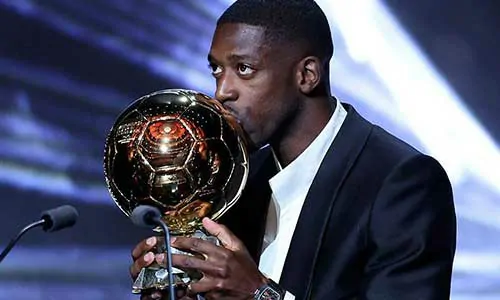
Ballon d’Or Winners Ranked: How the FIFA World Cup 2026 Will Shape Future Legends
The Ballon d’Or remains the ultimate individual honor in professional football. Established by French publication France Football in 1956, this golden trophy recognizes the player who has demonstrated outstanding skill, consistency, and leadership over the course of a competitive season.
As the global football community prepares for the highly anticipated FIFA World Cup 2026, discussions surrounding individual honors and legacy are reaching a fever pitch. Fans and pundits alike are already debating how upcoming performances on the world stage will influence future rankings of the game’s greatest players.
Historically, securing the Golden Ball requires a combination of elite club performance and international glory. In this article, we rank the players with the most Ballon d’Or awards in history and explore how the next generation of talent aims to write their own history in the coming years.
Table of Contents
- The Historical Connection Between the Ballon d’Or and the FIFA World Cup 2026 Era
- Ranked: Ballon d’Or Winners with the Most Awards Before the FIFA World Cup 2026
- Lionel Messi: The Absolute Record Holder with 8 Trophies
- Cristiano Ronaldo: The Portuguese Icon with 5 Trophies
- The Three-Time Winners: Cruyff, Platini, and Van Basten
- The Two-Time Winners: Legends of the Game
- Recent Winners: The Modern Post-Messi/Ronaldo Transition
- How Performance in the FIFA World Cup 2026 Will Define the Next Generation of Winners
- FAQ: Frequently Asked Questions
- Conclusion & Final Thoughts
The Historical Connection Between the Ballon d’Or and the FIFA World Cup 2026 Era
Since its inception, the Ballon d’Or has maintained an incredibly close relationship with major international tournaments. In years featuring a global championship, individual performance on the world stage heavily dictates who takes home the golden trophy.
This long-standing connection will become even more pronounced as players gear up for the upcoming FIFA World Cup 2026. In past decades, legendary figures like Bobby Charlton, Paolo Rossi, and Zinedine Zidane secured their Ballon d’Or victories primarily because of their heroic efforts in international tournaments.
Consequently, outstanding performances on the world stage have historically served as the ultimate catalyst for winning the Golden Ball, a trend that is expected to culminate at the FIFA World Cup 2026. While club football provides a baseline of consistency, the pressure of representing one’s nation remains the ultimate test of a player’s greatness.
In addition, the criteria for the award have evolved significantly over the years. Originally restricted to European players, the award opened up to players of all nationalities playing in Europe in 1995, and eventually went completely global in 2007. Therefore, players from every continent now have an equal opportunity to compete for football’s highest individual prize.
Ranked: Ballon d’Or Winners with the Most Awards Before the FIFA World Cup 2026
To understand the sheer difficulty of winning multiple Ballon d’Or awards, one must look at the exclusive list of players who have claimed the prize more than once. Below is the official ranking of multiple-time winners up to the current football season.
| Rank | Player | Country | Awards Won | Years of Victory |
|---|---|---|---|---|
| 1 | Lionel Messi | Argentina | 8 | 2009, 2010, 2011, 2012, 2015, 2019, 2021, 2023 |
| 2 | Cristiano Ronaldo | Portugal | 5 | 2008, 2013, 2014, 2016, 2017 |
| 3 | Michel Platini | France | 3 | 1983, 1984, 1985 |
| 3 | Johan Cruyff | Netherlands | 3 | 1971, 1973, 1974 |
| 3 | Marco van Basten | Netherlands | 3 | 1988, 1989, 1992 |
| 6 | Franz Beckenbauer | Germany | 2 | 1972, 1976 |
| 6 | Ronaldo Nazário | Brazil | 2 | 1997, 2002 |
| 6 | Alfredo Di Stéfano | Spain / Argentina | 2 | 1957, 1959 |
| 6 | Kevin Keegan | England | 2 | 1978, 1979 |
| 6 | Karl-Heinz Rummenigge | Germany | 2 | 1980, 1981 |
Lionel Messi: The Absolute Record Holder with 8 Trophies
Lionel Messi stands alone at the pinnacle of individual footballing achievements. The Argentine playmaker has collected eight Ballon d’Or trophies over an illustrious career that spans more than two decades, demonstrating unprecedented longevity at the highest level of the sport.
His early triumphs came during Barcelona’s golden era under Pep Guardiola, where he secured four consecutive awards between 2009 and 2012. During this period, Messi redefined the “false nine” position, scoring an astonishing 91 goals in the 2012 calendar year alone.
While his historic 2022 triumph in Qatar cemented his eighth trophy, fans worldwide are eager to see if he will grace the pitch once more at the FIFA World Cup 2026. Even as he plays his club football in North America, his influence remains immense, and his legacy is firmly established as one of the most remarkable stories in sports history.
Ultimately, Messi’s ability to evolve from a lightning-fast winger into a master playmaker has allowed him to stay relevant across different generations. His eighth victory highlighted his incredible leadership of the Argentine national team, proving that international success remains the most heavily weighted factor in voting.
Cristiano Ronaldo: The Portuguese Icon with 5 Trophies
Cristiano Ronaldo is arguably the most driven and physically dominant athlete the sport of football has ever seen. With five Ballon d’Or awards to his name, the Portuguese forward pushed Lionel Messi to his absolute limits during their historic decade-long rivalry in Spain’s La Liga.
Ronaldo won his first Golden Ball in 2008 after guiding Manchester United to a UEFA Champions League title. Following his world-record transfer to Real Madrid, he secured four more awards in 2013, 2014, 2016, and 2017, matching his club’s European dominance with astonishing individual statistics.
Although he currently plays in Saudi Arabia, his competitive drive remains unmatched, leading many to speculate whether he might make one final appearance at the FIFA World Cup 2026. His physical preparation and strict regimen continue to serve as an inspiration to younger athletes around the globe.
On the other hand, Ronaldo’s legacy is defined by his clutch performances in the biggest matches. His ability to score in successive Champions League knockout rounds and his leadership during Portugal’s Euro 2016 triumph secure his place among the undisputed legends of the game.
The Three-Time Winners: Cruyff, Platini, and Van Basten
Before the Messi-Ronaldo era dominated the awards, winning three Ballon d’Or trophies was considered the absolute peak of individual achievement. Only three legendary figures managed to reach this incredible milestone during the 20th century.
Johan Cruyff: The Architect of Modern Football
Johan Cruyff was a tactical genius who revolutionized the sport. Winning the award in 1971, 1973, and 1974, the Dutch maestro was the heartbeat of the famous “Total Football” system deployed by Ajax and the Netherlands national team.
Cruyff’s visionary approach to tactics will undoubtedly influence the managers and players who will compete in the FIFA World Cup 2026. His fluid movement, incredible spatial awareness, and philosophical approach to the game laid the foundation for modern football tactics.
Michel Platini: France’s Midfield General
Michel Platini dominated the mid-1980s like few others, winning three consecutive Ballon d’Or awards in 1983, 1984, and 1985. Operating as an attacking midfielder for Juventus and the French national team, Platini possessed incredible vision, passing range, and a lethal free-kick technique.
Platini’s ability to perform under pressure is exactly what modern midfielders must replicate if they want to succeed at the FIFA World Cup 2026. His stellar performance in the 1984 European Championship, where he scored nine goals in five matches, remains one of the most dominant individual tournaments in history.
Marco van Basten: The Complete Center-Forward
Marco van Basten was a striker of unparalleled elegance and technical ability. He secured his three awards in 1988, 1989, and 1992 while playing for AC Milan and the Netherlands, scoring iconic goals that are still played in highlight reels today.
His legacy serves as a blueprint for the world’s elite strikers aiming to leave their mark at the FIFA World Cup 2026. Although his career was tragically cut short by chronic ankle injuries at the age of 28, Van Basten’s peak years were nothing short of legendary.
The Two-Time Winners: Legends of the Game
The list of double-winners includes defensive pioneers, lethal strikers, and historical icons who dominated their respective eras. Winning the award twice proves that a player’s initial success was not a fluke, but rather a reflection of sustained world-class performance.
Alfredo Di Stéfano was the centerpiece of Real Madrid’s early European dominance, winning the award in 1957 and 1959. In addition, his legendary status earned him the unique “Super Ballon d’Or” in 1989, an honor that remains unmatched to this day.
Franz Beckenbauer, known affectionately as “Der Kaiser,” redefined the defender’s role by creating the modern “sweeper” or libero position. He won the award in 1972 and 1976, guiding West Germany to both European and World Cup glory through tactical intelligence and leadership.
Furthermore, players like Kevin Keegan (1978, 1979) and Karl-Heinz Rummenigge (1980, 1981) demonstrated incredible consistency at the turn of the decade. Their relentless work rates and goalscoring abilities made them dominant forces in European club football.
Lastly, Ronaldo Nazário, “O Fenômeno,” won the award in 1997 and 2002. His redemption story in 2002 remains one of the greatest World Cup narratives, providing inspiration for forward players heading to the FIFA World Cup 2026. His explosive speed and clinical finishing changed the expectations of what a modern forward should be.
Recent Winners: The Modern Post-Messi/Ronaldo Transition
As the legendary duopoly of Messi and Ronaldo naturally winds down, a new generation of footballers has stepped up to claim the ultimate individual crown. This transition has led to some of the most competitive races in recent memory.
In 2024, Manchester City and Spain midfielder Rodri claimed the award. His exceptional tactical discipline, defensive contributions, and ability to control the tempo of the game made him the centerpiece of both his club’s Premier League success and Spain’s European Championship triumph.
In addition, the 2025 Ballon d’Or ceremony saw a historic victory for Paris Saint-Germain and France winger Ousmane Dembélé. Dembélé put together a career-defining season, scoring 37 goals and providing 15 assists while driving PSG to their first-ever UEFA Champions League trophy alongside a domestic double.
These recent triumphs demonstrate that the voting panel is increasingly focusing on players who serve as the tactical heartbeat of championship-winning teams, rather than focusing purely on individual goalscoring numbers.
How Performance in the FIFA World Cup 2026 Will Define the Next Generation of Winners
Looking ahead, the footballing world is fully aware that the upcoming international tournament cycle will be a decisive factor in the next Ballon d’Or race. Success on the grandest stage of all has a unique way of overshadowing domestic club achievements.
Rodri’s exceptional tactical discipline will make him a key figure for Spain as they seek international glory at the FIFA World Cup 2026. If he can replicate his club form on the international stage, he remains a strong candidate to reclaim individual honors.
Following his extraordinary Champions League campaign, Dembélé will look to translate his club success into international dominance at the FIFA World Cup 2026. A strong tournament with France could elevate him into the conversation of multiple-time winners.
Superstars like Kylian Mbappé, Erling Haaland, and Lamine Yamal are already positioned as prime candidates to dominate the individual awards after the FIFA World Cup 2026. Ultimately, the player who steps up in the high-stakes knockout rounds in North America will hold a massive advantage in the voting booths.
FAQ: Frequently Asked Questions
As fans look ahead to the next cycle of footballing excellence leading up to the FIFA World Cup 2026, several questions frequently arise about the Ballon d’Or.
1. Will the winner of the FIFA World Cup 2026 automatically win the Ballon d’Or?
No, winning the tournament does not guarantee the award. However, history demonstrates that the standout player of a World Cup-winning team holds a massive advantage in the voting process.
2. Who has won the most Ballon d’Or awards in history?
Lionel Messi holds the absolute record with eight Ballon d’Or trophies, followed by Cristiano Ronaldo, who has won the award five times.
3. Why did legends like Pelé and Diego Maradona never win the Ballon d’Or?
Until 1995, the Ballon d’Or was strictly reserved for European players. In 2016, France Football conducted a retrospective evaluation, revealing that Pelé would have won seven awards had he been eligible.
4. Who won the Ballon d’Or in 2025?
Ousmane Dembélé of Paris Saint-Germain and France won the 2025 Men’s Ballon d’Or after leading his club to its historic first UEFA Champions League title and a domestic double.
5. What is the difference between the Ballon d’Or and FIFA’s The Best award?
The Ballon d’Or is organized by the French magazine France Football and is voted on by international journalists. FIFA’s The Best award is organized by football’s governing body and includes votes from national team coaches, captains, journalists, and fans.
6. Who was the youngest player to ever win the Ballon d’Or?
Ronaldo Nazário is the youngest recipient of the award, winning his first Ballon d’Or in 1997 at the age of 21 years and 95 days.
Conclusion & Final Thoughts
The ranking of Ballon d’Or winners represents a journey through the history of football’s elite. From the elegant playmaking of Johan Cruyff to the modern physical dominance of Cristiano Ronaldo and the genius of Lionel Messi, these athletes have set standards that may never be surpassed.
In addition, the upcoming FIFA World Cup 2026 is poised to write an entirely new chapter in this rich history, offering the world’s best players a golden opportunity to cement their legacies. As the game transitions into a highly competitive post-Messi/Ronaldo era, the race for individual glory remains more exciting than ever.
Join the Discussion!
Who do you think will win the Ballon d’Or after the FIFA World Cup 2026? Will we see a first-time winner or another historic campaign from an established superstar? Share your predictions in the comments section below!